To build organic rankings that survive algorithm updates, you need a disciplined backlink plan. In this guide, I will show you how to structure, prioritize, and execute a backlink acquisition roadmap from scratch.
▶ Related Video
Backlinks for SEO: Complete Guide for 2026
Executing this framework takes roughly 10 to 15 hours per week. You will need a standard crawler, an active backlink database like Ahrefs, an email prospecting tool, and published content that deserves citation.
| Phase | Objective | Core Deliverable | Typical Timeline |
|---|---|---|---|
| 1. Audit & Gap Analysis | Map competitor link equity | Competitor link deficit sheet | Days 1–7 |
| 2. Target Modeling | Define anchor ratios & velocity | Monthly acquisition targets | Days 8–14 |
| 3. Asset Creation | Produce high-utility content | Original data report or tool | Days 15–30 |
| 4. Outreach Execution | Pitch qualified editorial targets | Active email outreach pipeline | Ongoing (Monthly) |
| 5. Performance Tracking | Verify indexation and rank lift | Monthly ROI & attribution report | Rolling 90 Days |
Key Takeaways
- Audit the gap first. Compare your referring domains against the top three SERP competitors rather than chasing arbitrary authority scores.
- Protect your anchor profile. Keep exact-match commercial anchors under 5% to avoid algorithmic devaluation under modern spam systems.
- Prioritize linkable utility. Original industry datasets and specialized calculation tools consistently outperform standard blog posts for organic links.
- Pace monthly velocity. Match the natural acquisition rate of your immediate niche competitors instead of creating sudden backlink spikes.
- Measure on 90-day cohorts. Expect authoritative editorial backlinks to shift core keyword rankings within 8 to 12 weeks of initial indexation.
Auditing Your Backlink Profile and Finding Competitor Gaps
Before sending a single outreach email, determine your exact link deficit against the top three ranking pages for your target commercial terms.
I start every campaign by running a link intersect analysis using Semrush and Ahrefs. This exercise reveals domains that link to two or three direct rivals but have not yet linked to your site.
These overlapping referring domains represent your highest-probability wins because the site owners already curate content within your exact niche.
- Export the top 5 ranking URLs for each priority keyword cluster.
- Run a multi-domain link intersect query to identify shared referring domains.
- Filter out low-quality scrapers, automated directories, and coupon aggregators.
- Document the net domain gap needed to achieve parity over a 6-month horizon.
In my opinion, spending days obsessing over disavow files is a massive waste of time. Unless Google has served a manual action in Google Search Console, its algorithms simply devalue modern web spam automatically.
The first common mistake I see teams make is setting an aggressive goal to close a 400-domain gap in 30 days. That unnatural link velocity almost always triggers algorithmic suppression.
Before building external authority, ensure your site architecture distributes link equity effectively by reviewing our website optimization plan.
Defining Safe Velocity, Landing Pages, and Anchor Distribution
Your monthly acquisition velocity must mirror your competitors' baseline growth rather than an arbitrary monthly quota.
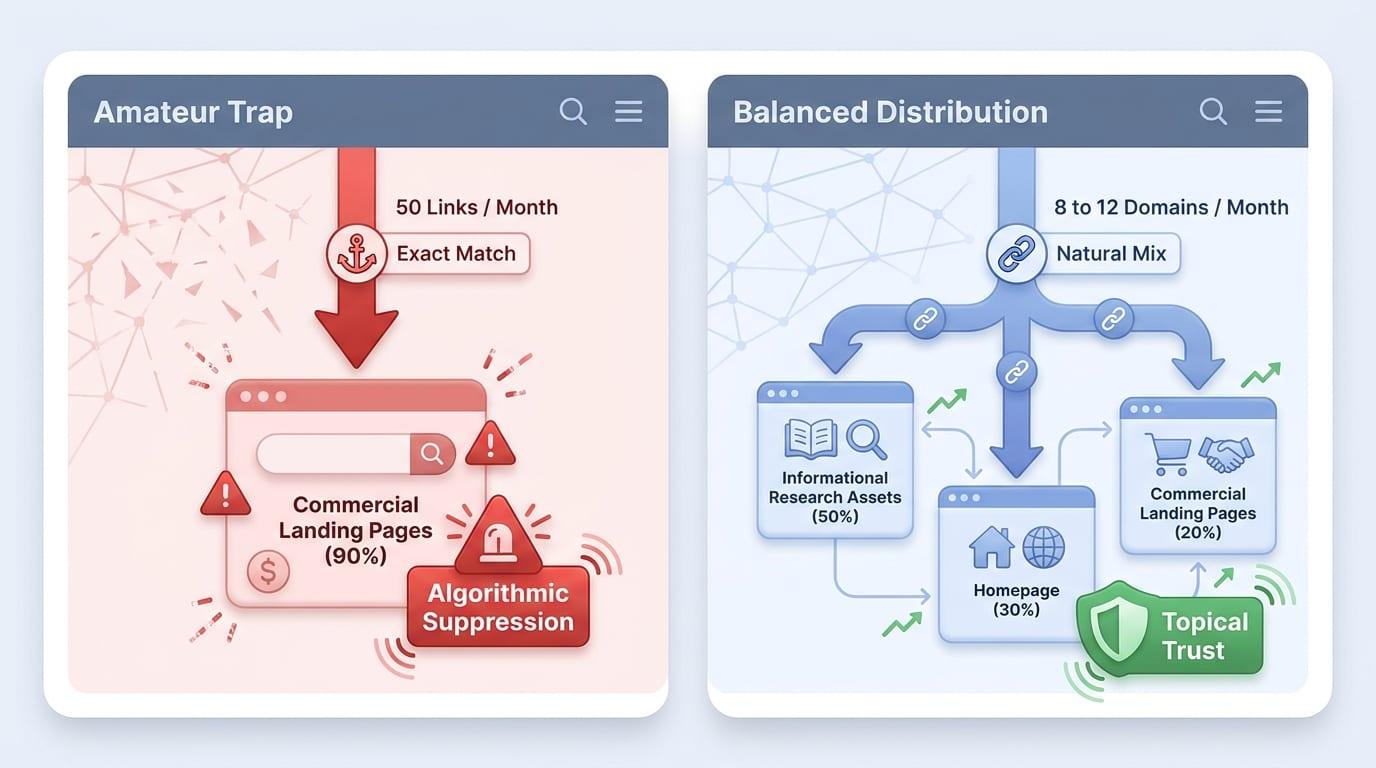
If the average top-three ranking competitor earns 8 to 12 new referring domains each month, aiming for 50 links per month will look synthetic to search engines.
I structure targets around sustainable monthly additions that steadily increase as your domain's organic baseline expands.
Google enforces strict policies regarding unnatural links in the Google Search Essentials spam policies. Violating these rules through aggressive anchor manipulation destroys topical trust.
My opinion on anchor text is contrarian: exact-match commercial anchors are an amateur trap. Top-performing sites dominate search results with overwhelmingly boring, branded backlink profiles.
- Branded & Navigational (60–70%): Brand name, website name, and variations of your founder's name.
- Naked URLs (15–20%): Full URLs (e.g., https://site.com) and clean domain citations.
- Topical & Partial Match (10–15%): Natural descriptive phrases combining the keyword with contextual verbs.
- Exact Match (<5%): Strict, unadorned keyword strings used sparingly on high-authority editorial pages.
You must also distribute links across different page types. Pointing 90% of acquired backlinks to your conversion pages is the second common mistake marketers make.
Instead, send 50% of incoming links to informational research assets, 30% to your homepage, and only 20% to commercial landing pages.
For a structured quarterly timeline to organize these link velocity targets, consult our 3-month SEO plan.
Selecting High-Yield Link Acquisition Tactics
Editorial links follow genuine utility: journalists and industry bloggers cite original data, free tools, and definitive definitions, not generic sales pages.
I have abandoned generic skyscraper articles entirely. In my opinion, publishing original benchmark data or free interactive tooling produces ten times the link equity of a 3,000-word summary.
When you publish data that others must cite as a primary source, you earn passive, compounding links every week without continuous email outreach.
- Proprietary Data Reports: Survey 200 industry peers or scrape anonymized platform trends to produce novel statistics.
- Free Calculators and Micro-Tools: Build lightweight widgets that solve specific calculation problems for your target demographic.
- Unlinked Brand Mentions: Monitor mentions across digital media and send quick notes requesting attribution links.
- Broken Resource Replacement: Find dead outbound links on authoritative resource hubs and pitch your live, updated asset as a replacement.
To find who influences your market and where they source their external references, I rely on audience research via SparkToro.
Understanding how search engines value these editorial connections is critical; explore our technical guide on understanding backlinks to evaluate link equity flow.
Building an Operational Outreach Workflow That Converts
A successful outreach campaign is an operational pipeline that filters prospects strictly, modularizes personalized messaging, and automates follow-up timing.
I reject the idea that you must spend an hour writing a bespoke email for every contact. In my opinion, disciplined semi-automated outreach with an irresistible value proposition easily outperforms artisanal small-batch emails.
The goal is finding the exact editor responsible for updating the article, not blasting generic `info@` or `contact@` addresses.
I qualify prospective target domains against strict minimum standards before adding them to an active sequence.
- Domain Authority: Minimum DR 40 with a clean historical organic search growth curve.
- Organic Search Traffic: At least 2,000 monthly organic visits verified by third-party indices.
- Topical Relevance: The page must contextually align with your asset without directly competing for your core commercial term.
- Editorial Integrity: Zero overt 'write for us' footprints or public links-for-cash marketplace advertisements.
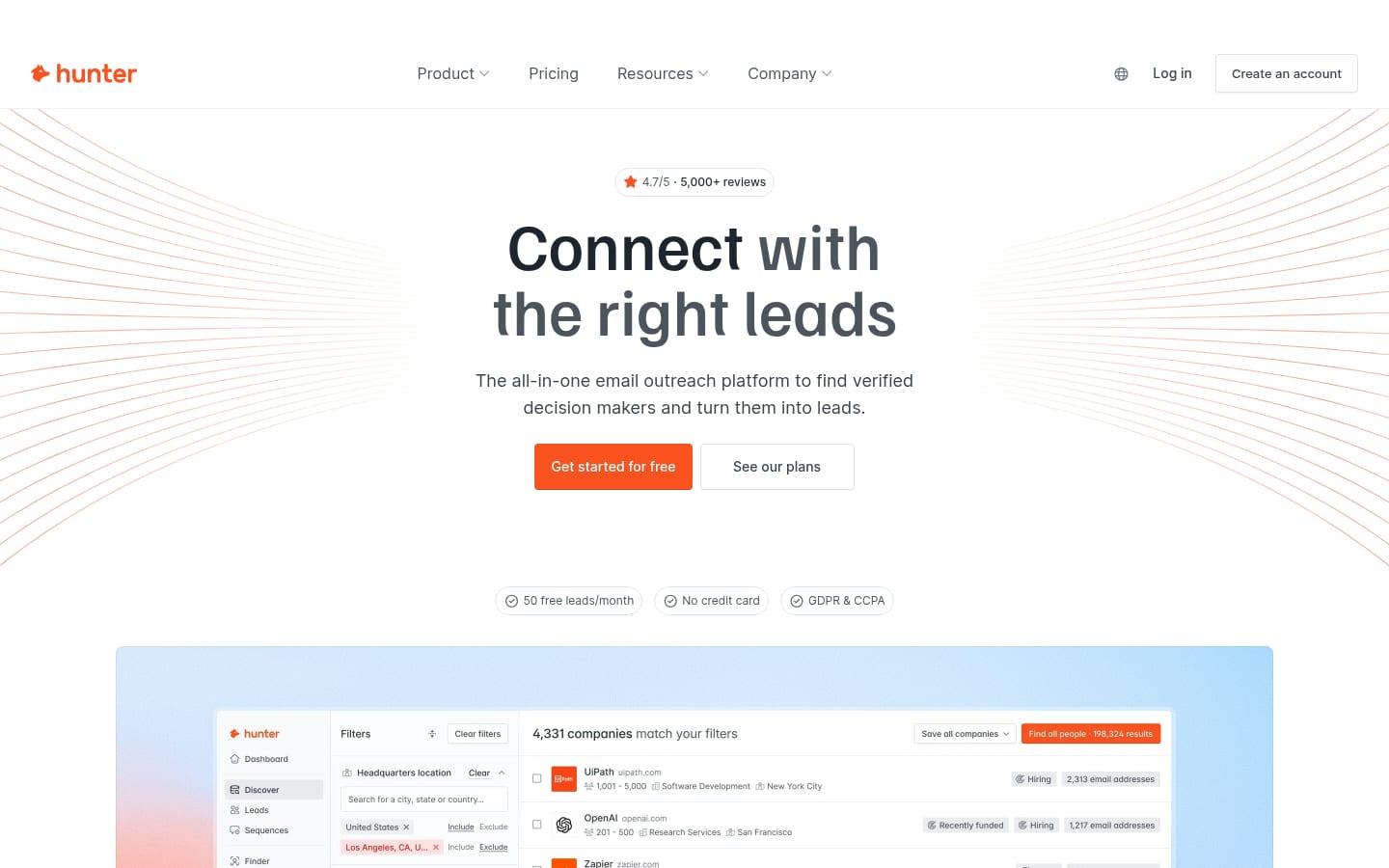
Once targets pass this screen, use Hunter to uncover direct editorial contact emails.
I track all conversational threads and follow-up schedules inside a link CRM like BuzzStream to prevent embarrassing double-pitches from your team.
- Email 1 (Day 1): Short pitch highlighting the asset's unique data point or offering a fix for a broken resource.
- Email 2 (Day 4): Gentle nudge adding one new contextual reason why the resource benefits their readership.
- Email 3 (Day 9): Final break-up email leaving the door open for future collaboration without pressuring the editor.
If you need to align these outreach resources across stakeholders or client deliverables, check our SEO proposal plan.
Measuring Indexation, Ranking Movement, and Plan ROI
Expect earned editorial backlinks to influence competitive organic rankings within 8 to 12 weeks of Google indexation.
New backlinks do not pass full ranking power until the host URL is crawled and refreshed in the main index. Tracking live indexation status is your first milestone.
In my opinion, checking keyword positions daily is a recipe for bad strategic decisions. Backlink attribution only reveals meaningful patterns when assessed in rolling 90-day performance cohorts.
Monitor your referring domain count in Moz or Ahrefs, but track actual visibility shifts through Google Search Console.
- Week 1–2: Target link confirmed live and verified indexable via Google Search Console URL Inspection.
- Week 3–6: Crawl budget recognition and upward movement in secondary long-tail keyword queries.
- Week 8–12: Core commercial target pages show noticeable rank velocity and referral traffic increases.
- Month 4+: Compounding organic impressions, improved topical authority, and organic conversion growth.
To map these link milestones against overall sitewide growth, read our comprehensive 90-day SEO plan.
If you want to capitalize on your earned backlink equity by expanding search visibility across hundreds of high-intent keywords, ProgSEO helps programmatic sites build and optimize search-ready pages at scale. Scaling topical depth alongside a steady link velocity creates a defensible organic footprint that compounds over time.
For a brand-new domain, aim for 3 to 8 high-quality referring domains per month. Scaling too rapidly before establishing topical authority can trigger algorithmic spam filters.
High-authority links typically impact keyword positions within 8 to 12 weeks. The exact timeline depends on how frequently search engine crawlers re-index the linking page and recalculate link graph weights.
A healthy distribution keeps branded and naked URL anchors between 70% and 80%, topical or partial match anchors at 10% to 15%, and exact-match commercial anchors under 5%.
Rarely. Google's algorithms ignore the vast majority of web scraper spam automatically. Only submit a disavow file if you receive a manual action notification inside Google Search Console.
Sources & References
- Ahrefs — SEO backlink indexer and link intersect analysis tools
- Semrush — Domain overview, competitive research, and backlink audit suite
- Google Search Central — Official search essentials spam policies and link scheme guidelines
- Google Search Console — Official indexation tracking and URL inspection tools
- SparkToro — Audience research and editorial publication discovery software
- Hunter — Email address verification and professional contact lookup platform
- BuzzStream — Digital PR and link outreach CRM workflow management software
- Moz — Domain authority tracking and anchor text distribution guides