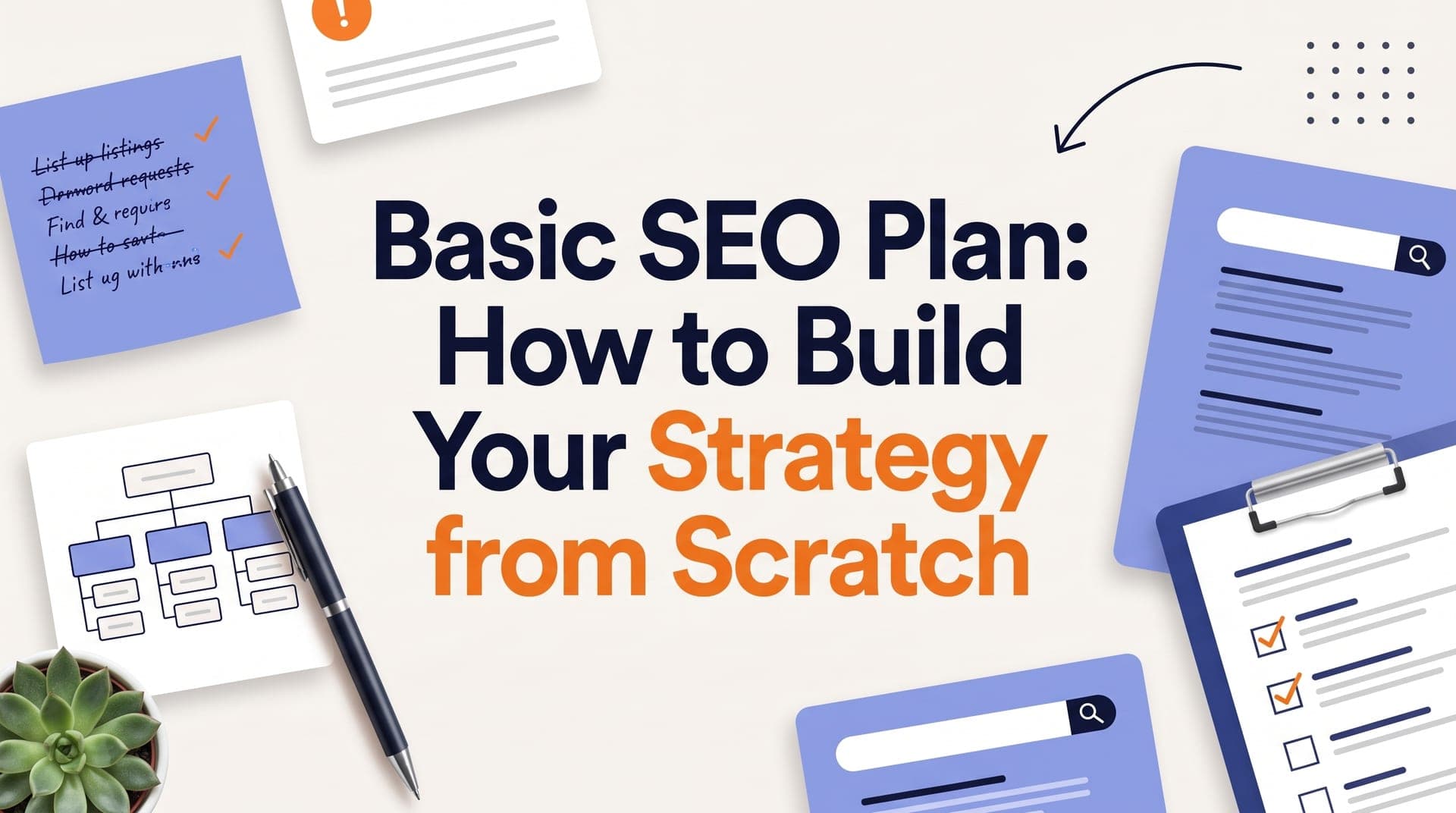
I have audited dozens of small business websites that wasted months publishing articles without seeing any organic traffic. By following a structured basic seo plan, you can diagnose indexing issues, target realistic queries, and establish predictable visibility within three to six months using free tools like Google Search Console. You do not need an enterprise budget or coding experience to get real traction.
▶ Related Video
SEO in 2025: How I'd Learn it if I Were Starting Over
Key Takeaways
- Technical health comes first. If search bots cannot parse your sitemap or robots.txt, published pages will never appear in search results.
- Search intent overrides search volume. Capturing fifty monthly visits from buyers searching specific solutions drives more revenue than thousands of broad impressions.
- Target low keyword difficulty. Unestablished domains should focus strictly on queries with difficulty scores below 20 until baseline trust grows.
- On-page optimization demands strict hierarchy. Every URL needs exactly one descriptive H1 tag, concise subheadings, and contextual internal links.
- Expect ninety-day validation cycles. Organic ranking momentum on new websites realistically takes between three and six months to mature.
The Four Pillars of a Functional SEO Roadmap
A dependable organic roadmap balances four interdependent disciplines: technical hygiene, keyword targeting, on-page optimization, and site authority. Neglecting any single pillar undermines the remaining three.
In my experience, founders often overcomplicate this balance. They spend weeks begging for backlinks while their core crawl architecture remains broken. Search engines evaluate the whole machine, not just isolated parts.
| SEO Pillar | Core Objective | Primary Tool | Target Metric |
|---|---|---|---|
| Technical SEO | Ensure crawlability and error-free indexing | Google Search Console | Valid indexed pages |
| Keyword Strategy | Match search intent with low competition | Keyword research platforms | Target query rankings |
| On-Page Optimization | Structure copy and meta tags for clarity | CMS content editor | Click-through rate (CTR) |
| Authority & Links | Establish domain trust and industry citations | Direct web outreach | Referring domains |
Addressing these disciplines in sequential order prevents wasted effort. You must build your foundation before publishing dozens of articles, as outlined in Google's SEO starter guide.
Phase 1: Technical Setup and Indexing Baseline
Search engines cannot rank what their automated crawlers cannot discover and store. Your first technical milestone is verifying ownership in Google Search Console and submitting a clean sitemap.
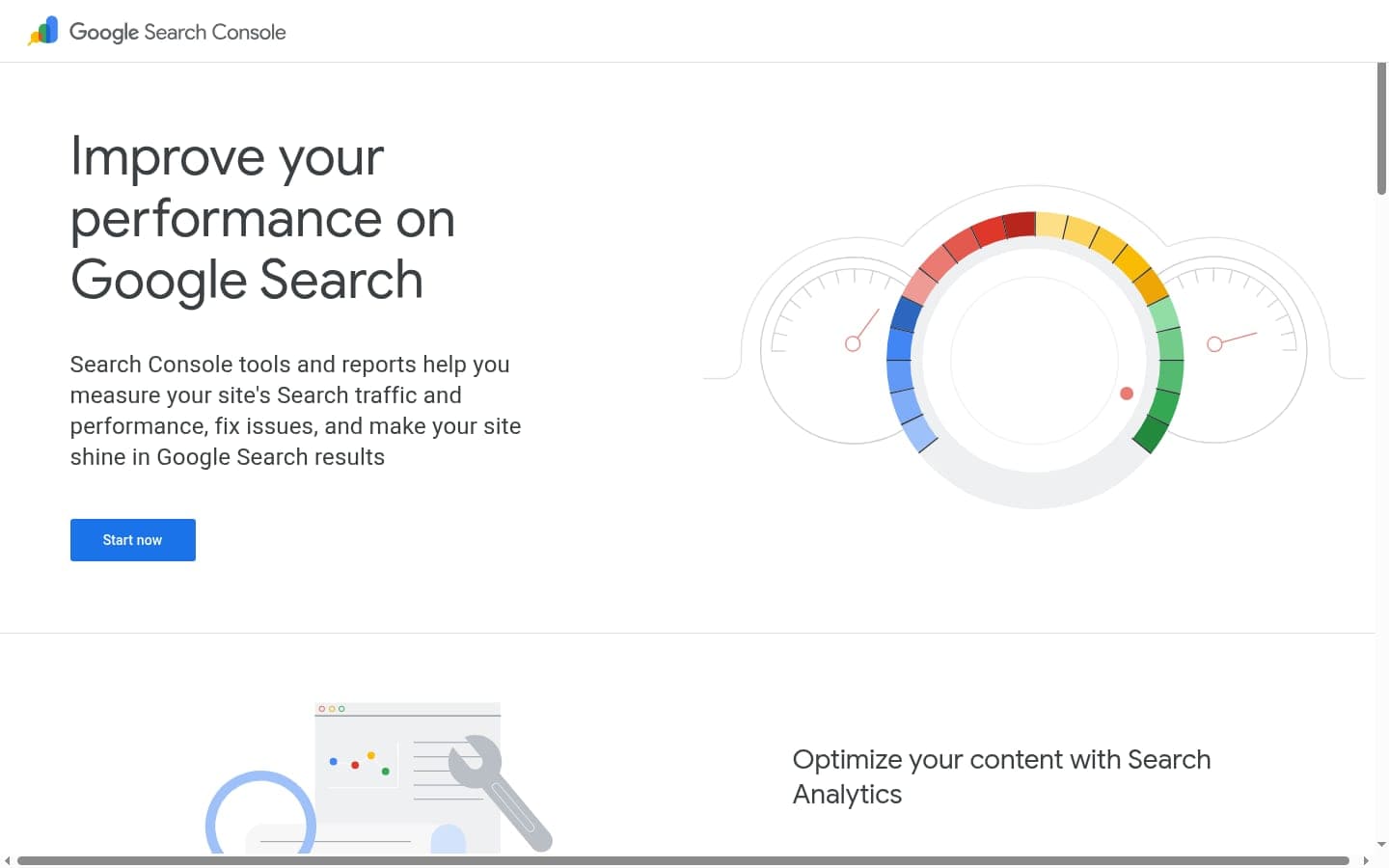
I strongly recommend verifying your site via domain DNS records rather than URL-prefix tags. DNS verification covers all subdomains and protocol variants automatically, saving you from fragmented tracking data later.
- Add your domain property to Google Search Console and verify DNS records with a TXT entry.
- Locate your autogenerated XML sitemap (usually at yourdomain.com/sitemap.xml) and submit its path.
- Confirm your robots.txt file does not contain accidental `Disallow: /` directives blocking search spiders.
- Inspect your primary URLs using the URL Inspection tool to ensure Google renders your main content without errors.
According to Google's official XML sitemap documentation, clean sitemaps help crawlers parse large or newly launched websites much more efficiently. Keep yours free of redirected or broken URLs.
If you host on proprietary website builders, review our configuration walkthrough for Wix SEO plan settings or our step-by-step breakdown for GoDaddy SEO plan setup to ensure automated platform settings do not suppress indexing.
Inspect your server headers to prevent duplicate versions of your site. Your naked domain, www subdomain, http, and https versions should all permanently redirect to a single canonical destination.
- Enforce a single canonical domain protocol (preferably HTTPS).
- Verify your server returns valid 200 HTTP status codes for live pages.
- Review Google robots.txt specifications to avoid syntax mistakes.
Phase 2: Keyword Research and Intent Mapping
Effective keyword research identifies realistic search queries where your website can realistically compete. Ranking difficulty reflects how many established, authoritative sites already dominate that query's search results.
Here is the first major mistake I see founders make constantly: targeting broad, high-volume vanity keywords on day one. Competing for terms with a keyword difficulty score above 50 with zero domain authority wastes months of writing effort.
A study by Ahrefs on keyword difficulty highlights that low-difficulty terms require drastically fewer referring domains to reach the top ten. Filter your initial keyword lists to difficulty scores below 20.

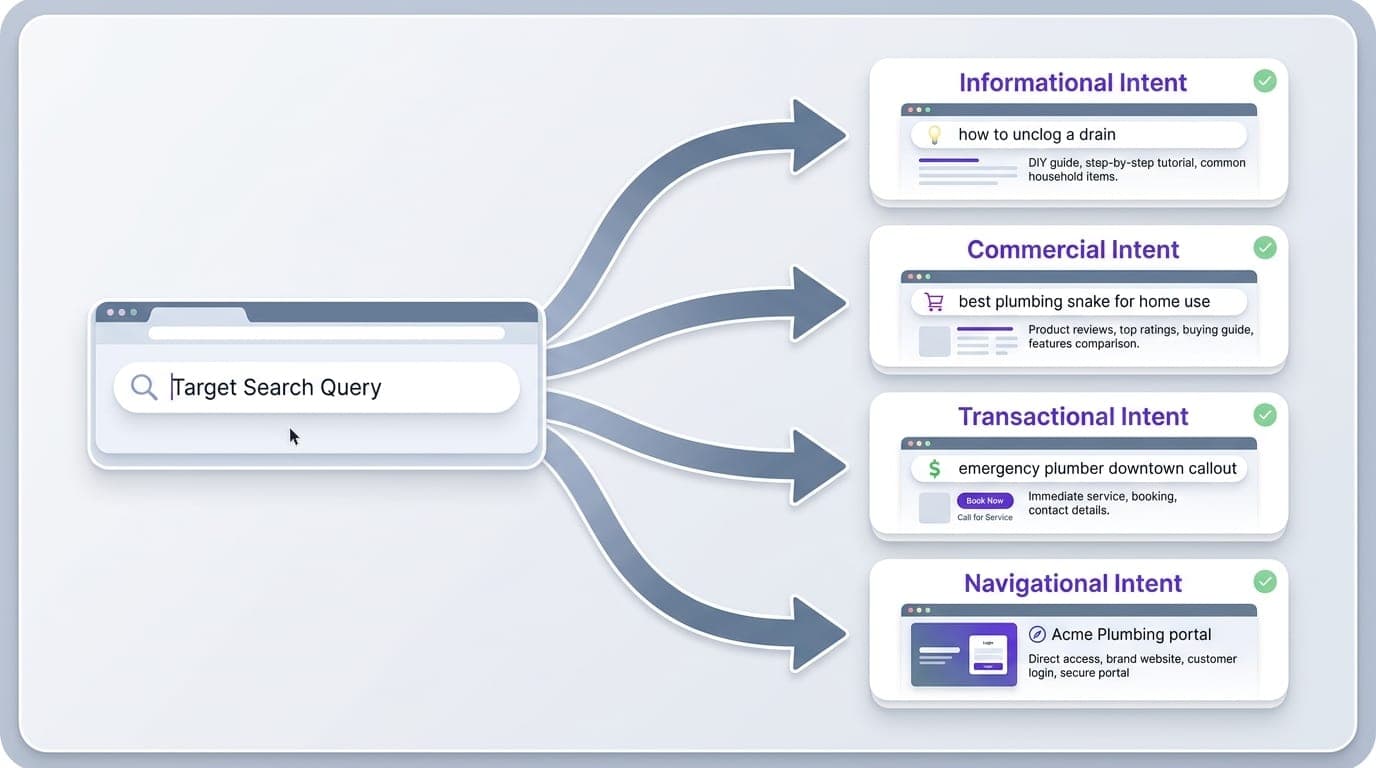
Every query reflects a specific user goal. Group your selected terms by search intent before writing any copy, as categorized in Semrush's search intent guide:
- Informational intent: Readers seeking answers or tutorials (e.g., 'how to unclog a drain').
- Commercial intent: Prospects evaluating competing tools or solutions (e.g., 'best plumbing snake for home use').
- Transactional intent: Users ready to purchase immediately (e.g., 'emergency plumber downtown callout').
- Navigational intent: Searchers looking for a specific brand or login page (e.g., 'Acme Plumbing portal').
My opinion is firm here: if a search term does not clearly indicate what commercial or practical problem the user wants solved, delete it from your list. High traffic numbers that never convert are vanity metrics.
Organize your selected keywords into an intent spreadsheet. You can structure your workflow using an SEO strategy plan PDF to track primary keywords, search volume, and assigned URLs.
Phase 3: Executing On-Page Optimization and Content Structure
On-page optimization organizes your content so search engine algorithms and human visitors immediately understand the core topic. Every page needs unambiguous signposts that match your mapped keyword.
Crafting a compelling title tag under 60 characters is your highest-leverage task. Place your primary keyword near the beginning, followed by a brand separator or unique differentiator.
- Write a unique title tag between 50 and 60 characters for every indexed URL.
- Add an enticing meta description under 160 characters that acts as ad copy for your search snippet.
- Use exactly one H1 heading per page that reinforces your primary target keyword.
- Break sections with logical H2 and H3 subheadings to support skimming and mobile readability.
- Include descriptive image alt text explaining what the graphic portrays for accessibility.
According to Moz's on-page factors overview, search engines rely on semantic structure to understand context. Avoid keyword stuffing; write naturally while ensuring your core phrases appear in strategic positions.
In my opinion, site owners waste far too much time obsessing over exact keyword density percentages. Focus on providing the most direct, practical answer on the internet instead of counting repetitive phrases.
- Answer the user's primary query within the first two paragraphs to reduce immediate bounces.
- Add at least two to four internal links pointing to relevant sibling articles across your site.
- Use descriptive anchor text for links rather than vague phrases like 'click here'.
- Audit existing pages to remove thin content that merely summarizes other articles without original insight.
Internal linking spreads crawl equity and helps search spiders discover deeper pages without waiting for external links. Every new article you publish should immediately receive links from at least two existing pages.
Phase 4: Building Foundational Authority and Backlinks
Initial backlinks act as independent third-party endorsements verifying that your website represents a real, reliable business. Without baseline authority, competitive ranking positions remain out of reach.
This brings me to the second critical mistake: buying cheap backlink packages from marketplaces or automated link farms. Unnatural link spikes trigger automated spam filters and can cause severe algorithmic penalties.
Review Google's search spam policies to understand prohibited link practices. Focus on securing legitimate references that deliver real human referral traffic.
- Claim local business profiles on Google Business Profile, Bing Places, and Apple Maps.
- Submit your business to vetted industry directories and local chamber of commerce registries.
- Reach out to software vendors, suppliers, or partners you work with for inclusion on their partner lists.
- Publish original calculations, benchmarks, or templates that other industry bloggers naturally cite.
I prefer securing five hyper-relevant, local directory citations over fifty random guest blog links from unrelated websites. Relevance and entity validation matter far more than raw link volume.
If you evaluate whether to hire help, compare agency tiers using our breakdown of Google SEO plans alongside current market standards in our guide to SEO pricing plans.
Phase 5: Performance Tracking, Timelines, and Upkeep Cadence
Evaluating your organic performance requires tracking leading indicators like impressions before expecting lagging indicators like conversions. Real progress unfolds across clear diagnostic phases.
Configure both Google Search Console and Google Analytics 4 property tracking. Search Console tracks impressions and query positions in Google, while GA4 measures post-click visitor engagement on your pages.
- Month 1: Complete technical audits, fix crawl errors, and publish foundational topic pages.
- Months 2–3: Watch Search Console impressions rise as Google tests your content in lower SERP positions.
- Months 4–6: Clicks and top-ten rankings begin accumulating for target low-difficulty terms.
- Ongoing: Refresh outdated statistics, fix newly discovered broken links, and expand keyword clusters.
In my experience, impatient site owners often abandon viable strategies at day sixty because organic clicks have not skyrocketed yet. SEO requires cumulative algorithmic evaluation; consistency during the initial dry spell separates winners from quitters.
Reserve thirty minutes every Monday to review your Search Console performance report. Filter by queries ranking between positions 8 and 20; these 'striking distance' keywords represent your fastest opportunities for optimization updates.
If you want to eliminate manual publishing friction as your roadmap expands, ProgSEO automates data-backed landing page creation to scale your organic footprint. It connects structured catalog data directly to programmatic search intent without repetitive manual formatting.
Most new websites see initial impressions within 30 to 60 days, while noticeable clicks and ranking momentum typically require three to six months of consistent optimization.
No. You can launch and manage an effective basic strategy using free platforms like Google Search Console, Google Analytics 4, and free trial tiers of keyword research platforms.
Focus each page on one primary target keyword and two to four closely related secondary variations that share the exact same search intent.
Yes, for ultra-low competition queries with low search difficulty. However, building foundational citations and partner links is essential for ranking competitive terms over time.
Sources & References
- Google Search Console — official webmaster suite for crawl monitoring, sitemap submission, and search performance diagnostics.
- Google Search Central — foundational search engine optimization documentation and algorithmic indexing recommendations.
- Google Sitemaps Overview — official technical guidelines for formatting and submitting XML sitemaps.
- Google Robots.txt Introduction — documentation outlining syntax and standards for web crawler directives.
- Google Search Spam Policies — official guidelines detailing prohibited backlink schemes and manipulative link practices.
- Google Analytics Support — setup documentation for measuring website engagement and conversion events.
- Ahrefs Keyword Difficulty Study — empirical analysis evaluating how backlink profiles influence ranking difficulty scores.
- Semrush Search Intent Guide — industry classification framework for evaluating transactional and informational search queries.
- Moz On-Page Factors — practitioner reference covering title tags, heading hierarchies, and internal link architecture.