I structure organic search turnarounds into disciplined quarterly sprints because open-ended roadmaps quickly lose momentum. When executing an effective 90 day seo plan, you need clear sequencing: resolving technical roadblocks in month one, publishing targeted content in month two, and driving internal authority in month three. You will need access to your CMS, an enterprise crawler, and active reporting via Google Search Console.
▶ Related Video
How to Rank Your Business Website on Google in 90 Days (Step-by-Step SEO Blueprint for 2025)
Quarterly Sprint Takeaways
- Track leading indicators first. Monitor impressions and indexation rates before expecting organic conversion spikes.
- Eliminate crawl debt early. Fixing index bloat and redirect chains clears the path for newly published pages.
- Target specific search intent. Avoid generic top-of-funnel keywords that burn editorial budgets without driving pipeline value.
- Redistribute page equity. Connect orphan pages with targeted anchor text to accelerate ranking momentum by Day 90.
- Align with developer sprints. Ship technical changes by securing engineering slots in the first two weeks.
Setting Realistic 90-Day SEO Goals and Baselines
Before touching a single title tag or running a crawl, you must document where your site stands today. My opinion: tracking pipeline revenue in month one is a rookie trap that destroys team credibility. Search engines require weeks to process structural overhauls, so you must establish leading indicators rather than obsessing over lagging revenue.
The first mistake people usually make is promising a doubling of inbound organic leads within the first quarter. That rarely happens on established sites and never happens on fresh domains. Instead, build your sprint around measurable operational milestones and crawl diagnostics, similar to drafting a structured seo consultant business plan.
| Quarterly Phase | Primary Objective | Core Metrics | Key Deliverables |
|---|---|---|---|
| Month 1 (Days 1–30) | Technical hygiene & baselines | Indexation rate, crawl errors, GSC impressions | Technical audit, crawl clean-up, tracking setup |
| Month 2 (Days 31–60) | Content production & intent mapping | Keyword coverage, ranking positions (11–30) | Pruned content, net-new search pages, intent updates |
| Month 3 (Days 61–90) | Link equity & conversion tuning | Top 10 rankings, unbranded CTR, organic conversions | Internal linking silos, backlink outreach, sprint review |
Establish your baseline metrics across three core tools: Google Search Console, your primary web analytics platform, and a third-party rank tracker. Record your unbranded click volume, total indexed URLs, average click-through rate (CTR), and the distribution of keyword rankings across positions 1 through 100.
- Current crawl health: Log total 4xx errors, 5xx server spikes, and redirect chains.
- Index coverage ratio: Compare submitted sitemap URLs against valid indexed URLs.
- Search impression trajectory: Establish average weekly impressions for the previous 90 days.
- Core Web Vitals scores: Check Largest Contentful Paint (LCP) and Interaction to Next Paint (INP).
Month 1 (Days 1–30): Auditing, Technical Fixes, and Quick Wins
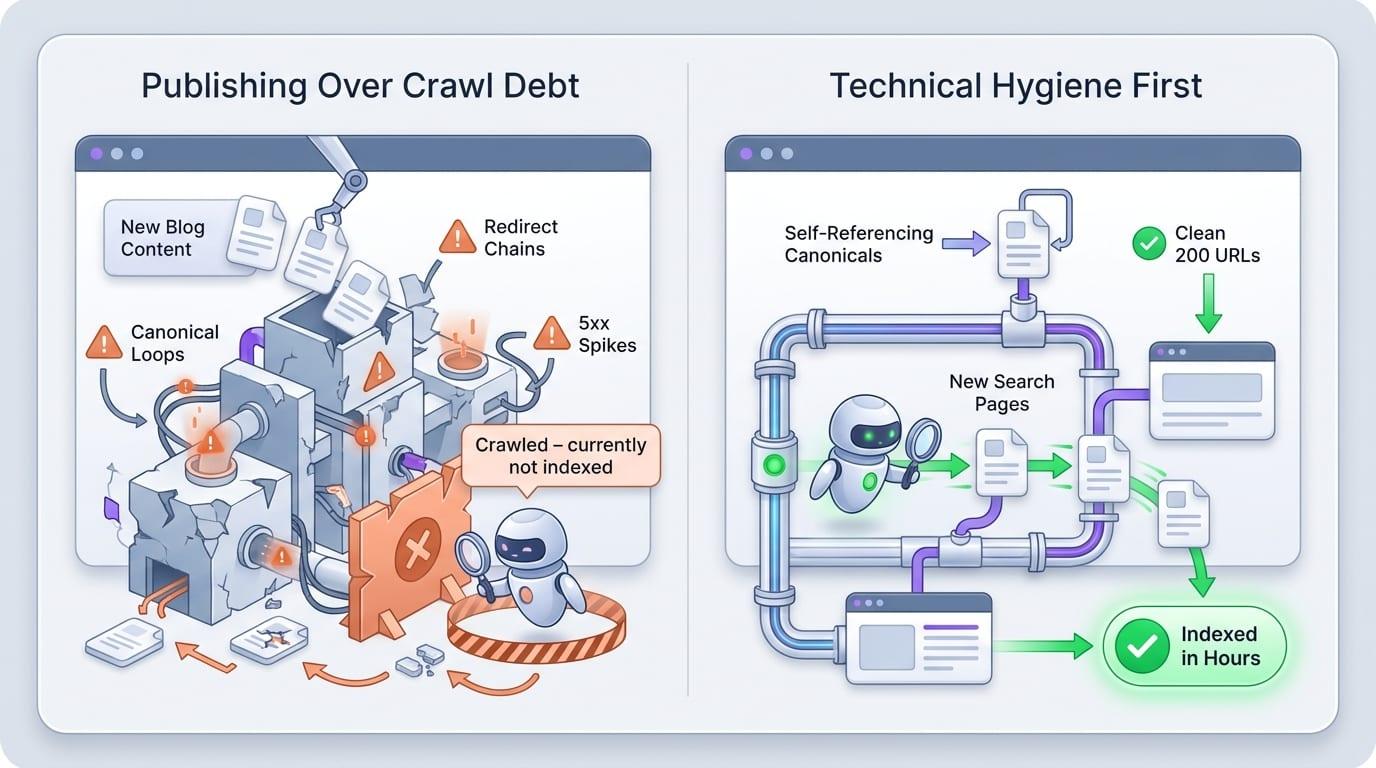
In my experience, chasing meta title tweaks before fixing canonical loops or 5xx server spikes is malpractice. Your first 30 days must uncover foundational technical blockers that stop search engine bots from discovering, parsing, and indexing your highest-converting templates.
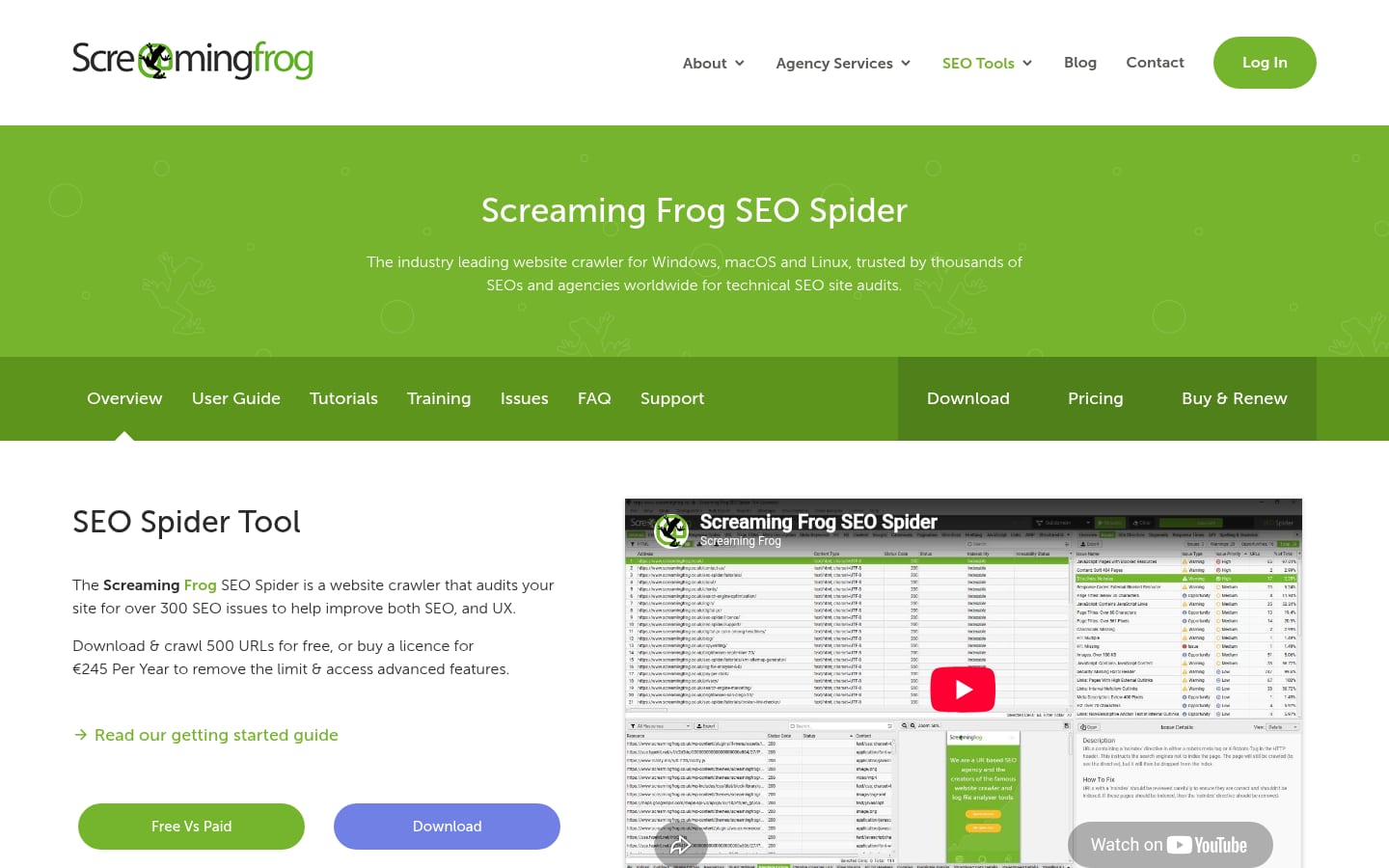
Run a comprehensive crawl using Screaming Frog SEO Spider to identify structural flaws. Configure the crawler to execute JavaScript if your frontend relies on client-side rendering. Compare the crawl output directly against your log files to see how search engines actually navigate your architecture.
Review your index coverage according to Google Search Central guidelines. You will almost certainly find pages stuck in 'Discovered – currently not indexed' or 'Crawled – currently not indexed'. These status tags point to poor internal linking, duplicate content, or thin pages that drain your crawl budget.
- Inspect XML sitemaps: Remove redirected, canonicalized, or non-200 URLs from all sitemap index files.
- Resolve redirect chains: Update internal links pointing to 301 redirects so they target final 200 destinations directly.
- Standardize canonical tags: Ensure every canonical URL is self-referencing unless explicitly consolidating duplicate parameters.
- Audit robots.txt directives: Verify you are not inadvertently disallowing critical CSS, JavaScript, or programmatic subdirectories.
- Fix broken internal links: Prioritize repairing internal 404 links that sit on high-traffic templates.
The second mistake people usually make is launching new blog content while the underlying site architecture still suffers from duplicate URLs and canonical loops. Clean up your technical foundation first so new assets index within hours instead of lingering in search engine queues for months.
- Page title and H1 alignment: Align mismatched H1s with target search intent on top 20 pages.
- Structured snippet schema: Add valid JSON-LD schemas using specifications from Schema.org.
- 404 soft error mitigation: Ensure discontinued products or deleted posts return proper 404 or 410 HTTP response codes.
- Mobile rendering parity: Confirm that primary navigation and hidden accordions render completely in mobile viewports.
Month 2 (Days 31–60): Content Expansion and Intent Mapping
I find that targeting high-volume top-of-funnel keywords during a 90-day window is a guaranteed waste of budget. High-difficulty head terms require months of authority building. Instead, focus Month 2 entirely on commercial intent and high-conversion queries sitting in positions 11 to 25.

Pull your striking-distance keywords from Google Search Console. Filter for queries with high impressions but average positions between 11 and 30. Expanding these existing pages with sharper answers and structured examples yields faster organic gains than writing completely new articles from scratch, as detailed in my guide to building an on-page seo plan.
Research published by Ahrefs on ranking velocity demonstrates that only 5.7% of newly published pages reach Google's top 10 within a year. By contrast, optimizing existing URLs with established equity cuts that waiting period significantly. Map every URL to a singular primary keyword and prevent self-cannibalization.
- Map search intent: Categorize target keywords into informational, commercial, and transactional intent buckets.
- Prune zombie content: Redirect or delete outdated content generating zero organic impressions over the last 12 months.
- Execute content consolidation: Merge three or four thin articles covering overlapping subtopics into one authoritative guide.
- Fill content gaps: Analyze top three competitors to identify missing subheadings, tables, and comparative data.
- Deploy regional silos: For multi-location businesses, implement targeted location hubs following a structured local seo business plan.
Month 3 (Days 61–90): Internal Linking, Authority, and Sprint Review
I firmly believe that strategic internal linking delivers three times faster ranking velocity than cold backlink outreach. Month 3 is where you connect your freshly optimized pages into logical hubs, distributing authority from your strongest external link targets down to commercial subpages.
Inspect your internal PageRank flow. Use site search operators or crawling software to identify high-authority editorial pages that never link to your revenue drivers. Follow the recommendations in Google's ranking systems guide to implement descriptive, contextual anchor text instead of generic callouts.
Complement internal link redistribution with focused authority outreach. Rather than buying directory listings, build digital PR relationships and reclaim broken brand mentions. You can scale off-site authority sustainably using a dedicated off-page seo plan.
- Eliminate orphan URLs: Ensure every newly published page has at least three internal contextual links.
- Descriptive anchor text: Replace generic anchors like 'learn more' with keyword-rich semantic phrases.
- Unlinked brand reclamation: Reach out to publications that cite your company data or research without linking back.
- Core competitor link gaps: Benchmark your domain against industry averages documented in Moz's Beginner's Guide to SEO.
Conclude your sprint with an objective Day 90 review. Evaluate leading metrics against your baselines: total impression volume, index coverage percentage, and striking-distance keyword migration. If impressions rose sharply while clicks stayed flat, revisit your meta titles and structured snippets to improve search CTR.
Adapting the Plan for In-House Onboarding vs. Site Sprints
My view is simple: an SEO hire who refuses to understand the engineering team's release cadence is doomed to fail. If you are entering a company as a new in-house lead, your 90-day execution must balance technical auditing with cross-functional relationship building.
In-house teams frequently hit development bottlenecks. Engineers have sprint commitments that do not accommodate sudden SEO audit decks with 500 tickets. Break your technical demands into bite-sized Jira stories, complete with acceptance criteria, expected business value, and rollback contingencies.
- Days 1–30 (Listening & Auditing): Learn current CMS limitations, review tracking configurations, and shadow product managers.
- Days 31–60 (First Sprints & Quick Wins): Submit high-impact, low-effort tickets like robots.txt updates or title tag template bugs.
- Days 61–90 (Cross-Department Rollouts): Train editorial teams on intent guidelines and collaborate on an international seo plan if scaling abroad.
- Ongoing Mitigation: Reserve 10% of engineering bandwidth per sprint by presenting SEO fixes as technical debt reductions.
If you want to accelerate the content production phase of this sprint without burning engineering hours, ProgSEO turns your structured catalog and database entries into search-ready landing pages automatically. It fits neatly into Month 2 execution when scaling programmatic templates across thousands of target queries.
Expect measurable increases in search impressions, resolved crawl errors, and improved rankings for striking-distance keywords. Bottom-funnel revenue gains typically materialize between months four and six as search engines recalculate domain authority.
Month one focuses on technical health: running deep crawls, cleaning sitemaps, fixing 4xx and 5xx errors, resolving canonical issues, and setting up accurate Google Search Console baseline reports.
Prioritize updating existing striking-distance pages currently ranking between positions 11 and 30. Then, map commercial-intent keywords to build net-new landing pages that fill clear competitive search gaps.
Analyze Google Search Console impression trends. If impressions increased without clicks, rewrite page titles and descriptions. If impressions stagnated, investigate underlying indexation blockers or insufficient backlink equity.
Sources & References
- Google Search Console — Official documentation for setting up performance tracking, indexing status, and search analytics.
- Google Search Central — Primary technical guide on crawl budgets, canonicalization rules, and indexing behavior.
- Google Ranking Systems — Search engine documentation outlining internal anchor text usage and core algorithmic ranking systems.
- Screaming Frog SEO Spider — Desktop auditing tool specification for diagnosing broken links, redirect chains, and site architecture.
- Schema.org — Collaborative structured data standards used to generate rich snippets and entity markup.
- Ahrefs — Comprehensive data study tracking the average time required for newly published pages to rank in search results.
- Semrush — Search intelligence platform providing competitive keyword gap analysis and backlink monitoring.
- Moz — Foundational industry resource explaining link authority metrics and search visibility fundamentals.