
When I left my senior agency role to work for myself, I drafted my first seo consultant business plan over a single weekend. Building an independent practice requires roughly 15 to 20 hours of structured planning, access to basic financial modeling spreadsheets, and an unflinching look at your actual calendar.
▶ Related Video
Start An SEO Consulting Business - How To Build A 6 Figure SEO Business
In this guide, I will show you how to map your positioning, model your cash flow, package your deliverables, and price your expertise without burning out.
$79B
Global SEO Market Size
70%
SEOs Using Monthly Retainers
£50 - £200/hr
Typical Hourly Rate Range
50 - 90 hrs
Average Monthly Billable Capacity
Key Takeaways
- Niche positioning commands pricing power. Generalist consulting forces you into commodity fee battles, while technical or vertical specialization cuts sales cycles in half.
- Billable hours are strictly capped. Realistic solo consultants bill between 50 and 90 billable hours per month; anything higher triggers severe delivery failure.
- Retainers stabilize consulting revenue. Over 70% of practitioners rely on a monthly recurring retainer model to protect against unpredictable project churn.
- Tool stacks compress early margins. Fixed software overhead depends on your tool choices and routinely drains monthly revenue, requiring a strict software audit before launch.
- Pipeline diversification prevents feast-or-famine cycles. Combining inbound thought leadership with strategic agency referral partnerships creates consistent monthly deal flow.
Structuring the Core Business Plan and Executive Summary
An actionable business plan for an independent consultant should never exceed five or six pages. When I draft an operational plan, I ignore the 40-page corporate templates designed for venture capital pitches. You are building an agile service practice, not a manufacturing firm.
Your operational summary needs to answer exactly five practical questions: who you serve, what you deliver, how much you charge, how many hours you can realistically work, and how you win clients. Everything else is unnecessary overhead.
| Consulting Pillar | Strategic Focus | Primary Deliverable | Core Operational Metric |
|---|---|---|---|
| Positioning & ICP | Vertical or CMS specialism | Target account qualification criteria | Sales qualified lead conversion rate |
| Productized Services | Audits & strategic advisory retainers | Fixed-scope technical roadmaps | Effective hourly rate (EHR) |
| Fee Architecture | Value-based pricing & recurring retainers | Standardized engagement agreements | Monthly recurring revenue (MRR) |
| Capacity Model | Strict delivery hour caps | Utilization tracking dashboard | Billable hours (capped at 50–90/mo) |
| Pipeline Generation | Referrals & inbound authority | Partner referral agreements | Customer acquisition cost (CAC) |
The first major mistake I see consultants make is treating non-billable administrative hours as free time, which wrecks financial forecasting. In my opinion, traditional 30-page corporate business plans are just socially acceptable procrastination that keeps you from pitching real prospects.
- Executive Summary: A one-page thesis defining your positioning, target financial targets, and competitive edge.
- Market Analysis & ICP: A documented profile of your ideal client, their revenue size, tech stack, and primary pain points.
- Service Menu: Three to four productized service offerings with clear boundaries and deliverable definitions.
- Financial & Capacity Budget: A mathematical model balancing software expenses, tax reserves, and billable limits.
- Go-to-Market Strategy: A clear pipeline system detailing how you will generate inquiries month after month.
Defining Your Ideal Client Profile and Positioning Niche
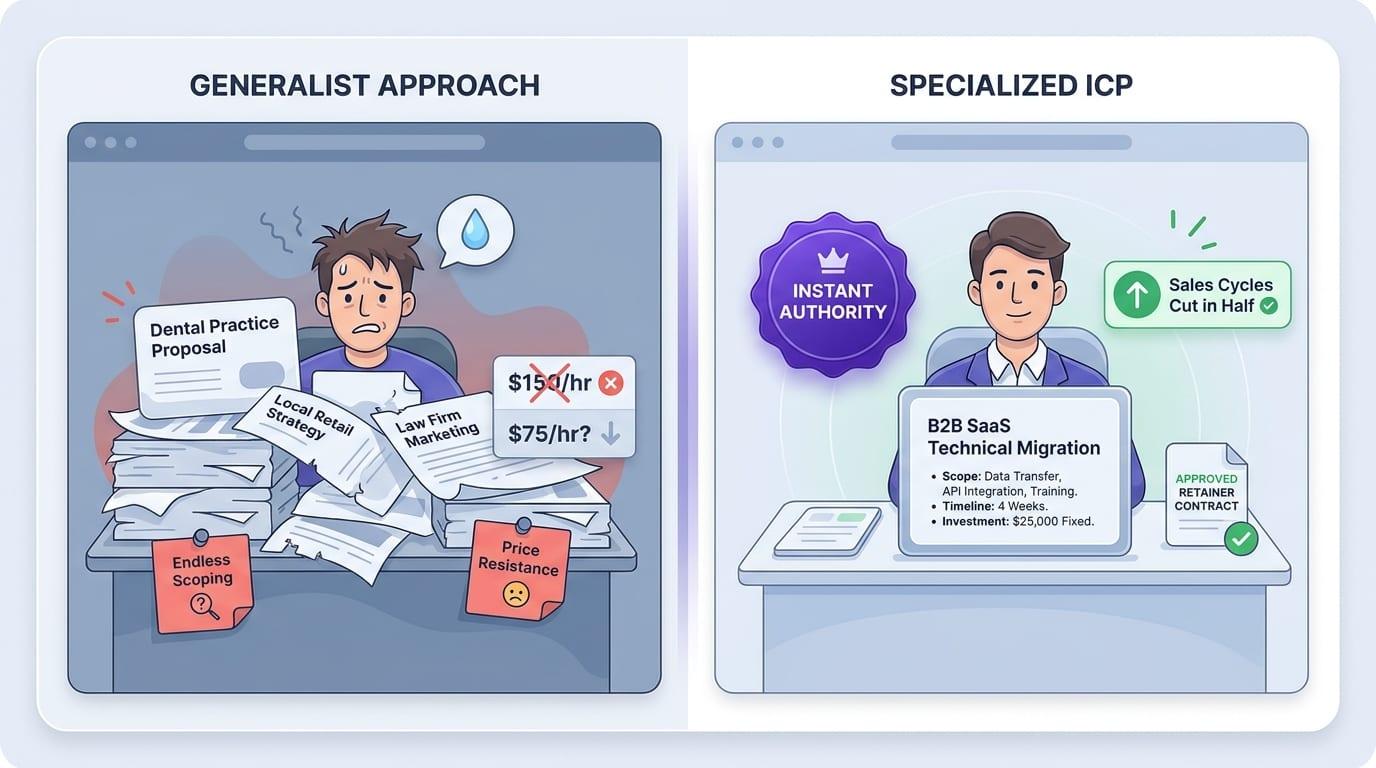
Specializing in a defined niche is the fastest way to double your consulting fees and slash sales friction. When I started consulting, I made the common mistake of pitching everyone from dental practices to national e-commerce retailers. That generalist approach meant every proposal required bespoke scoping, endless revisions, and aggressive price resistance.
Narrowing your focus creates instant authority. When you define a sharp ideal client profile (ICP), prospects immediately recognize you understand their unit economics, tech stack constraints, and regulatory hurdles. If you specialize in enterprise migrations, you can reference direct Google Search Central documentation to prove technical compliance to engineering leads.
- Industry Vertical: Focus on high-LTV sectors like B2B SaaS, fintech, legal, or health tech where organic search directly drives pipeline value.
- Platform Specialism: Become the go-to authority for a specific platform, such as building an ecommerce website SEO plan tailored strictly for headless Shopify Plus.
- Business Lifecycle: Serve companies navigating a critical inflection point, such as venture-backed Series A startups preparing for rapid organic scaling.
- Technical Problem: Position yourself around high-risk scenarios, such as enterprise CMS migrations, international hreflang overhauls, or algorithmic penalty recovery.
Specialization does carry the trade-off of a smaller addressable market, but your conversion rates jump significantly. In my opinion, generalist SEO consulting is economically dead for solo practitioners who want to charge premium rates without hiring an army of junior contractors.
Structuring High-Margin Service Packages and Deliverables
Productizing your consulting services into fixed deliverables protects your calendar from scope creep. Custom proposals invite endless client negotiation. By establishing standardized packages, you turn complex consulting engagements into predictable deliverables with defined scopes, timelines, and inputs.
A balanced consulting portfolio combines one-time upfront diagnostic projects with ongoing strategic oversight. Upfront projects filter out low-budget tire kickers, while recurring advisory engagements stabilize monthly cash flow. You can organize ongoing advisory through a structured monthly SEO action plan that keeps client engineering teams aligned.
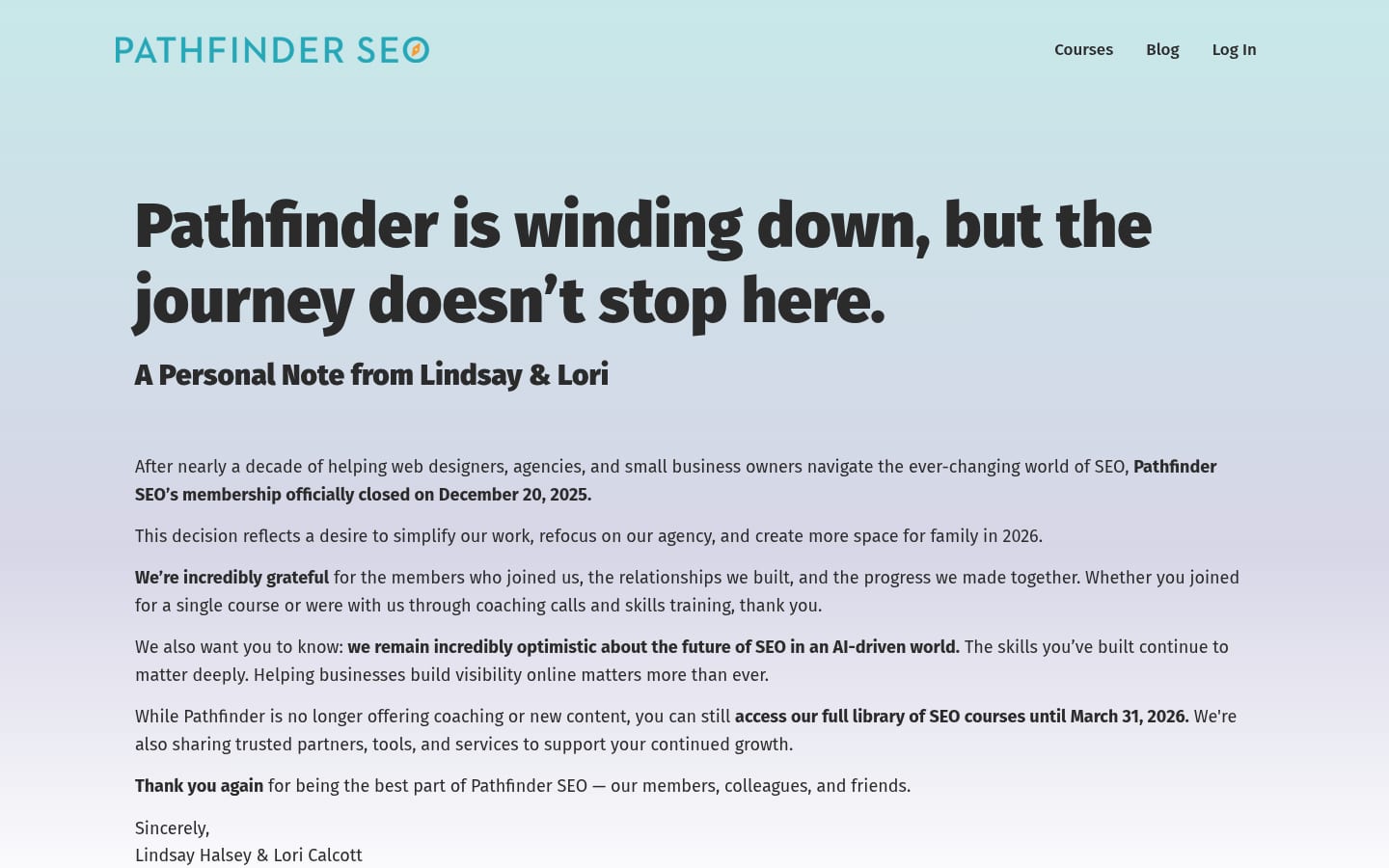
Real-world market rates validate this productized structure. As of November 2026, Pathfinder SEO's pricing guide documents that a one-off SEO Assessment for a local business client runs at $750, while an SEO Assessment for a business that serves a national audience is priced at $1,200.
Their data further shows that an SEO Set-Up for local businesses costs $2,250, whereas an SEO Set-Up for websites that serve a national audience commands $3,750. For ongoing guided execution, they offer a subscription model with the Pathfinder approach to SEO Membership at $99/month.
- Diagnostic Technical SEO Audit: A fixed-price, 3-week engagement delivering an engineering-ready backlog prioritizing crawlability, indexing, and architecture fixes.
- Strategic Growth Roadmap: A comprehensive 6-month content, internal linking, and competitor gap strategy delivered as a standalone deliverable.
- Migration Oversight: A high-ticket project package covering pre-launch URL mapping, staging environment validation, and post-launch traffic stabilization.
- Advisory Retainer: A recurring monthly engagement providing bi-weekly executive strategy calls, backlog review, and monthly performance reporting.
In my opinion, you should never offer an ongoing monthly retainer without first executing a paid initial technical SEO audit to uncover hidden technical debt.
Setting Pricing Models and Validated Fee Structures
The pricing structure you choose directly dictates your retention rates and your sanity. Hourly billing penalizes your speed and experience. If a site crawl analysis that took you eight hours five years ago now takes two hours because of your custom Python workflows, billing hourly cuts your gross revenue by 75%.
Instead, establish fixed project fees and a monthly recurring retainer framework. Retainers align your incentives with long-term organic compounding and provide cash flow predictability. According to market data checked as of November 2026 from Luca Tagliaferro's analysis of SEO retainers, the broader SEO industry has reached a $79 billion market value.
His industry analysis notes that a decisive 70% of SEO professionals charge a monthly retainer fee rather than relying purely on one-off gigs. When billing on an hourly basis, an independent SEO consultant typically operates within an hourly rate range low end of £50 up to an hourly rate range high end of £200/hour.
For comprehensive advisory scopes, Luca Tagliaferro cites an SEO project estimated annual cost example of £30,000/year, which breaks down to an SEO retainer monthly retainer cost example of £2,500/month. For general agency benchmarks, Pathfinder SEO highlights a standard SEO services agency hourly rate of $150/hour.
- Hourly Billing (£50 to £200/hour): Useful only for ad-hoc advisory calls or overflow scope additions beyond agreed deliverables.
- Fixed-Fee Projects ($750 to $3,750+): Best for assessments, foundational setups, and architectural migrations with clear boundary limits.
- Monthly Recurring Retainers (£2,500/month): The foundation of a healthy consulting practice, securing stable revenue and proactive client collaboration.
- Value-Based Pricing: Quoting fees based on the expected commercial upside for the enterprise, typically reserved for high-stakes migrations or major redesigns.
In my opinion, billing strictly by the hour is an operational trap that artificially caps your earnings and commoditizes high-level strategic expertise.
Calculating Operating Expenses and Software Tool Stack
Keeping your fixed overhead minimal gives you the financial runway to reject bad-fit prospects. Your SEO tool stack overhead represents your largest recurring expenditure outside of income taxes. Without strict budgeting, software subscriptions will quietly drain your operating margins before you hit consistent revenue.
When configuring software, evaluate database subscriptions versus crawling utilities carefully. Comparing specialized data tools such as ProgSEO vs Semrush for small business content generation highlights how fast SaaS subscriptions multiply when managing multi-client intelligence.
- Technical Crawlers: Essential desktop crawling tools like Screaming Frog SEO Spider provide deep diagnostic analysis at a minimal annual cost.
- Competitive Intelligence: Comprehensive databases like Ahrefs for backlink profile tracking, keyword difficulty scoring, and SERP visibility.
- Financial & Invoicing Software: Professional bookkeeping platforms like QuickBooks to automate client invoicing, expense categorization, and tax preparation.
- Professional Insurance & Legal: Professional indemnity and commercial general liability insurance policies to protect against contract disputes and data breach liabilities.
In my opinion, junior consultants obsess over subscribing to five different enterprise analytics databases when a desktop crawler, Search Console, and one solid backlink database provide 90% of what clients actually need.
Forecasting Billable Capacity and Realistic Revenue
You cannot build a solvent consulting financial model on the illusion of a 40-hour billable work week. The second critical mistake I often see new consultants make is assuming every working hour generates direct income. Administrative duties, business development, client calls, and bookkeeping consume nearly half your calendar.
Your true billable capacity as a solo operator is strictly constrained by reality. Data checked as of November 2026 from Architect Sivaiah's study on SEO consultants reveals that SEO consultants average a monthly billable hours range between 50 and 90 billable hours per month.

If you target 70 billable hours monthly, your gross monthly revenue and annual earnings depend on your effective hourly rate. Subtracting monthly operational expenses and a 25% tax reserve determines your clean monthly net take-home pay.
- Client Delivery (50% of time): Technical auditing, roadmapping, data analysis, and direct executive strategy sessions.
- Business Development (25% of time): Discovery calls, pipeline outreach, networking, proposal preparation, and thought leadership writing.
- Operations & Admin (15% of time): Invoicing, contract review, software maintenance, client onboarding, and bookkeeping.
- Continuing Education (10% of time): Testing algorithmic shifts, studying documentation, and developing proprietary automation scripts.
In my opinion, anyone claiming to sustain 140 billable hours every month as a solo operator is outsourcing client deliverables secretly or heading straight for severe mental burnout.
Building a Predictable Client Acquisition Pipeline
A reliable consulting pipeline must generate qualified inbound conversations well before your current retainer contracts expire. Relying purely on informal word-of-mouth creates volatile feast-or-famine cycles. When you get overwhelmed delivering client audits, marketing stops, and two months later your cash flow drops sharply.

To prevent this dip, build a multi-channel acquisition engine across three distinct pillars: technical authority content, agency referral partnerships, and targeted outreach. Tracking pipeline stages inside a platform like HubSpot CRM ensures prospects do not slip through the cracks during busy delivery weeks.
- Inbound Authority Teardowns: Publishing in-depth teardowns of site architecture flaws on LinkedIn or personal blogs demonstrates analytical depth without sounding salesy.
- Agency Overflow Partnerships: Web development, design, and paid media agencies frequently need senior SEO audits for their clients but lack in-house technical talent.
- Structured Strategic Outbound: Crafting bespoke 3-point video teardowns for accounts that fit your ideal client profile, identifying crawl errors or broken migrations.
Establishing recurring authority also requires a consistent link building plan to ensure your own domain ranks for competitive regional and vertical consulting queries. In my opinion, cold email pitch blasts to generic marketing directors produce the lowest quality consulting relationships.
Treat your business plan as a live operational framework rather than a one-time intellectual exercise. Review your financial model quarterly, adjust your fee tiers as your case studies compound, and protect your billable boundaries fiercely.
As you expand your strategic retainers, leveraging automated data workflows through ProgSEO helps streamline programmatic content architecture without increasing your billable hours. Building scalable operational systems early ensures your solo practice remains both profitable and sustainable.
The startup capital needed to launch an independent consulting practice depends on your operational choices. This budget covers your initial software stack (Ahrefs and Screaming Frog), professional business insurance, contract legal templates, domain hosting, and bookkeeping software.
Prioritize productized diagnostic projects and monthly recurring retainers. Industry benchmarks indicate 70% of SEO professionals use monthly retainers, which stabilize cash flow. Limit hourly billing to out-of-scope advisory work, pricing between £50 and £200/hour.
A solo SEO consultant can realistically handle 4 to 7 active retainer clients simultaneously. Because average monthly billable capacity ranges between 50 and 90 billable hours, managing more than 7 retained clients degrades delivery quality and triggers burnout.
Yes. If an enterprise client experiences organic traffic losses or indexation issues during a site migration under your strategic advisory, professional indemnity insurance protects you against costly contract liability claims.
Sources & References
- Luca Tagliaferro — Benchmark data on the $79B SEO industry market value, retainer models, and hourly fee distributions.
- Pathfinder SEO — Real-world pricing schedules for local versus national SEO assessments, setups, and memberships.
- Architect Sivaiah — Practical benchmarks for solo consultant monthly billable capacity and time allocation.
- Google Search Central — Official technical guidelines, search ranking documentation, and best practices.
- Screaming Frog — Desktop website crawler documentation, features, and operational auditing workflows.
- QuickBooks — Cloud accounting, financial tracking, and solo consulting invoicing tools.
- HubSpot — Pipeline tracking, consulting sales cycle management, and CRM tools.
- Ahrefs — Competitive research databases, backlink intelligence, and SERP tracking platforms.