Building a tactical on page seo plan takes roughly four to six hours of audit time before you edit a single line of copy. You need access to Google Search Console, a dedicated crawler, and a spreadsheet to map your URLs directly to real search demand.
▶ Related Video
On-Page SEO Tutorial | On-Page Optimization Step By Step | SEO Tutorial For Beginners | Simplilearn
In my experience, teams fail at on-page execution because they treat optimization as a vague copywriting exercise. When you ground your work in structured scoring and intent alignment, you turn stagnant content into consistent organic growth.
| Optimization Layer | Core Objective | Primary Tool | Standard Milestone |
|---|---|---|---|
| Page Prioritization | Identify high-potential URLs | Google Search Console | Sprint 1 (Days 1–5) |
| Intent & Keyword Mapping | Align searcher goals with page content | Ahrefs / Semrush | Sprint 1 (Days 6–10) |
| Content & Structure Overhaul | Refine H1-H3 hierarchy and semantic depth | Content Editor / CMS | Sprint 2 (Days 11–20) |
| Metadata & URL Handling | Maximize organic click-through rates | CMS Metadata Fields | Sprint 2 (Days 21–25) |
| Technical & Schema Validation | Optimize assets and add JSON-LD markup | Schema.org / PageSpeed | Sprint 3 (Days 26–30) |
Key Takeaways
- Triage before rewriting. Prioritize pages sitting on positions 4 through 15 to capture immediate traffic increases.
- Match intent over volume. Target the specific format Google ranks, whether it is a tool, guide, or product comparison.
- Protect heading hierarchy. Use a single descriptive H1 and reserve H2 and H3 tags strictly for logical subtopics.
- Anchor text drives context. Route internal links using descriptive, topic-specific keywords instead of generic anchor text.
- Structured data clarifies entities. Implement validated JSON-LD schema on every template to secure rich search results.
Triaging Your URLs: The Impact-Effort Prioritization Matrix
I recommend auditing your highest-opportunity pages first rather than attempting a site-wide content overhaul in one exhausting pass. Most teams waste weeks auditing bottom-tier utility pages that will never move the needle.
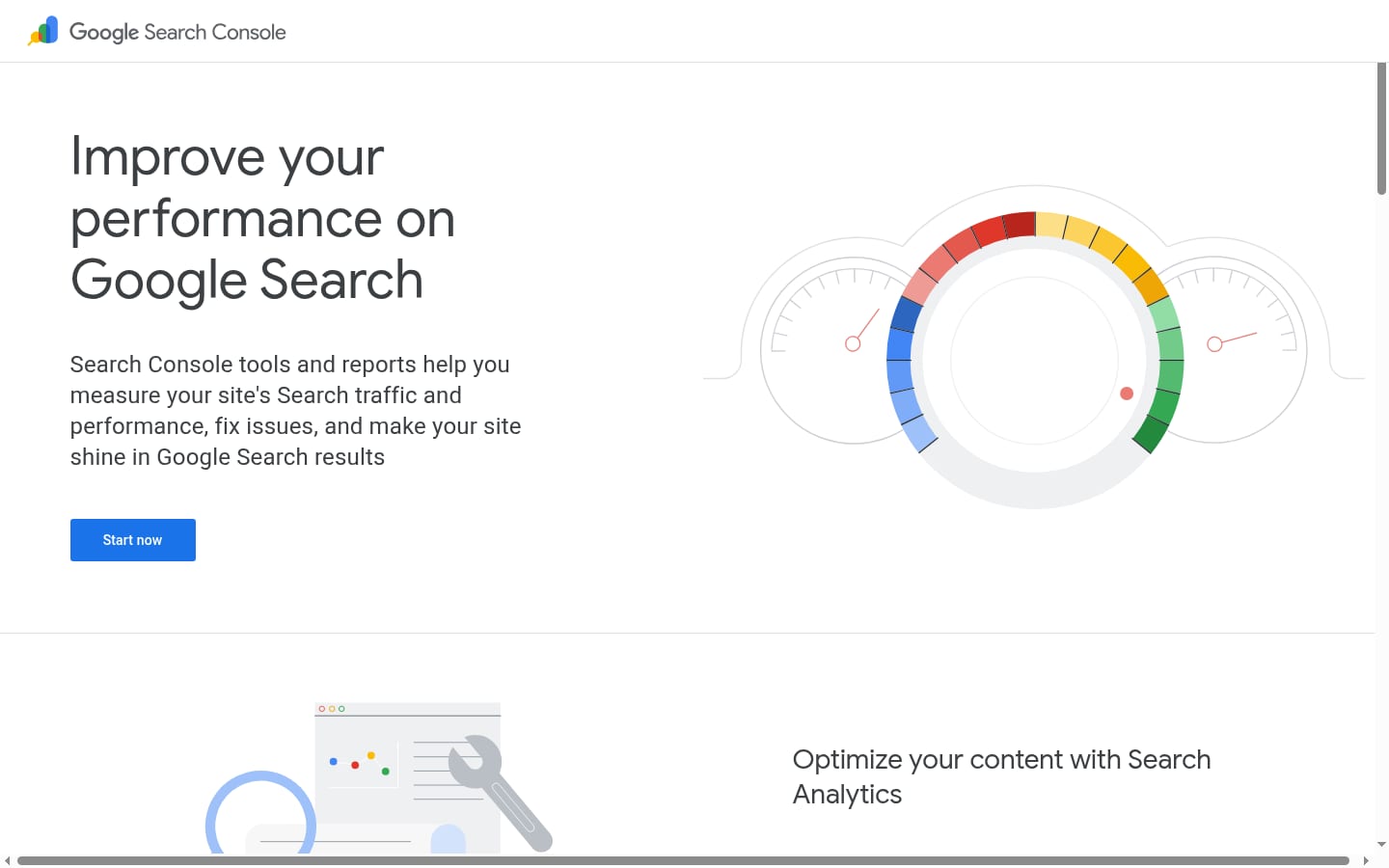
Pull your top 200 pages by impressions from Google Search Console over the last 90 days. Filter for queries where your average ranking sits between position 4 and 15. These URLs already have algorithmic trust; they simply lack on-page precision.
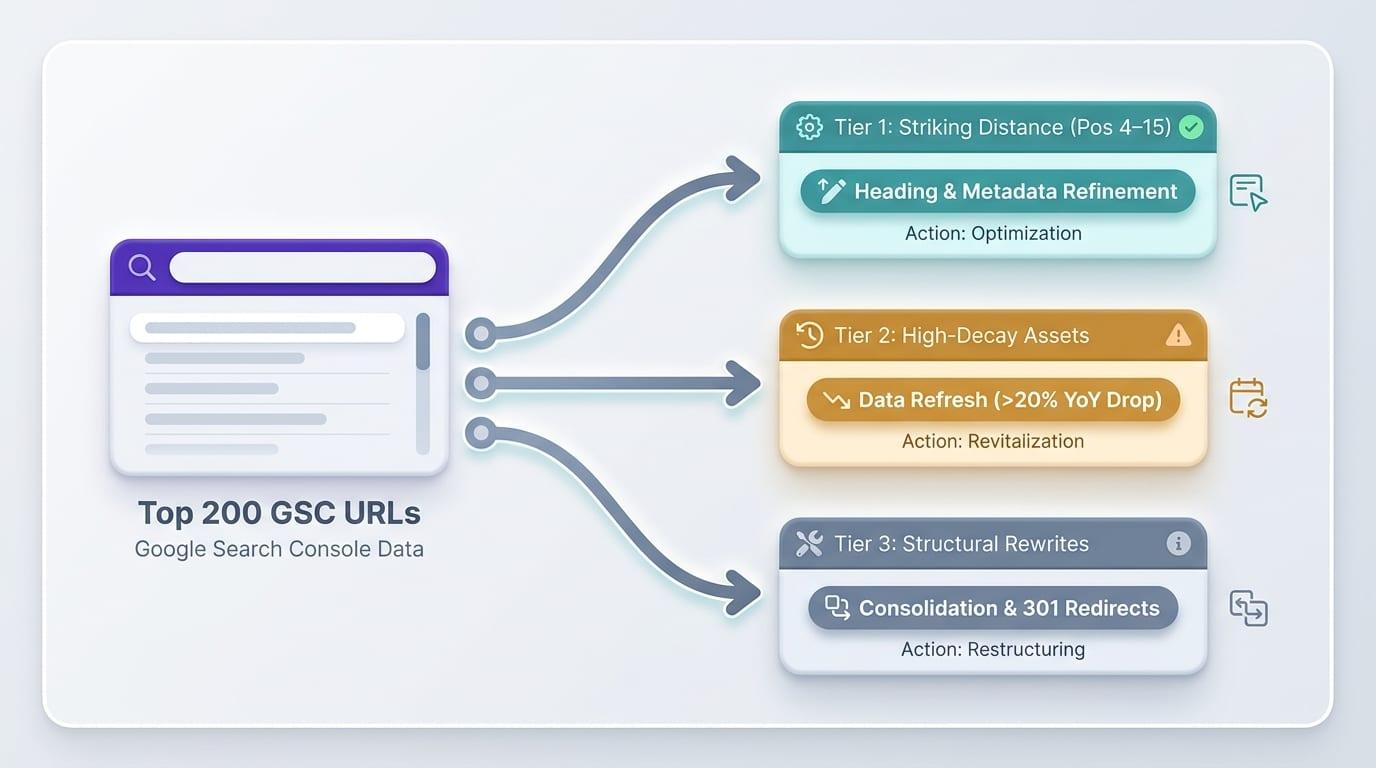
To organize your backlog effectively, sort your pages into three distinct tiers using an impact-effort scoring model:
- Tier 1: Striking distance pages. Positions 4 to 15 with high commercial value. Require heading adjustments, copy expansion, or metadata refinement.
- Tier 2: High-decay assets. Top-performing traffic drivers from past years that dropped over 20% year-over-year. Need refreshed data and modern search intent matching.
- Tier 3: Structural rewrites. Thin or cannibalized pages that require consolidation, 301 redirects, or complete structural reconstruction.
Mistake 1 to avoid: Treating every URL with equal priority during an audit. If you split your editorial focus across low-value legal pages and core revenue hubs simultaneously, your high-intent pages languish without updates for months.
If you are starting from scratch on a smaller property, building a basic seo plan helps establish your baseline audit checklist before diving into page-by-page technical fixes.
Search Intent and Semantic Keyword Mapping
Search engines evaluate relevance through topical completeness, not mechanical keyword frequency. Chasing raw search volume without dissecting live SERP patterns guarantees failed rankings.
Run your target keyword through Ahrefs and inspect the top five organic results. Determine what the searcher actually expects before you modify existing page copy.
- Informational intent: The reader seeks step-by-step guidance, definitions, or procedural checklists.
- Commercial investigation: The user is comparing features, pricing models, pros, and cons before purchasing.
- Transactional intent: The searcher wants to buy, subscribe, or register immediately with minimal educational friction.
- Navigational intent: The user seeks a specific brand portal, login screen, or support repository.
Assign one primary keyword representing the core subject of the URL. Then, select three to five secondary semantic variants that address related subtopics.
For specialized stores, integrating this framework into a dedicated ecommerce website seo plan prevents category pages from competing directly with individual product specifications.
Record these keyword clusters in your tracking sheet. Ensure each secondary keyword corresponds to a concrete subhead or functional section on your target page.
Engineering On-Page Content Structure and Metadata
Title tags and H1 headings are direct indexing instructions, not marketing slogans. Every page requires a single H1 tag that explicitly states what the content delivers.
Follow the official recommendations in Google Search Central documentation on title links to prevent search engines from rewriting your snippet text. Keep title tags between 50 and 60 characters (under 600 pixels).
Structure your metadata and subheadings following these direct formatting rules:
- Place primary terms near the start of the title. Position your core keyword in the first 35 characters of the title tag.
- Write intent-focused meta descriptions. Limit snippets to 150–160 characters. Include a distinct value proposition and a clear action phrase.
- Maintain a rigid heading hierarchy. Nest H2 sections for broad subtopics, and H3 tags strictly inside their parent H2 modules.
- Construct clean URL slugs. Adhere to Google's guidelines on URL structure by using lowercase letters, hyphens, and zero trailing parameters.
Mistake 2 to avoid: Stuffing exact-match keywords into every H2 and H3 heading. It damages readability and triggers search quality downgrades for repetitive phrasing.
Write headings that solve specific problems. If your section teaches image compression, label it 'Compressing Image Files for Web Performance' rather than repeated variations of your target keyword.
If you operate across localized service regions, combining this structure with local seo plans ensures city-specific landing pages maintain clean heading logic without triggering duplicate content penalties.
Internal Linking Architecture and Anchor Text Distribution
Strategic in-content internal links transfer search equity and clarify entity relationships faster than automated footer widgets. I find contextual in-body links consistently outperform sidebar links for ranking stability.
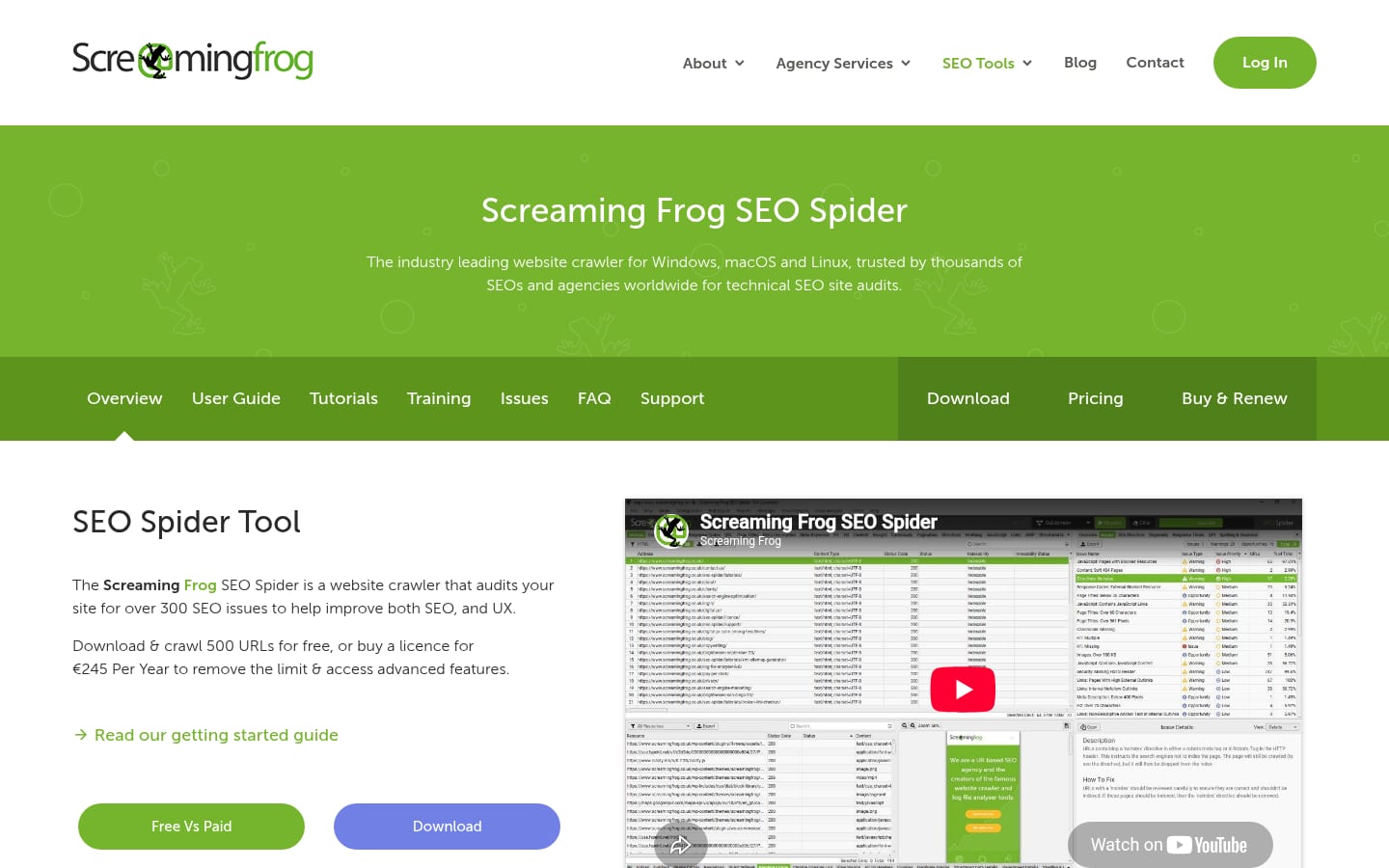
Use a crawler like Screaming Frog SEO Spider to analyze your internal link distribution. Identify orphaned pages and URLs with fewer than three inbound contextual links.
Adopt a hub-and-spoke content model. Your comprehensive pillar guides should pass authority down to detailed subtopic pages, which then link directly back up to the parent pillar.
- Use descriptive anchor text. Anchor phrases must clearly name the subject of the destination page rather than using ambiguous phrases like 'click here'.
- Vary your anchor phrasing. Mix exact primary terms with natural variations to prevent unnatural anchor text profiles.
- Prioritize top-of-body placement. Early in-content links pass strong contextual signals because users naturally engage with them first.
- Prune broken internal redirects. Replace 301 redirect chains inside your content with the final direct destination URL.
Review your overall content hub periodically against your broader google seo plans to ensure newly added pages inherit authority from existing top-ranking assets.
Technical Page Enhancements: Schema Markup, Media, and Core Web Vitals
Valid JSON-LD structured data is non-negotiable if you want search engines to parse page entities cleanly. Adding explicit markup removes indexing ambiguity and unlocks rich snippet enhancements.
Reference the vocabulary standards established on Schema.org to choose appropriate entity types. Common models include Article, HowTo, Product, and FAQPage schemas.
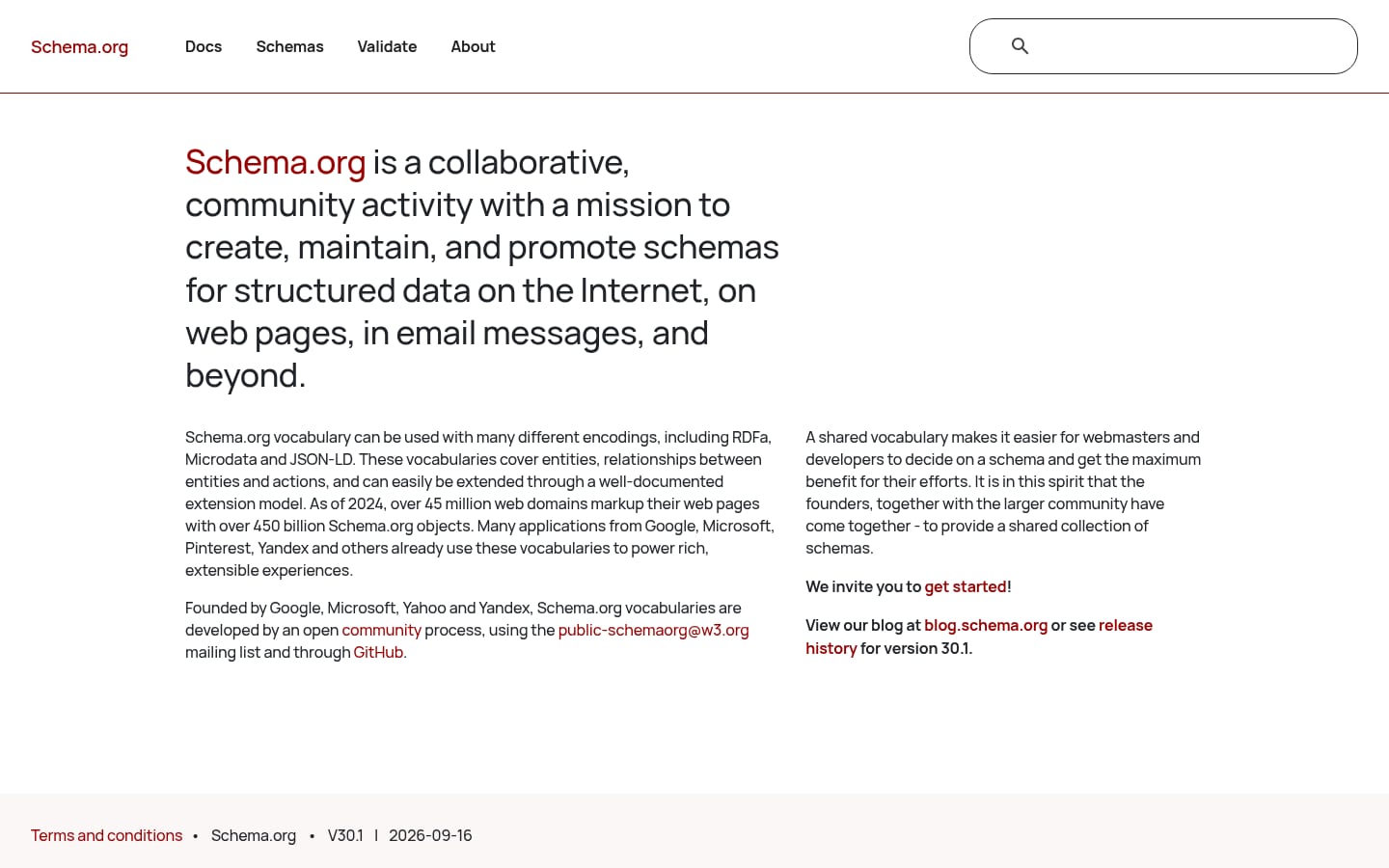
Pair your structured data deployment with rigorous media optimization and layout performance standards:
- Convert media to next-gen formats. Serve graphics in modern WebP or AVIF formats to cut image payloads by up to 40%.
- Add descriptive image alt text. Comply with W3C Web Accessibility Initiative standards by describing visual content accurately for screen readers.
- Set explicit image dimensions. Define width and height HTML attributes on all media containers to eliminate Cumulative Layout Shift.
- Monitor Core Web Vitals thresholds. Check your metrics against web.dev Core Web Vitals performance targets to ensure Largest Contentful Paint stays under 2.5 seconds.
On proprietary site builders, platform constraints can impact these technical implementations. Reviewing the nuances of wix seo plan cost illustrates how platform tooling influences technical SEO workflows.
Phased Rollout Schedule and Content Decay Auditing
If your on-page plan lacks a scheduled post-launch review milestone, it is simply wishful thinking. Launching updates without tracking algorithmic response leaves you blind to what actually worked.
Execute your optimization roadmap across four disciplined phases over a 30-day implementation cycle:
- Days 1–7: Audit and priority triage. Run deep site crawls, extract Search Console data, and populate your URL prioritization matrix.
- Days 8–18: Content and metadata updates. Overhaul copy on Tier 1 pages, rewrite title tags, and fix heading hierarchies.
- Days 19–25: Technical asset and schema deployment. Compress media files, configure JSON-LD snippets, and resolve layout shift issues.
- Days 26–30: Link routing and indexing validation. Deploy contextual internal links and submit updated URLs to Google Search Console for re-crawling.
After launching updates, establish a 90-day review cadence. Compare impressions, average ranking, and CTR against the 90 days preceding your rollout.
When executing large-scale content rollouts, teams often use ProgSEO to generate data-driven pages that match target search intent across extensive keyword clusters. It keeps on-page elements synchronized without requiring hours of manual template editing.
Start by auditing existing URLs in Google Search Console, filtering for keywords ranking in positions 4 through 15. Map each page to a verified search intent, update the H1 and heading hierarchy, optimize title tags within 60 characters, and connect pages via contextual internal links.
Prioritize pages using an impact-effort matrix. Focus first on high-impression striking distance pages sitting on positions 4 to 15, then move to decaying historical traffic drivers, and address thin utility pages last.
Use a hub-and-spoke model where top-level pillar articles link down to focused cluster pages, and cluster pages link back up using descriptive, varied anchor text placed naturally within the body copy.
Audit your core commercial and content pages every 90 days. Check for content decay, declining search impressions, and emerging competitor search intent shifts to keep rankings stable.
Sources & References
- Google Search Console — Official webmaster performance tracking and URL inspection tool.
- Google Search Central: Title Links — Best practices for optimizing title tags and display snippets.
- Google Search Central: URL Structure — Guidelines for organizing web addresses and slug formatting.
- Schema.org — Official community standard for structured data and JSON-LD schema definitions.
- Screaming Frog SEO Spider — Desktop crawler for auditing internal links, status codes, and on-page assets.
- web.dev Core Web Vitals — Google documentation on technical performance metrics including LCP and CLS.
- W3C Web Accessibility Initiative — Standards for accessible web content and descriptive image alternative text.
- Ahrefs — Search engine optimization platform for keyword analysis and SERP competitor research.