
Executing a consistent seo weekly plan turns organic growth from an erratic guessing game into an operational habit. In this guide, I will show you how to audit technical health, analyze traffic anomalies, and push content updates in 5 to 8 hours per week using standard tools like Google Search Console and Google Analytics 4.
▶ Related Video
Wix SEO 2026 How to Rank #1 on Google | Wix Website SEO Tutorial & Optimization#WixSEO #SEOTutorial
| Day | Primary Discipline | Core Deliverables | Estimated Time |
|---|---|---|---|
| Monday | Technical Hygiene | Crawl errors, sitemaps, index coverage, server status codes | 60-90 mins |
| Tuesday | Performance & Anomalies | GA4 organic sessions, conversion paths, rank tracking drift | 45-60 mins |
| Wednesday | Content Optimization | Decay audits, search intent tuning, on-page updates | 90-120 mins |
| Thursday | Content Production | Brief reviews, publishing new URLs, internal linking additions | 90-120 mins |
| Friday | Off-Page & Reporting | Backlink health checks, 404 reclamation, stakeholder wrap-up | 45-60 mins |
Key Takeaways
- Batch by functional discipline. Grouping technical audits on Monday and content drafting on Wednesday eliminates disruptive task switching.
- Catch technical defects early. Weekly crawl spot-checks prevent rogue canonicals, 5xx server spikes, and noindex tags from wiping out indexation.
- Isolate week-over-week trends. Comparing 7-day rolling traffic against the prior 28 days filters out algorithmic panic from standard weekend dips.
- Prioritize decaying assets. Refreshing content that slipped from positions 2-5 delivers faster organic revenue gains than drafting brand-new articles.
- Protect link equity weekly. Monitoring newly lost backlinks and broken referral pages every Friday stops link decay before equity vanishes.
A Realistic 5-Day Weekly SEO Schedule
The most effective way to manage search optimization is to isolate distinct tasks by day. Trying to write an article, fix a canonical loop, and conduct link outreach in the same afternoon destroys focus. When you batch your work, you build momentum across technical, editorial, and off-page priorities.
A common mistake people make is treating search strategy as an unplanned fire drill, jumping into their dashboard only after an executive notices a dip. A structured calendar protects your long-term organic visibility against day-to-day chaos, establishing the rhythm you need for an effective basic SEO plan.
“SEO does not fail because of algorithm updates; it fails because teams abandon recurring maintenance for whatever emergency shouted loudest in Slack that morning.”
- Practitioner Field Note
In my opinion, any routine requiring more than two hours per day of maintenance is fundamentally broken. SEO is meant to compound over months, not burn you out before the end of your first quarter.
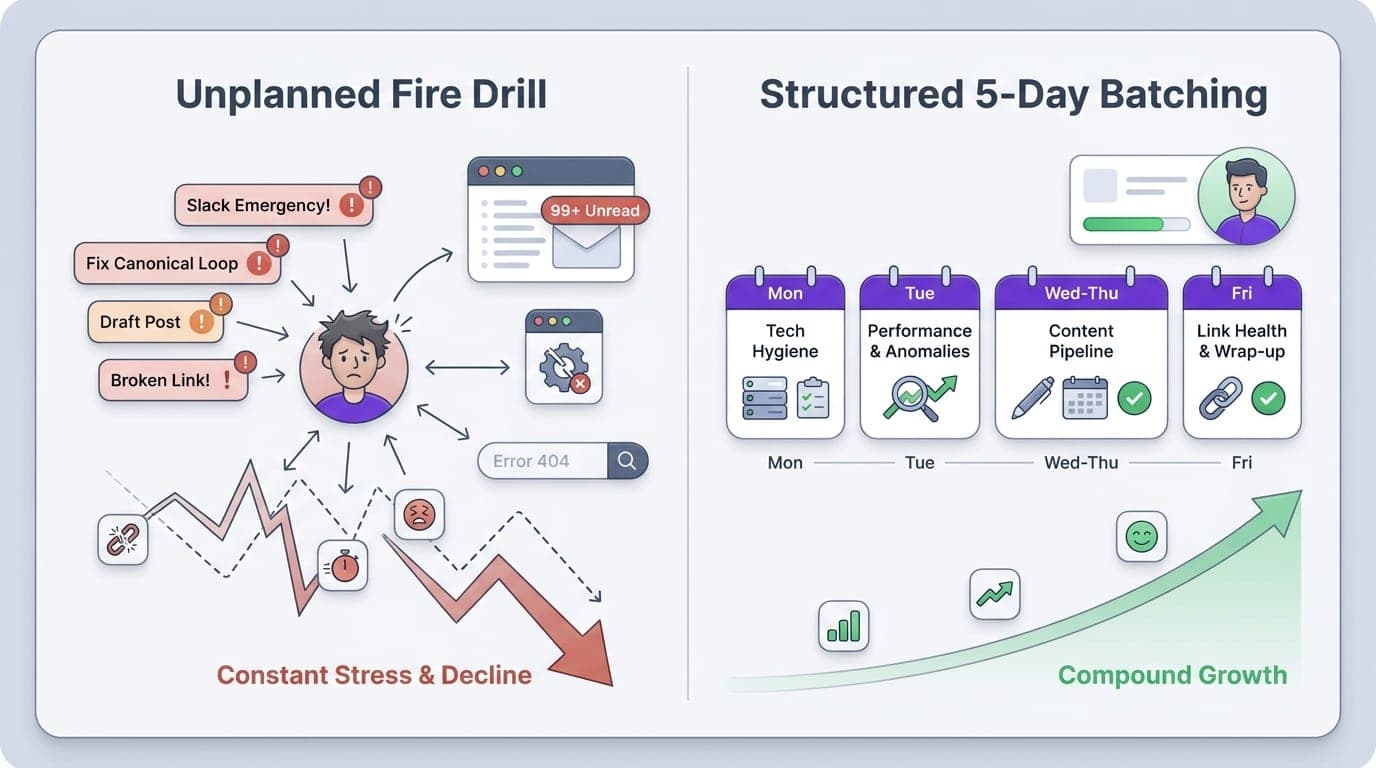
Monday Technical Hygiene and Crawl Diagnostics
Monday morning belongs to technical health because weekend code deployments are notorious for breaking live sites. I always start by reviewing indexing signals before touching content. Detecting a rogue noindex directive or a broken XML sitemap on Monday prevents five days of lost search visibility.
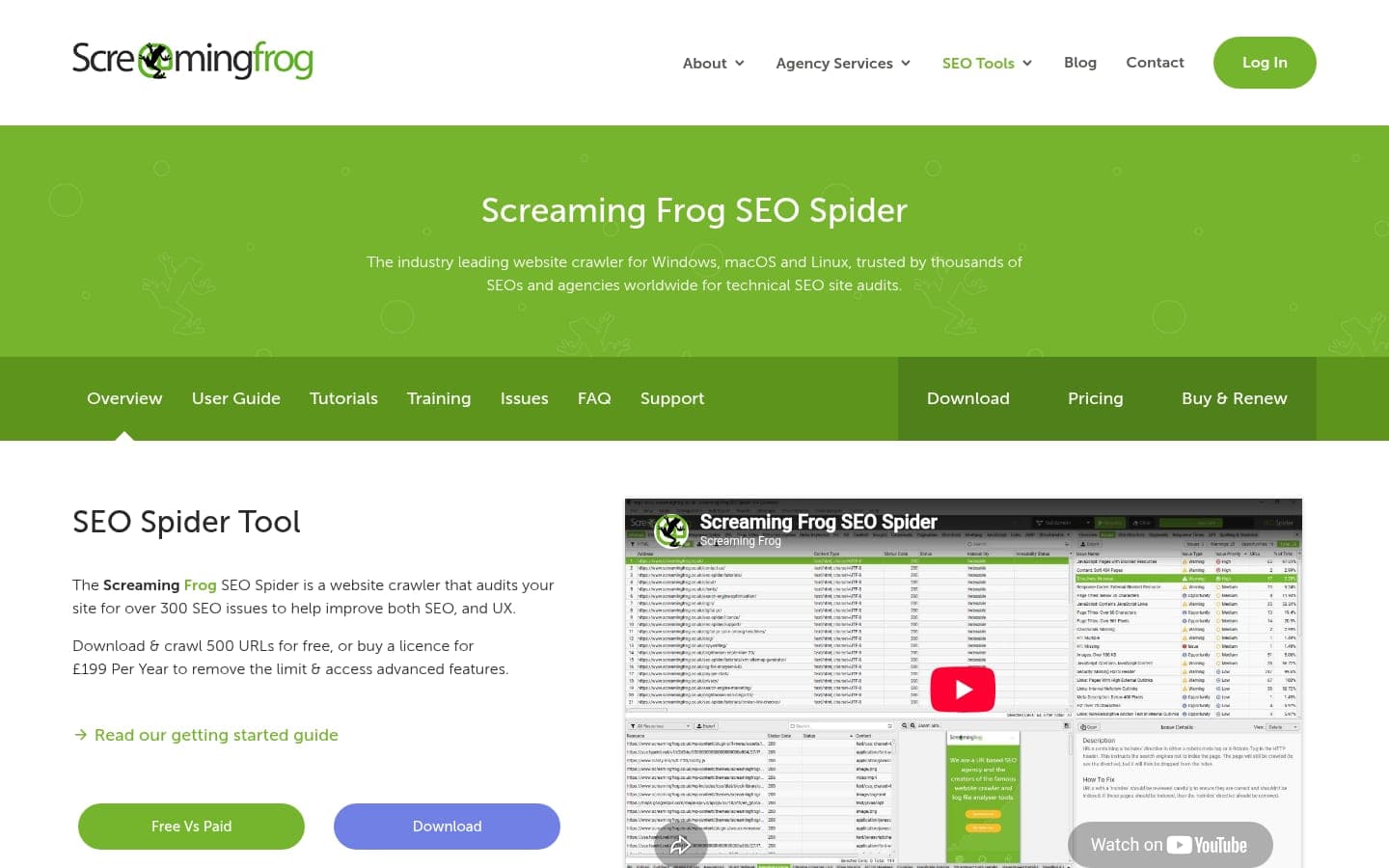
I launch a scheduled headless crawl using Screaming Frog SEO Spider across the top 2,000 URLs to verify status codes against the official W3C HTTP status code standards. Then, I open Google Search Console to inspect the Page Indexing report for sudden exclusions or server errors.
- Inspect 5xx server spikes: Check host availability logs in Search Console under Settings > Crawl stats.
- Audit 404 errors: Identify high-priority internal links pointing to dead pages and queue 301 redirects.
- Verify robots.txt integrity: Ensure engineering did not accidentally disallow key staging paths on production.
- Review canonical drift: Check that primary landing pages self-canonicalize and do not point to HTTP versions.
- Check Core Web Vitals: Spot-check high-traffic product templates for sudden CLS or LCP degradations according to Google Search Central guidelines.
In my view, relying solely on automated email alerts for technical failures is a critical mistake. Notification filters fail, webhooks crash, and manual spot-checks take less than twenty minutes to guarantee your indexation foundation remains intact.
Tuesday Performance Tracking and Anomaly Detection
Tuesday provides the cleanest look at traffic trends because data pipelines from Sunday and Monday have fully processed. I evaluate performance by comparing the trailing 7-day window against both the preceding week and the prior 28 days to filter out expected weekend seasonality.
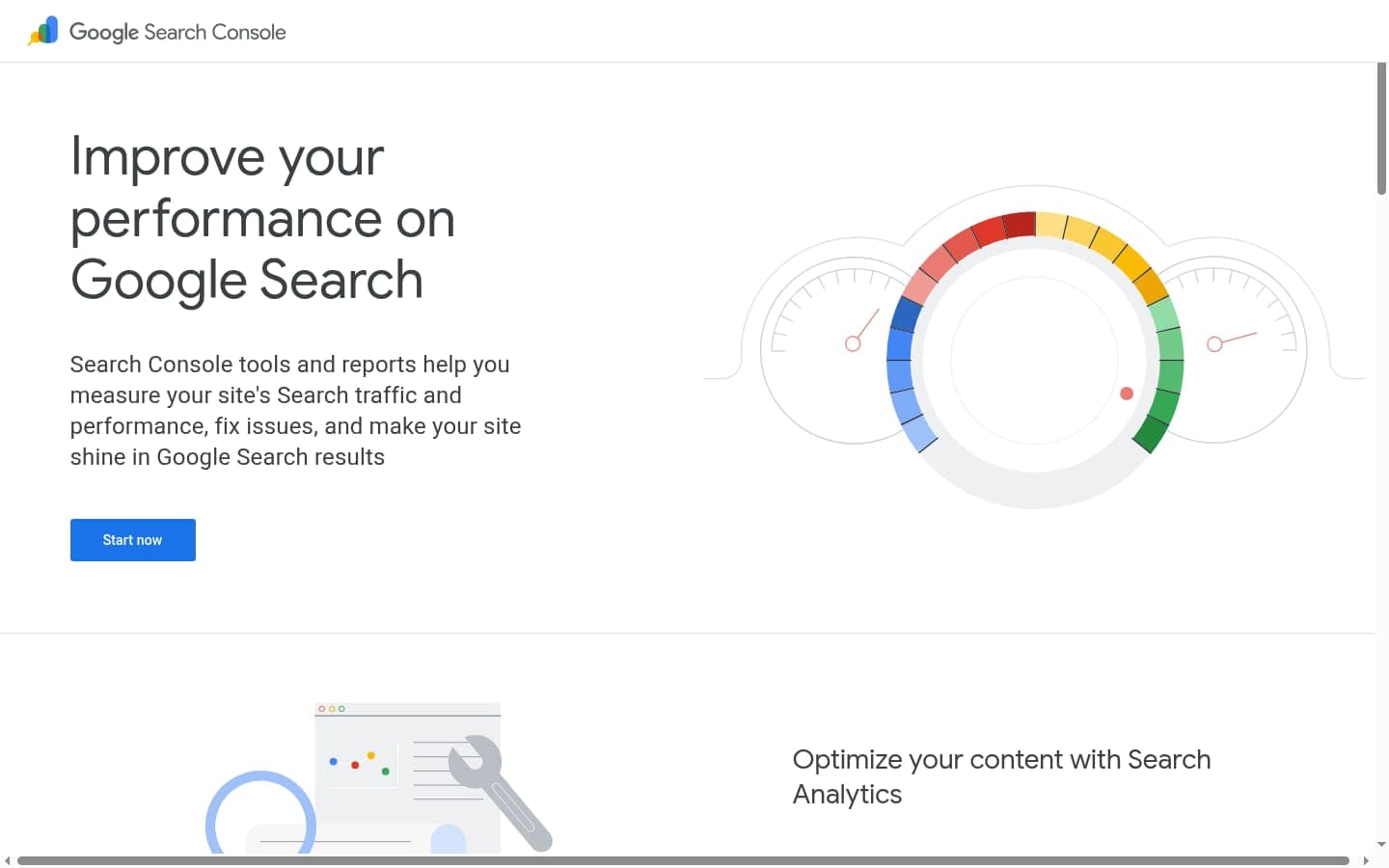
I analyze organic landing page sessions and conversions within Google Analytics 4. If a revenue-driving URL experiences a sudden drop exceeding 15% week-over-week, I immediately drill down into country filters, device types, and Search Console impressions to diagnose the source.
Another common mistake is rewriting page titles the second a keyword ranking shifts three spots. Normal data center fluctuations happen daily; I only flag an issue when an average position declines steadily over two consecutive weekly reporting cycles.
For tracking priority keyword clusters, I review rank tracking software snapshots. If your budget is lean, tracking core sets through a Semrush free plan or an Ubersuggest free plan provides enough data to spot regional volatility.
- Log organic conversion anomalies: Confirm that revenue, form submissions, and key events match session volume.
- Review top 20 query impressions: Check whether high-volume queries lost average positions or rich snippets.
- Identify CTR declines: Flag URLs where impressions remained stable but clicks dropped, indicating SERP layout changes.
- Filter out brand traffic spikes: Separate branded navigation queries from commercial non-brand performance.
My firm opinion is that reporting on organic impressions without tying them directly to conversion paths is wasted effort. If impressions climb while leads vanish, your SEO trajectory is moving in reverse.
Wednesday and Thursday Content Pipeline Execution
Midweek is dedicated entirely to your content engine, split into optimization on Wednesday and publication on Thursday. Rather than scrambling to write posts daily, blocking two days ensures you maintain publishing cadence while systematically refreshing decaying legacy assets.

On Wednesday, I hunt for content decay. I look for historical articles that dropped from positions 1-3 down to positions 4-8 over the last quarter. You can extract these quickly using an enterprise crawler or even an grandfathered Ahrefs legacy plan account to export declining query positions.
- Update outdated statistics: Replace obsolete figures and broken sources with current year research.
- Satisfy revised search intent: Analyze the top three competing results to see if searchers now prefer concise tables over long text.
- Add missing semantic subtopics: Insert relevant secondary questions answered by newly ranking competitors.
- Prune cannibalized sections: Consolidate redundant paragraphs that compete directly with other internal pages.
On Thursday, the focus shifts to production and on-page integration. Publishing an article without connecting it to your existing site architecture wastes crawl equity. Every new URL must link back to your money pages, as outlined in Moz's Beginner's Guide to SEO.
- Stage and format new content: Ensure header tags follow a logical H2 and H3 hierarchy without skipping levels.
- Tune meta titles and descriptions: Write descriptive tags within 50-60 characters that address search intent directly.
- Build contextual internal links: Add at least three outbound links to relevant supporting pages from the body copy.
- Add back-links from legacy pages: Edit 2 to 3 existing indexed articles to link directly into the newly published post.
In my experience, updating a decaying URL that already possesses authority yields three times the organic traffic lift of publishing a brand-new post from scratch. Never prioritize production volume over legacy maintenance.
Friday Link Health and Off-Page Momentum
Friday wraps the week with backlink hygiene and high-level stakeholder updates. Link acquisition is useless if you hemorrhage existing authority through neglected 404 pages or unmonitored backlink loss. A short Friday review protects your backlink graph from silent decay.
Automated uptime or Slack webhooks catch catastrophic server failures immediately, but Friday is when you manually review external link acquisition. I review newly lost backlinks flagged in Semrush backlink audits to determine if a referring domain removed an editorial citation or if our URL structure broke.
- Reclaim lost backlink equity: Set up 301 redirects for broken external links landing on dead 404 pages.
- Monitor unlinked brand mentions: Reach out to journalists and editors who cited your brand name without a link.
- Follow up on active PR outreach: Check responses from digital PR and content syndication campaigns launched earlier in the week.
- Audit toxic anchor spikes: Check for unexpected surges in manipulative foreign-language anchors signaling negative link spam.
Keep stakeholder reporting brief: a three-bullet Friday summary covering weekly wins, identified technical blockers, and next week's editorial priority provides clarity without wasting hours building unread slide decks.
My opinion on link outreach is simple: if your pitching template takes fewer than thirty seconds to customize, you are sending spam that devalues your brand. Friday outreach should focus exclusively on relationship building and fixing broken citations.
Scaling the Workflow Across Different Team Sizes
Not everyone has a forty-hour marketing department. A solo founder or small business owner must compress this entire framework into a sustainable four-hour sprint. Conversely, an agency or dedicated in-house team should expand these checkpoints into collaborative workflows across specialized staff.
If you manage a business site hosted on simple site builders, you might weigh proprietary app subscriptions against overall operational expenses, such as the Wix SEO plan cost. Regardless of platform, maintaining a disciplined routine remains far more critical than purchasing expensive tool tiers.
- Solo operators (3-4 hours/week): Spend 30 minutes on GSC errors Monday, 30 minutes on Tuesday traffic, 2 hours on content Thursday, and 30 minutes on Friday link checks.
- In-house teams (10-15 hours/week): Split tasks between developers (technical checks), editorial staff (decay updates and production), and marketing leads (reporting).
- Agencies (30+ hours/week): Assign dedicated technical audits to technical specialists and funnel automated anomaly reporting directly into client dashboards.
- Time-crunch triage rule: When deadlines tighten, drop link outreach and net-new writing; protect technical crawlability and decay refreshes first.
If you find yourself overwhelmed, my advice is to cut outreach entirely. Protecting your technical hygiene and refreshing top-performing pages will always deliver superior baseline results compared to half-hearted promotional outreach.
To scale recurring publishing workflows without manual bottlenecks, ProgSEO provides programmatic SEO tools that turn data sets into optimized, search-ready landing pages automatically. It helps small teams automate large-scale content generation while keeping weekly maintenance focused on high-level strategy.
For a solo site owner, spending 3 to 5 hours each week is sufficient to audit errors, review analytics, and publish or refresh one piece of content. Dedicated in-house SEO managers generally allocate 12 to 18 hours across cross-departmental coordination.
No. Daily rank tracking causes unnecessary panic over standard search engine fluctuations and temporary algorithmic tests. Checking rankings once a week on Tuesday provides a clean, actionable perspective on real ranking trends.
Reviewing 5xx server errors, robots.txt exclusions, and unintended noindex directives must happen weekly. Waiting 30 days to catch an indexing error can cause critical commercial landing pages to drop completely out of search results.
If your time is severely constrained, you can pause manual outreach. However, you should still spend 15 minutes every Friday auditing broken internal or inbound links to prevent your existing domain authority from leaking through 404 pages.
Sources & References
- Google Search Console — Official webmaster platform for monitoring crawl performance and page indexing status.
- Google Search Central — Developer documentation outlining search crawling, indexing, and Core Web Vitals standards.
- Google Analytics Support — Technical documentation on organic traffic attribution and conversion tracking in GA4.
- Screaming Frog — Desktop site crawling tool for technical hygiene diagnostics and response code audits.
- IETF RFC 9110 HTTP Standards — Standard HTTP status code specifications defining server responses and redirect protocols.
- Ahrefs — SEO software suite for monitoring keyword movements, content gaps, and backlink portfolios.
- Semrush — Search intelligence platform providing rank tracking, backlink loss monitoring, and competitor audits.
- Moz SEO Guide — Comprehensive industry reference covering internal linking architecture and on-page optimization practices.