To capture buyers within your immediate geographic area, you need an actionable local search marketing strategy that aligns Google Maps visibility with localized website authority. I have spent years refining this six-week framework across retail stores, medical clinics, and home services. Drawing on BrightLocal's consumer review research, local searchers convert at significantly higher rates than general organic visitors.
▶ Related Video
10 Marketing Strategies Guaranteed to Grow ANY Business (PROVEN & PROFITABLE)
| Phase | Strategic Pillar | Primary Deliverable | Execution Window | Target Metric |
|---|---|---|---|---|
| Phase 1 | Keyword Discovery | Geo-modifier keyword matrix and search intent map | Week 1 | Organic Impression Share |
| Phase 2 | Profile Optimization | Full Google Business Profile setup and photo audit | Week 2 | Google 3-Pack Presence |
| Phase 3 | On-Page Architecture | Service area landing pages with LocalBusiness schema | Weeks 3–4 | Local Organic Traffic |
| Phase 4 | Citations & Reviews | Data aggregator sync and review request pipeline | Weeks 4–5 | Prominence & Conversion Rate |
| Phase 5 | Community Authority | Neighborhood sponsorships and local PR outreach | Week 6+ | Domain Authority & Inbound Calls |
Key Takeaways
- Primary categories dictate pack rankings. Choosing the single most precise category in Google Business Profile influences your map presence more than keyword stuffing your description.
- Doorway pages damage domain authority. Mass-producing thin geographic landing pages without localized testimonials or unique images triggers algorithmic spam filters.
- Review velocity outweighs aggregate score. Consistent monthly feedback featuring specific service names signals active operations better than an idle 5.0-star profile.
- Core aggregators establish NAP trust. Aligning your name, address, and phone number on tier-one data distributors suppresses duplicate listings across the web.
- Community ties generate durable links. Earning backlinks through local sponsorships and regional business partnerships delivers geographic relevance that paid guest posts cannot duplicate.
Map High-Intent Geo Keywords and Search Intent
Targeting local buyers begins by separating explicit geographic queries from implicit proximity searches. Explicit searches include a city or neighborhood modifier, such as roof repair Lakewood. Implicit searches, like roof inspection near me, rely completely on the searcher's physical GPS location and IP address.
I analyze keyword clusters using standard research platforms, evaluating trade-offs between tools as detailed in this comparison of Moz, Semrush, and Ahrefs. Export your seed services, then cross-reference search volumes against the Google Keyword Planner to isolate commercial intent.
In my opinion, obsessing over high raw search volume for local queries is a mistake. A localized search phrase with twenty monthly searches and direct transactional intent generates more booked revenue than a broad informational query with five hundred visits.
- Core service terms: Combine primary offerings with your target municipality (e.g., commercial HVAC repair Denver).
- Emergency variations: Filter for high-urgency modifiers such as 24/7, same day, or urgent.
- Neighborhood micro-terms: Identify historic districts, business parks, and sub-markets that regional competitors ignore.
- Competitor brand alternatives: Monitor search queries comparing regional service providers against national franchises.
Configure and Optimize Your Google Business Profile
Your primary category selection in Google Business Profile (GBP) dictates your inclusion in the Google Local Pack more than any on-page meta tag. If an electrical contractor selects Construction Company instead of Electrician, their map visibility will collapse across their service territory.
A common mistake I see business owners make is keyword stuffing their registered business name. Adding extra descriptors like Apex Roofing - Best Emergency Roofers Chicago violates Google's profile guidelines and risks an instant algorithmic suspension that takes weeks to overturn.
While Google Local Services Ads provide paid top placement, organic profile optimization produces lasting free inquiries. Fill out every attribute, define distinct operating hours, publish your comprehensive service menu, and upload genuine interior and exterior photographs weekly.
“I believe profile managers waste too much energy drafting weekly Google updates when they should spend that time uploading geotagged photos of recent client jobs.”
- Marcus Vance
- Set an exact primary category: Align your main service with Google's predefined taxonomy.
- Add secondary categories: Include supporting services without diluting your core offering.
- Configure service areas: Select realistic delivery radii or specific zip codes for service-area businesses.
- Write an authentic business description: Outline your experience, history, and community roots without stuffing keywords.
- Upload weekly job images: Showcase real staff, fleet vehicles, and completed field work.
Build High-Converting Location Landing Pages
Every geographic territory you target requires an organic landing page built with custom local copy, real customer proof, and structured schema markup. A solid site layout reinforces this approach, matching principles found in our guide to SEO marketing strategy.

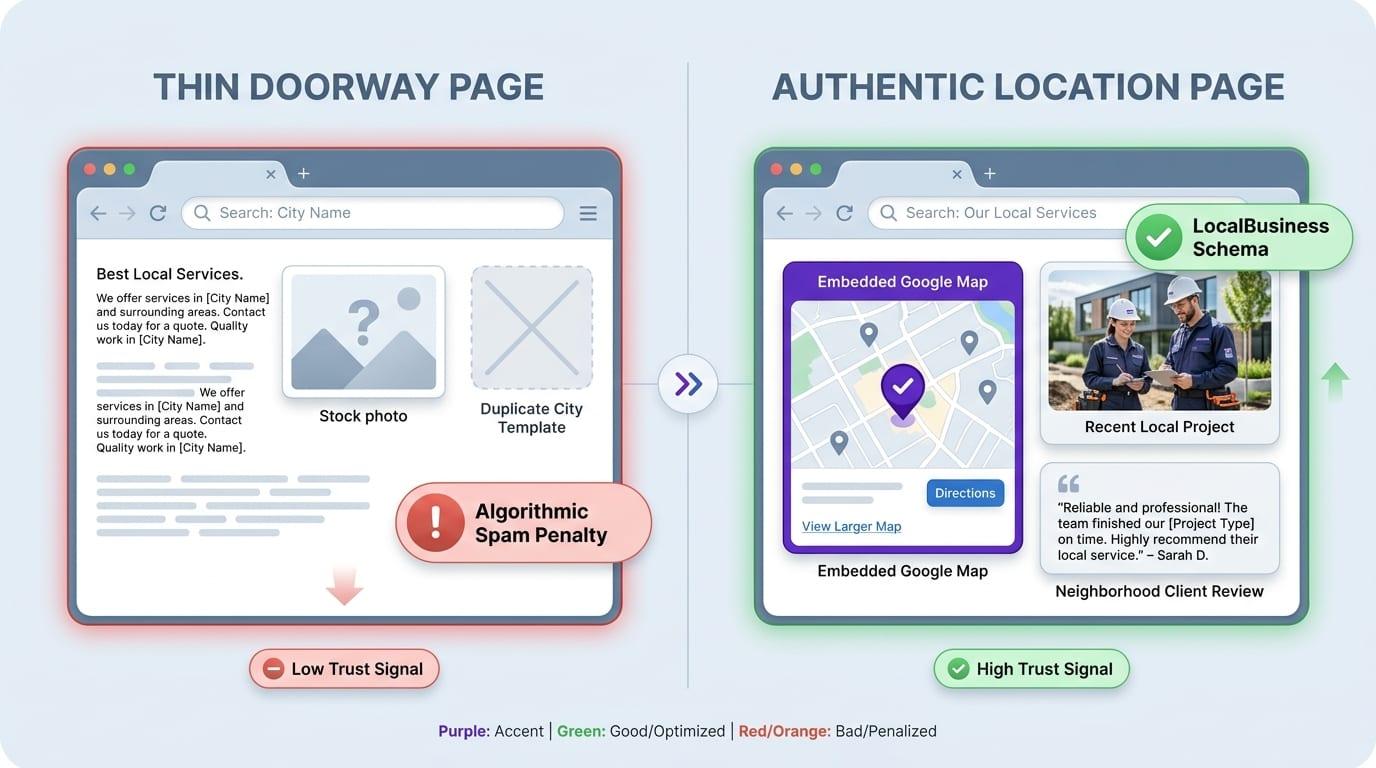
Another frequent mistake is publishing doorway pages—creating dozens of shallow city pages where only the city name changes. Search algorithms easily detect duplicated paragraphs across regional URLs and will de-index the entire batch.
My rule is direct: if you cannot display three unique local project photos, quote a neighborhood client, or reference a nearby landmark, do not publish that city page. Use Google's structured data guidelines to embed machine-readable code into your page templates.
- Specific header hierarchy: Use H1 and H2 tags that combine the primary regional service with the target neighborhood.
- Embedded Google Map: Embed your verified profile map or geographic service boundary directly into the contact section.
- Click-to-call phone numbers: Format phone numbers with standard `tel:` links matching your listing.
- Local staff highlights: Introduce the specific technicians or project managers operating within that territory.
Integrate structured data using the official Schema.org LocalBusiness specification. This confirms your operating hours, geo-coordinates, and physical address directly to search engine crawlers.
text
{
  "@context": "https://schema.org",
  "@type": "HVACBusiness",
  "name": "Apex Climate Solutions",
  "image": "https://example.com/photos/storefront.jpg",
  "telephone": "+1-303-555-0198",
  "address": {
    "@type": "PostalAddress",
    "streetAddress": "1420 Market St",
    "addressLocality": "Denver",
    "addressRegion": "CO",
    "postalCode": "80202",
    "addressCountry": "US"
  },
  "geo": {
    "@type": "GeoCoordinates",
    "latitude": 39.7505,
    "longitude": -104.9990
  }
}
Establish Consistent NAP Citations Across Core Networks
Your business Name, Address, and Phone number (NAP consistency) must match identically across all public web directories. Mismatched suite numbers or outdated phone numbers fracture search engine trust and split local ranking signals.
Start your citation distribution by claiming top discovery platforms like Apple Business Connect and Bing Places for Business. These platforms feed navigation systems, in-car voice assistants, and desktop search engines.
Next, syndicate your data to major aggregators such as Data Axle, which license business records to hundreds of secondary search engines and navigation apps. While automated software platforms can manage these entries, manually reviewing primary directory listings prevents corrupted duplicate profiles.
I consider industry-specific associations far more valuable than obscure business directories. A verified listing on a regional homebuilders portal passes stronger local trust signals than dozens of low-quality web directories.
- Tier-1 general directories: Claim profiles on Yelp, Better Business Bureau, and YellowPages.
- Navigation ecosystems: Verify location coordinates on Apple Maps, Bing Maps, and TomTom.
- Industry directories: Submit credentials to trade-specific portals like Avvo, Houzz, or Healthgrades.
- Regional business databases: Register with municipal business registries and local licensing boards.
Scale Genuine Customer Reviews and Reputation Velocity
Generating steady customer reviews directly impacts your local pack visibility and conversion rates. Search engines prioritize profiles that exhibit consistent review velocity—new feedback arriving every week rather than a sudden spike followed by months of silence.
87%
Consumers reading online reviews for local businesses
4.2+
Minimum star rating required by most local buyers
14 Days
Optimal window for generating post-service reviews
You must strictly follow the FTC guidelines on customer reviews. Never offer financial discounts or gifts in exchange for ratings, and never filter dissatisfied customers through review-gating forms.
In my experience, an active 4.8-star profile with two hundred detailed reviews converts significantly better than a stagnant 5.0-star profile with fifteen brief blurbs. Buyers and search algorithms value nuanced operational feedback over unblemished perfection.
To build an enduring review engine, train your frontline team to request feedback during project handoffs. Align this with your wider promotional framework using an actionable content marketing strategy for SEO.
- Send automated SMS prompts: Trigger text messages with direct review shortlinks within two hours of job completion.
- Guide customer wording: Prompt clients to mention the specific technician, service performed, and their city.
- Respond to all feedback: Post public responses to positive and negative reviews within forty-eight hours.
- Address service issues publicly: Demonstrate accountability by resolving customer complaints calmly and professionally.
Acquire Geographic Backlinks Through Community Engagement
Acquiring local backlinks requires trading real community engagement for authoritative neighborhood digital references. While traditional SEO focuses on domain authority, local search engines prioritize geographic proximity and regional relevance.
Join regional trade organizations and your municipal chamber of commerce. The U.S. Small Business Administration regularly highlights how chamber memberships validate operational authenticity to commercial registries and consumer watchdogs.
I find that spending five hundred dollars to sponsor a local youth sports team or neighborhood festival yields better localized link equity than buying five guest posts on broad marketing websites. These community links prove physical operations in ways spam links cannot fake.
- Chamber of commerce memberships: Secure profile links from regional civic and commercial directories.
- Event and league sponsorships: Sponsor local fun runs, school sports, and agricultural fairs for donor links.
- Local vendor cross-promotions: Exchange preferred vendor resources with non-competing service providers.
- Unlinked brand reclamation: Search local news outlets for business mentions and request attribution links.
Track Local Grid Visibility and Conversion Metrics
Measuring local visibility requires tracking geo-grid ranking distribution rather than relying on a single static ranking position. Because a user's location alters map results street by street, grid rank trackers show your rank radius from one mile to twenty miles out.
Append custom UTM campaign parameters to your profile website link and appointment buttons. This lets you track direct inquiries inside Google Analytics 4 documentation and distinguish map clicks from standard organic visitors.
My take is simple: tracking ranking positions across an entire metropolitan area is useless unless you tie those ranking zones directly to inbound phone calls and booked revenue. For smaller businesses, our insights on small sites search rankings explain how focused sites outmaneuver sprawling national directories.
Review your data monthly to adjust category selections, landing page content, and citation data. If you are structuring multiple locations, consider how ProgSEO programmatically creates and manages structured location pages from business data to streamline multi-city rollouts.
Google Business Profile category and NAP adjustments often generate Local 3-Pack movement within two to four weeks. However, ranking organically across competitive suburbs typically requires eight to twelve weeks of consistent citation cleanup, page creation, and review acquisition.
Yes. Service-area businesses (SABs) can register a Google Business Profile without displaying their street address publicly. You define your service zones by cities or zip codes, though you must still verify a legitimate residential or commercial base address with Google.
Reviews impact local prominence and relevance. When customers naturally mention specific services, product types, and neighborhood names in their feedback, search algorithms use that text to associate your profile with those localized search queries.
Your primary Google Business Profile category remains the most influential single factor for the Local Pack, while localized on-page content and inbound links drive your organic results below the map.
Sources & References
- BrightLocal Research — industry study on consumer review patterns and local buying habits.
- Google Keyword Planner — official search volume and commercial intent analysis tool.
- Google Business Profile Help — guidelines and category rules for Google Business Profile optimization.
- Google Search Central — documentation on implementing LocalBusiness structured data on landing pages.
- Schema.org LocalBusiness — official technical specification for local business entity schema attributes.
- Apple Business Connect — primary business listing and navigation management portal for Apple Maps.
- Bing Places for Business — authoritative search directory management for Bing and Microsoft Copilot.
- Data Axle — core data aggregator distributing verified business information across directory networks.
- Federal Trade Commission — federal regulatory guidelines on customer review solicitation and platform compliance.
- U.S. Small Business Administration — government resource on local business registration, compliance, and chamber partnerships.
- Google Analytics Help — official documentation on setting up campaign measurement and conversion tracking.