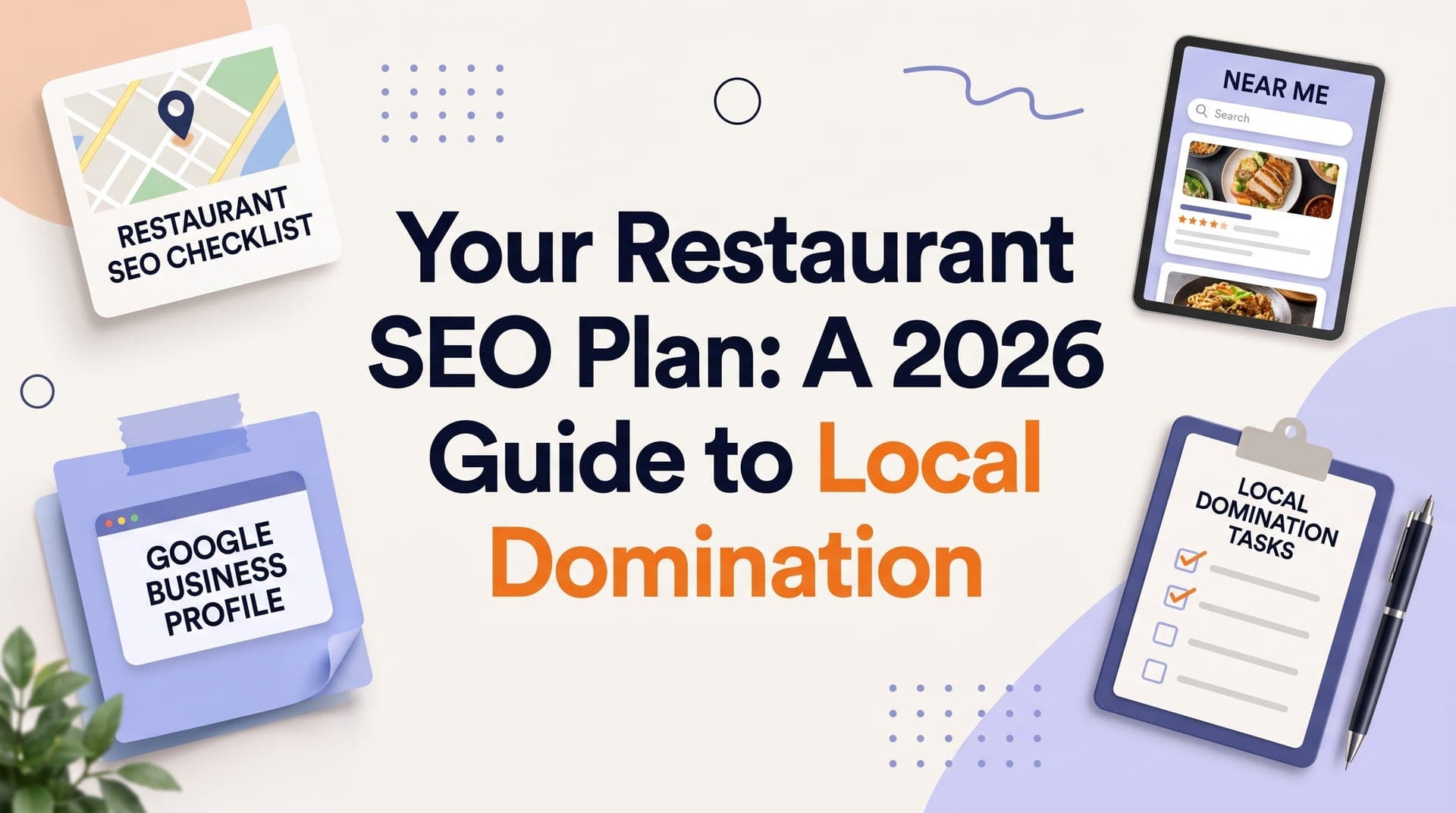
If you need an effective seo plan for restaurant growth in 2026, you cannot rely on foot traffic and word-of-mouth alone. I have spent the last decade building digital strategies for hospitality groups, and the reality is stark: diners decide where to eat by scrolling local search results on their phones, usually within a three-mile radius of your front door.
▶ Related Video
The BEST SEO Tutorial for Businesses 2026 (Full Guide)
I constantly see incredible chefs struggling with empty dining rooms simply because their digital storefront is invisible. They obsess over the plating but completely ignore how their menu looks to search engine crawlers. Today, search algorithms do not just look at your website; they evaluate user behavioral signals, local entity connections, and real-time review sentiment.
In this guide, I will walk you through exactly how I audit, build, and scale a local search presence for food and beverage concepts. We will cover everything from fixing technical debt to dominating zero-click searches, ensuring your tables stay booked.
Key Takeaways
- Your Google Business Profile is your homepage. More than 70% of diners will never click through to your actual website before booking a table or ordering.
- PDF menus are digital poison. Search engines cannot easily parse text trapped in images or PDFs, costing you thousands of long-tail menu keyword searches.
- Schema markup drives reservations. Implementing proper LocalBusiness and Restaurant schema directly connects your operating hours and menu to AI search features.
- Local citations must be hyper-relevant. Generic directory spam no longer works; you need mentions from local food bloggers, regional press, and neighborhood guides.
- AI search changes discovery. AI overviews rely heavily on user reviews and structured data to recommend restaurants for highly specific queries like "romantic patio dining".
Auditing Your Current Digital Footprint
My firm opinion is that most technical SEO audits provided to hospitality owners are entirely useless. They focus on obscure code minification instead of the user experience metrics that actually drive local conversions. Before you build new campaigns, you have to find out where your restaurant is currently bleeding traffic.
The most common mistake I see owners make at this stage is treating their website like a static digital brochure rather than a customer acquisition engine. If your site has not been updated since 2023, you are already losing impressions to competitors who actively optimize for mobile-first indexing.
Claiming Your Map Real Estate
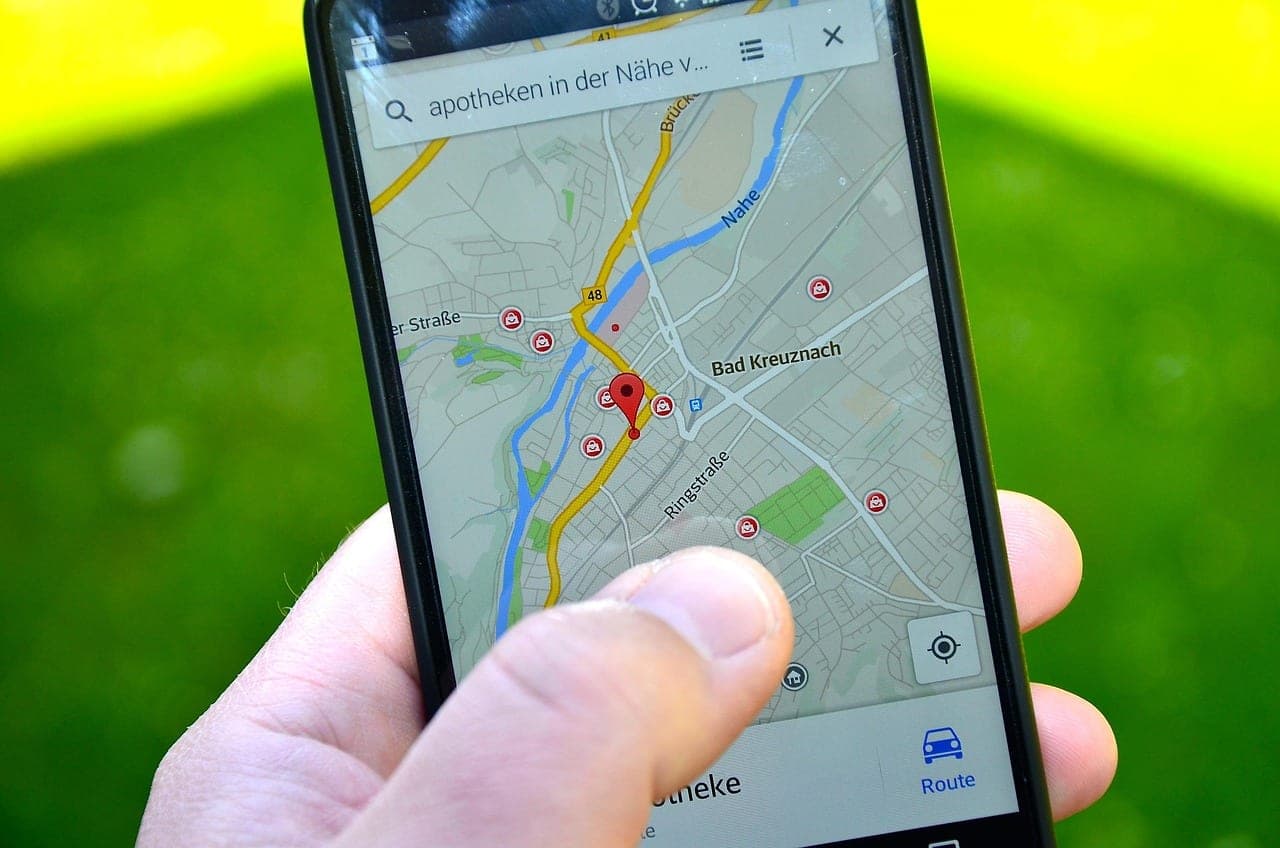
The very first step is checking your visibility across the major mapping ecosystems. I do not just mean Google Maps. You need to pull out an iPhone and search for your restaurant on Apple Maps, which powers voice search for Siri and natively integrates into millions of dashboard navigation systems.
You must identify and merge duplicate listings. Often, a previous owner, an aggressive third-party delivery app, or an automated scraper will have created rogue profiles for your address. These duplicate profiles cannibalize your reviews and confuse the search algorithms about your actual phone number and operating hours.
- Search your exact address on Google Maps to find unverified ghost listings.
- Check Apple Business Connect to ensure your pin is dropped on the correct entrance.
- Verify your integration status with mapping data aggregators like Foursquare.
- Audit third-party delivery apps (UberEats, DoorDash) for mismatched contact info.
- Ensure your primary phone number matches across all map applications.
Technical Baseline Check
A restaurant website needs to load instantly on a 4G connection. Diners are usually searching while walking, sitting in an Uber, or debating with friends at a bar. I always start by running the site through Google PageSpeed Insights to check the Core Web Vitals, specifically looking at Cumulative Layout Shift (CLS).
If your "Book a Table" button jumps down the screen right as a user tries to tap it because a massive hero image finally loaded, you lose that reservation. Speed is a direct ranking factor, but more importantly, it is a conversion factor.
When comparing diagnostic platforms, many agencies debate Ahrefs vs Moz for local audits. For restaurants, I lean heavily toward tools that emphasize local citation health and mobile performance over massive backlink indexes.
Competitor Menu Mapping
You need to know what keywords your neighbors are winning. I manually scrape the digital menus of the top three ranking restaurants in the neighborhood. I am looking for specific modifiers they use—words like "gluten-free crust," "grass-fed beef," or "late-night happy hour."
This gap analysis forms the foundation of our keyword strategy. If three rival Italian spots rank for "fresh pasta downtown" and your menu just says "Pasta Dishes," you are handing them customers. You must map your actual inventory to the exact phrases diners type into their search bars.
Mastering the 2026 Google Business Profile
If I had to give you one guiding opinion for local hospitality marketing, it is this: Your actual website is just a backup. Your Google Business Profile (GBP) is your real homepage now. Most of your customers will convert without ever leaving the Google ecosystem.
The second massive mistake owners make is failing to natively build their menu inside GBP. They just upload a blurry photo of the physical menu. In 2026, AI overviews read the structured menu data inside your Google profile to answer queries like "who has the best spicy tuna roll near me." If your menu is a photo, you do not exist to the AI.
Menu Structuring for Search
Google allows you to build a structured, categorized menu directly within your profile. I spend hours manually typing out every dish, including a rich description and an appetizing photo for each item. This populates your profile with incredible long-tail keyword relevance.
Do not just write "Burger." Write "Double Smash Burger with House Aioli and Truffle Fries." The more descriptive text you feed the platform, the wider your local net becomes when users search for specific cravings. You can review Google's official menu guidelines to ensure your formatting complies.
- Navigate to the 'Menu' editor in your Google Business dashboard.
- Create distinct categories (Appetizers, Mains, Cocktails, Gluten-Free).
- Add every single item with its exact price to build trust.
- Write 15-20 word descriptions for each dish highlighting key ingredients.
- Attach a high-resolution, well-lit photo to the top 10 most profitable items.
- Update this section immediately whenever your physical menu changes.
Behavioral Signals and Reviews
Google ranks profiles based heavily on how users interact with them. If people click for driving directions, dial your phone number, or browse your photos for three minutes, Google's algorithm promotes your listing. Review velocity—the speed and consistency at which you get new reviews—is the strongest behavioral signal you can influence.
You must respond to every single review, good and bad, within 24 hours. When responding to positive reviews, naturally weave in target entities. Instead of "Thanks for coming!", I write, "Thank you! We are thrilled you loved the wood-fired Neapolitan pizza at our downtown location."
| GBP Feature | Old Strategy (2023) | Modern Strategy (2026) |
|---|---|---|
| Categories | Select 'Restaurant' and stop. | Add granular secondary categories (e.g., 'Vegan Restaurant', 'Cocktail Bar'). |
| Photos | Upload interior shots once a year. | Upload user-generated food content weekly to signal activity. |
| Menu | Link out to a PDF on the website. | Build natively in GBP with rich descriptions and pricing. |
| Updates | Rarely post, maybe for holidays. | Post weekly specials using the 'Add Update' feature to drive zero-click engagement. |
Weekly Update Cadence
Treat the Google Posts feature like a localized social media feed. Every Wednesday, I have my clients post their weekend specials, live music schedules, or new seasonal cocktails. These posts expire from the immediate view, but they keep the profile active and signal to crawlers that the business is vibrant and operating.
Always include a clear call to action in these posts, utilizing the "Reserve" or "Order Online" buttons to reduce friction. Every extra tap you force a hungry user to make is an opportunity for them to bounce to a competitor.
Building High-Impact Local Citations and Backlinks
My controversial opinion on off-page SEO for hospitality is that mass directory submissions are effectively dead as a competitive advantage. Getting listed on 100 generic business directories is baseline maintenance; it will not push you from position four to position one in the map pack.
What actually moves the needle in 2026 is hyper-local relevance. A backlink from a neighborhood association blog or a highly engaged local food influencer carries exponentially more weight than a standardized listing on a national yellow-pages clone.
Niche Food Directories
While I ignore generic directories, I aggressively target niche, food-specific platforms. Platforms like The Infatuation, Eater, and localized vegan or gluten-free databases pass incredible topical authority. According to BrightLocal's citation research, industry-specific directories remain a strong trust signal.
You have to ensure your Name, Address, and Phone Number (NAP) is pixel-perfect across these tier-one platforms. If Yelp says "Street" and TripAdvisor says "St.", most modern algorithms can reconcile it, but conflicting phone numbers will actively suppress your rankings.
- Audit your TripAdvisor profile for outdated menus or broken URLs.
- Claim your Yelp business page and optimize the 'From the Business' section.
- Ensure your Zomato/Urbanspoon legacy data has been properly updated or redirected.
- Submit your site to regional tourism boards and city-center dining guides.
- Check that your Apple Maps integration is properly syncing with Yelp reviews.
Local Press Outreach
Digital PR for restaurants does not require a massive agency retainer. I teach owners to pitch local lifestyle journalists whenever they launch a new menu, hire a notable chef, or host a charity night. When the local newspaper writes about your new patio opening and links to your site, your domain authority spikes.
Keep a rolling spreadsheet of every journalist who covers the food scene in your city. Follow them on social media, engage with their content, and when you have a genuinely interesting story—like sourcing 100% of your produce from farms within 50 miles—pitch them an exclusive.
Event Sponsorships
One of the most underutilized backlink strategies is local sponsorship. Sponsoring a Little League team, a 5K charity run, or a local food bank usually costs between $200 and $500. In return, your restaurant gets its logo and a backlink placed on a highly trusted, locally relevant organizational website.
These .org and local .com backlinks send massive geographical trust signals to search engines, proving that your business is deeply embedded in the physical community.
Optimizing Your Restaurant's On-Page Experience
I cannot stress this enough: aesthetic-heavy, code-bloated websites are destroying your organic traffic. A restaurant owner's opinion of a "beautiful" website often involves heavy background videos and auto-playing music. I tell my clients that speed and structured data beat aesthetics every single time.
The biggest technical mistake you can make is forcing a hungry user to pinch-and-zoom a PDF menu on a 6-inch screen. If your menu is not built in clean, indexable HTML, you are invisible for dish-specific search queries. Stop using PDFs immediately.
Schema Markup for Restaurants
Structured data is how you translate your website into a language search engines natively understand. By implementing Schema.org/Restaurant markup, you explicitly define your operating hours, price range, cuisine type, and menu URLs for the crawlers.
This code sits invisibly in your website's header but allows Google to display rich snippets—like star ratings and price indicators—directly in the search results. I also implement `Menu` and `MenuItem` schema so individual dishes can trigger zero-click answers.
- Inject LocalBusiness schema on the homepage detailing your core NAP data.
- Add GeoCoordinates schema to pinpoint your exact latitude and longitude.
- Use OpeningHoursSpecification to clearly define holiday closures and split shifts.
- Implement aggregateRating schema to pull your average review score into search results.
- Validate all code using Google's Rich Results Test tool before deploying.
Mobile-First Ordering Integration
Search engines evaluate user experience metrics like bounce rate and time on site. If a user clicks your site to order takeout but encounters a broken third-party widget, they leave immediately. This "pogo-sticking" back to the search results tells Google your site is a bad result.
Your integration with systems like Toast or Olo must be seamless. Use direct, fast-loading buttons that open the ordering portal in a clean new tab, rather than trying to cram an unoptimized iframe into your mobile layout.
Location Pages for Multiple Branches
If you operate three different locations, you cannot stuff all their information onto one "Contact" page. You must build a dedicated, unique URL for each physical branch. Each location page needs its own specific schema markup, localized content, driving directions, and embedded Google Map.
This prevents keyword cannibalization and allows each distinct neighborhood to rank independently. A single page trying to rank for both "Downtown" and "Westside" will usually fail at both.
Developing a Hyper-Local Content Strategy
Let me be brutally honest: nobody in your city is searching for your chef's personal recipe blog. My opinion is that most restaurant content marketing completely misses the search intent. People search for utility, occasions, and logistics, not culinary diaries.
Your content strategy must intercept diners at the exact moment they are planning an event or looking for a specific vibe. When evaluating Perplexity SEO tracking tools and AI search patterns, we see that modern queries are highly conversational: "Where is a good place for a 10-person birthday dinner downtown?"
Private Dining and Catering Hubs
The highest ROI pages on a restaurant website are the private dining and event pages. These queries ("corporate dinner venues," "small wedding reception restaurants") have high commercial intent and massive average order values. I build comprehensive hubs for these services.
These pages should include floor plans, minimum spend requirements, capacity charts, and high-quality photography of past events. The more detail you provide, the better it ranks and the higher your lead conversion rate becomes.
- Create a dedicated 'Holiday Party Venues' landing page well before Q4.
- Build a 'Catering Menu' page optimized for office lunch deliveries.
- Draft an FAQ section addressing dietary accommodations for large groups.
- Include video walkthroughs of your private dining rooms.
- Add a highly visible, frictionless lead capture form for event inquiries.
Sourcing and Sustainability Pages
Diners increasingly search for ethical, farm-to-table, or sustainable dining options. If you buy your beef from a local ranch or your produce from a regional farm, you need a dedicated "Our Purveyors" page. This captures long-tail searches for "farm to table restaurants" and builds incredible brand affinity.
Do not just list the farms; link out to them. Outbound links to local agricultural entities reinforce your geographic relevance to the search engines, as noted in advanced guides by Search Engine Land.
Neighborhood Guides
I like to create "Things to do near [Neighborhood]" content. If you are located next to a major theater, stadium, or museum, write a guide on "Where to eat before a show at the Grand Theater." You are intercepting search traffic from people planning their evening itinerary, capturing them before they even search for food.
Measuring the ROI of Your SEO Plan for Restaurant Locations
Organic traffic numbers are vanity metrics; table turns and online orders are sanity metrics. My firm belief is that if your reporting does not connect keyword rankings to actual revenue, you are wasting your time. You must track the specific actions users take once they land on your site.
I frequently consult comprehensive comparisons of marketing suites, like Moz vs Semrush vs Ahrefs marketing capabilities, to determine the best way to track local map-pack fluctuations. However, for the actual revenue tracking, you must rely on your analytics configuration.
Setting Up Conversion Tracking
You need to configure Google Analytics 4 to track specific custom events. I set up tracking tags for every time a user clicks the "Reserve Now" button, taps the phone number to call, or clicks through to the third-party delivery portal.
By attributing these clicks back to organic search, you can mathematically prove that your optimization efforts are directly responsible for putting guests in seats.
- Deploy Google Tag Manager to cleanly organize your event tracking.
- Set up a click trigger for your reservation widget (OpenTable, Resy).
- Track 'tel:' link clicks to monitor inbound phone calls from mobile search.
- Monitor clicks to PDF menus (if you are still transitioning away from them).
- Create custom GA4 reports filtering exclusively for organic local traffic.
Monitoring Local Keyword Fluctuations
Local rankings are highly volatile and change based on the physical location of the searcher. A user standing one block north might see a different map pack than a user standing one block south. I use specialized local rank trackers that utilize grid-based tracking to visualize exactly where our visibility drops off.

If you notice you are losing ground for "best brunch" on the weekends, you can immediately counteract it by pushing fresh GBP updates, adding new menu photos, and soliciting targeted reviews to regain that specific keyword.
Measuring Call-to-Action Clicks
Finally, monitor the user journey on your highest-traffic pages. If 1,000 people visit your Private Events page but only two fill out the form, your SEO worked, but your conversion rate optimization (CRO) failed. Always ensure the contact forms are short, fast, and function perfectly on mobile devices.
Building a reliable seo plan for restaurant growth requires continuous refinement. You establish your technical baseline, dominate the map pack, build local authority, and rigorously track what drives revenue. If you are tired of wrestling with outdated optimizations and want an automated infrastructure that handles the heavy lifting, consider implementing ProgSEO to instantly build and update data-driven local search pages.
Local map pack optimizations (like GBP updates and review velocity) can show movement in as little as 2 to 4 weeks. Organic website rankings for competitive terms typically take 3 to 6 months to establish authoritative traction.
Generally, no. Traditional recipe or chef blogs have a terrible ROI for local search. Instead, focus on building highly detailed utility pages: private dining hubs, catering menus, and neighborhood guides.
Common culprits include an unverified Google Business Profile, a suspended profile due to policy violations (like keyword stuffing the business name), or conflicting NAP (Name, Address, Phone) data across the web.
While Google dominates search volume, Apple Maps natively integrates Yelp reviews and data. Because Apple Maps powers Siri and iOS devices, maintaining an accurate, highly-rated Yelp profile remains crucial for voice and mobile search.
Sources & References
- Apple Business Connect — Official portal for managing location data on Apple Maps.
- Google PageSpeed Insights — Google's diagnostic tool for measuring Core Web Vitals and mobile performance.
- Google Business Help — Official guidelines and formatting rules for Google Business Profile menus.
- BrightLocal — Industry-leading research detailing the impact of citations on local search rankings.
- Schema.org — The standardized markup language documentation for Restaurant entities.
- Search Engine Land — Authoritative publication on advanced search engine optimization and entity mapping.
- Google Analytics 4 — Developer documentation for implementing custom event tracking in GA4.