Creating effective SEO titles is crucial for attracting clicks and improving rankings. A well-crafted title can significantly impact your content's visibility in search engine results.
In this guide, we will explore the Best SEO Title Examples and provide actionable tips for crafting titles that resonate with search engines and readers alike.
We’ll cover the fundamentals of SEO-friendly titles and share best practices for maximizing engagement. Additionally, we will introduce tools like our SEO Title Generator to help streamline your title creation process.
Let’s dive into the world of SEO titles and discover how to elevate your content!

The Fundamentals of SEO-Friendly Titles
Before diving into the creative aspects of title generation, it is crucial to understand the technical foundation. Even the most creatively written headline will fail if it does not adhere to search engine guidelines.
H1 Tag vs Meta Title Tag: Understanding the Difference
One of the most common points of confusion in on-page SEO is the difference between the H1 tag and the meta title. While they often contain similar wording, they serve distinct purposes:
- Meta Title Tag: This is an HTML element located in the section of your webpage. It is the clickable blue link that appears in search engine results and the text displayed on the user's browser tab. Search engines use this tag to understand the primary topic of your page.
- H1 Tag: This is an on-page heading. It is the visible title users see after they have clicked through to your website.
While analyzing the H1 tag vs meta title tag, the best practice is to keep them closely aligned to ensure a cohesive user experience, but they don't have to be identical. Your meta title must be heavily optimized for clicks and search engines, whereas your H1 can be slightly longer and more conversational since the user is already on your page.
How Long Should a Meta Title Be?
A frequent question among content creators is: how long should a meta title be? Search engines measure title length in pixels rather than character counts, but character guidelines are still the easiest way to draft your titles.
As a general rule, the title tag character count limit 2024 remains largely consistent with recent years. You should aim for 50 to 60 characters (or a maximum of 580 pixels on desktop and 680 pixels on mobile). If you stay within this range, you can usually ensure that your entire title is visible to users.
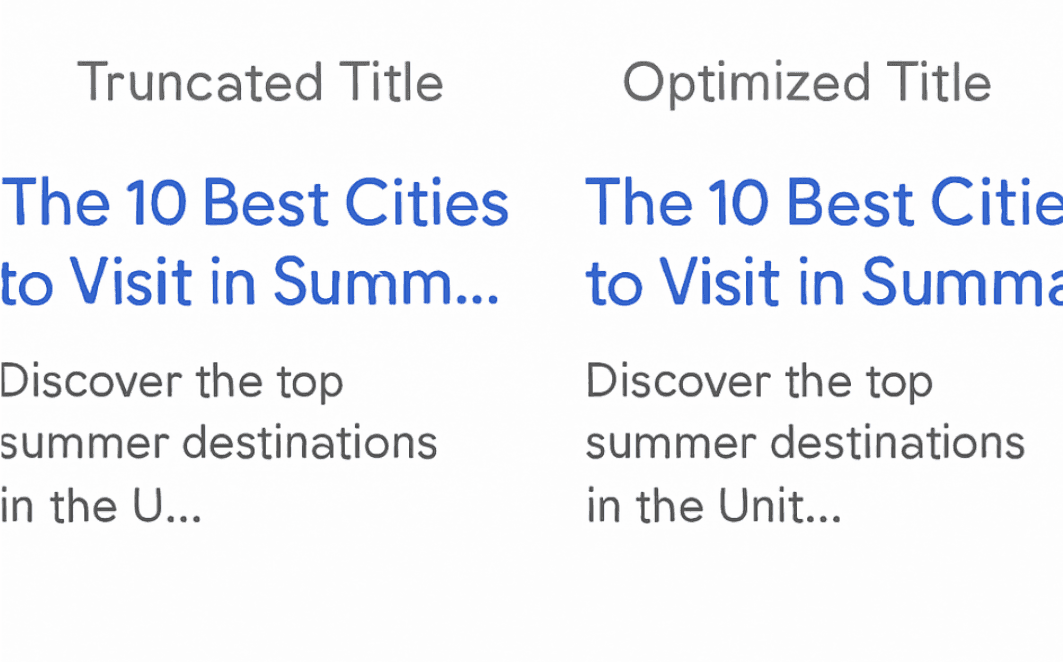
Fixing Truncated Title Tags in SERPs
When your title exceeds the pixel limit, Google cuts it off and appends an ellipsis (...). This truncation can hide crucial context, strip away your primary keyword, or cut off your brand name, leading to a massive drop in clicks.
Fixing truncated title tags in SERPs requires a straightforward approach:
- Front-load your main keyword: Place your most important keywords at the beginning of the title.
- Remove unnecessary filler words: Cut out words like "a," "and," or "the" if they aren't strictly necessary for readability.
- Use a SERP preview tool: Before publishing, always run your drafted title through a pixel-width checker.
The Psychology of Clicks: Crafting Compelling Headlines
Technical perfection is only half the battle. To win the click, you must appeal to human psychology. Let's break down how to write clickable headlines that stand out in a sea of generic search results.
Emotional Triggers for Search Engine Titles
Humans are emotional creatures, and our clicking behavior is heavily influenced by how a title makes us feel. Incorporating emotional triggers for search engine titles can dramatically increase your click-through rate.
- Curiosity: Pique the reader's interest by implying a secret, a surprising fact, or a counter-intuitive truth. (e.g., "The SEO Strategy Nobody is Talking About")
- Urgency & FOMO: Convey that the reader might miss out if they don't act now. (e.g., "Fix These 5 Critical SEO Mistakes Before It's Too Late")
- Authority & Trust: Assure the reader that the information is backed by experts or data. (e.g., "A Data-Driven Guide to Ranking on Google")
Using Power Words in Search Snippets
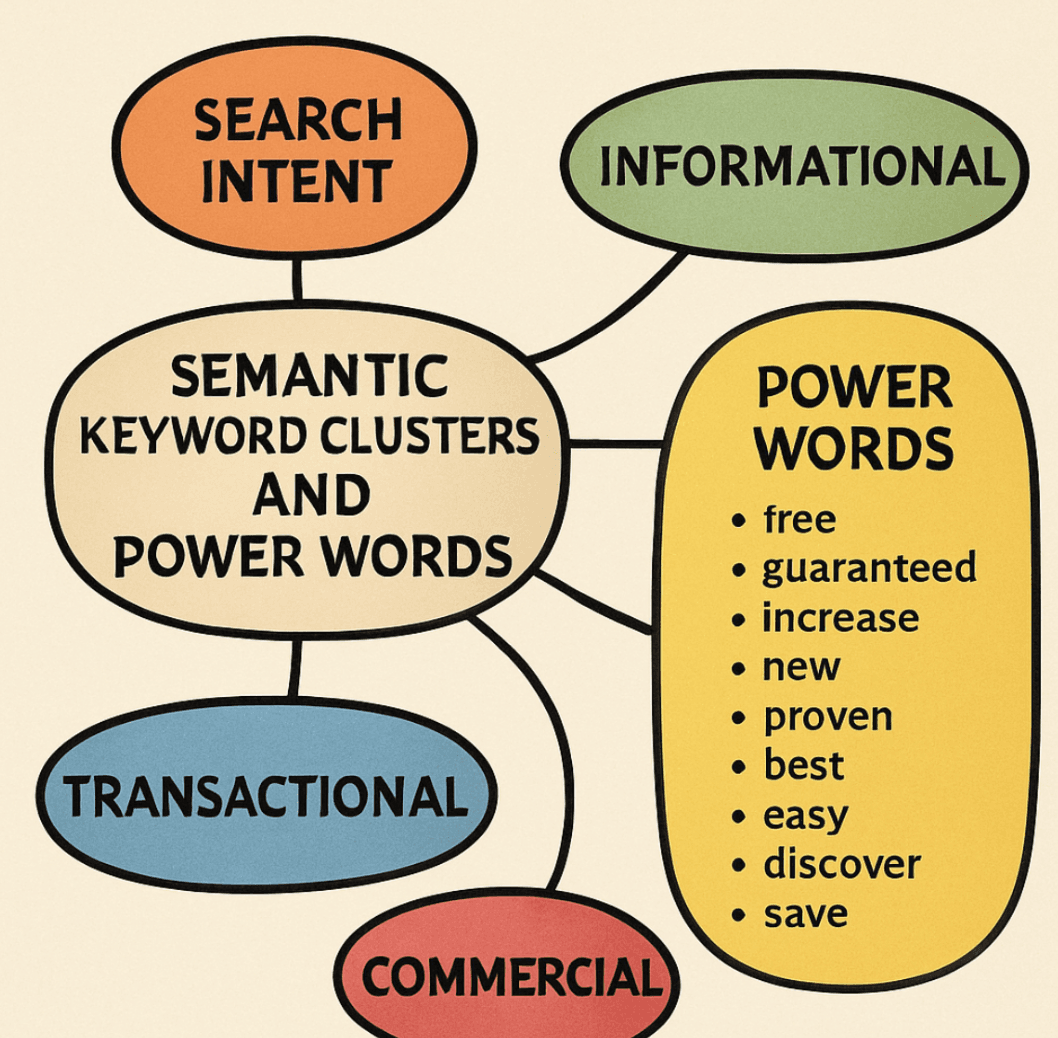
Power words are persuasive, descriptive words that trigger an emotional response. Using power words in search snippets instantly elevates a boring title into a compelling call to action.
Some highly effective power words include:
- Proven, Exclusive, Ultimate, Comprehensive, Secret, Effortless, Guaranteed, Free, Fast.
Instead of writing "Tips for Better Sleep," an upgraded, power-word-infused title would be: "7 Proven Tips for Effortless and Deep Sleep."
Semantic Keyword Integration in Headlines
Gone are the days when you could just stuff an exact-match keyword into a title and rank. Today, Google's algorithm is incredibly sophisticated at understanding context and intent.
Semantic keyword integration in headlines involves using conceptually related words (LSI keywords) alongside your primary target. If your main keyword is "digital marketing," semantic terms might include "campaigns," "ROI," or "online strategy." This natural integration satisfies search engines while keeping the title readable and engaging for humans.
The Best SEO Title Examples in Action
Looking at real-world applications is the best way to master title creation. Below, we've categorized the Best SEO Title Examples by content type to demonstrate how these strategies come together.
Effective Blog Post Headlines for SEO
When writing informational content, the goal is to promise a clear, valuable solution to the searcher's query. Effective blog post headlines for SEO clearly state what the reader will learn.
Example 1: The Listicles
- Weak: Best Laptops in 2024
- Strong: 10 Best Laptops in 2024 (For Every Budget & Need)
- Why it works: It includes the year for freshness, a number (which naturally attracts clicks), and addresses specific user intents (budget and need).
Example 2: The "How-To" Guide
- Weak: How to Train a Dog
- Strong: How to Train a Puppy: A Step-by-Step Guide for Beginners
- Why it works: It narrows the target audience (beginners/puppies) and uses a power phrase ("Step-by-Step Guide").
Niche Focus: Food and Recipe Blogs
Let's look at a highly specific example to show how localization and sensory words can elevate a title. If you are running a culinary blog, you need to stand out against massive recipe aggregators.
Here are the best SEO title examples for Greek cuisine article:
- Classic: "Authentic Moussaka Recipe: A Taste of Greece | Chef's Blog"
- Listicle: "15 Classic Greek Dishes You Must Try (Easy & Delicious)"
- How-to: "How to Make the Perfect Tzatziki Sauce in 5 Minutes"
Notice how these titles incorporate speed ("5 Minutes"), sensory power words ("Delicious," "Perfect"), and authenticity ("Authentic," "Classic"), making them incredibly enticing to a searcher looking for genuine Mediterranean recipes.
Unique Titles for E-Commerce Product Pages
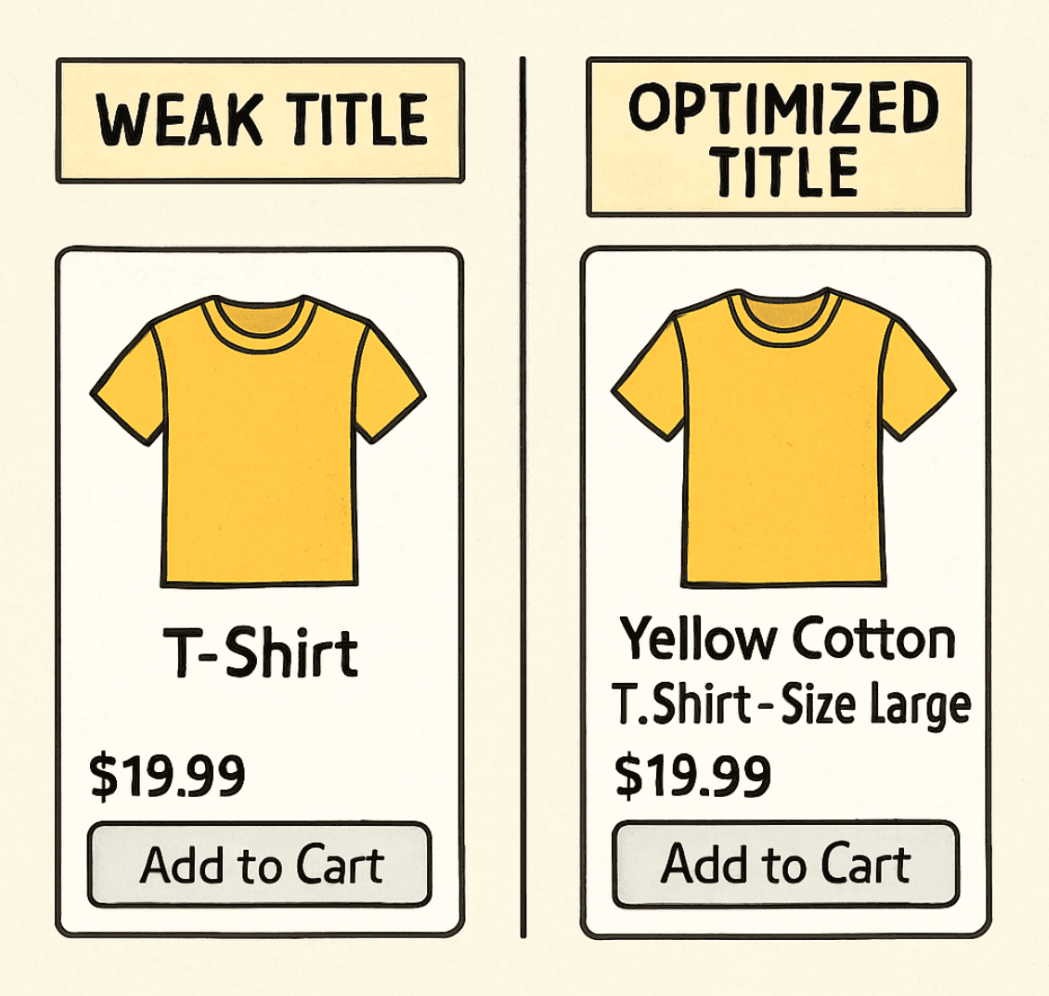
E-commerce SEO is fiercely competitive. Product pages often suffer from duplicate titles across the web, especially if multiple retailers sell the exact same item. Creating unique titles for e-commerce product pages is vital for outranking competitors.
A proven formula for e-commerce is: Brand + Product Name + Model/SKU + Defining Feature + Category
Example for a Camera Store:
- Weak: Canon Camera 5D
- Strong: Canon EOS 5D Mark IV DSLR Camera (Body Only) | Buy Online
- Why it works: It gives the exact model, clarifies what is included ("Body Only"), and uses a transactional call to action ("Buy Online").
Example for Apparel:
- Weak: Men's Running Shoes
- Strong: Nike Air Zoom Pegasus 39 - Men's Lightweight Running Shoes
- Why it works: It perfectly integrates semantic keywords ("Lightweight") and includes specific brand and model data to capture high-intent buyers.
High CTR Title Tag Templates
If you find yourself staring at a blank screen, relying on tested formulas can speed up your workflow. Here are several click-worthy SERP headline formulas and high CTR title tag templates you can adapt for your own content:
1. The "Ultimate Guide" Template
- Formula: The Ultimate Guide to [Topic/Keyword] in [Year]
- Example: The Ultimate Guide to Off-Page SEO in 2024
2. The "Problem/Solution" Template
- Formula: How to [Achieve Desired Result] Without [Common Pain Point]
- Example: How to Double Your Traffic Without Spending a Dime on Ads
3. The "Listicle + Benefit" Template
- Formula: [Number] Ways to [Keyword/Topic] (And [Secondary Benefit])
- Example: 12 Ways to Save Money (And Build Long-Term Wealth)
4. The "Mistakes to Avoid" Template
- Formula: [Number] [Topic] Mistakes You Are Making (And How to Fix Them)
- Example: 7 Common Diet Mistakes You Are Making (And How to Fix Them)
5. The "Comparison" Template
- Formula: [Keyword 1] vs. [Keyword 2]: Which is Better for [Target Audience]?
- Example: Shopify vs. WooCommerce: Which is Better for Small Businesses?
These templates inherently utilize psychology, structure, and intent-matching, giving you an excellent starting point for any piece of content.
Step by Step Title Tag Optimization Strategy
Writing a great title for a new post is one thing, but SEO is an ongoing process. You likely have dozens, if not hundreds, of existing pages on your site that are underperforming simply because their titles are unappealing.
Let's walk through a step by step title tag optimization process to reclaim that lost traffic.
Step 1: Identifying Underperforming Pages
To begin optimizing titles for low click-through rates, you first need to identify which pages need help. You don't need to guess — Google provides the exact data you need.
Step 2: Google Search Console CTR Analysis
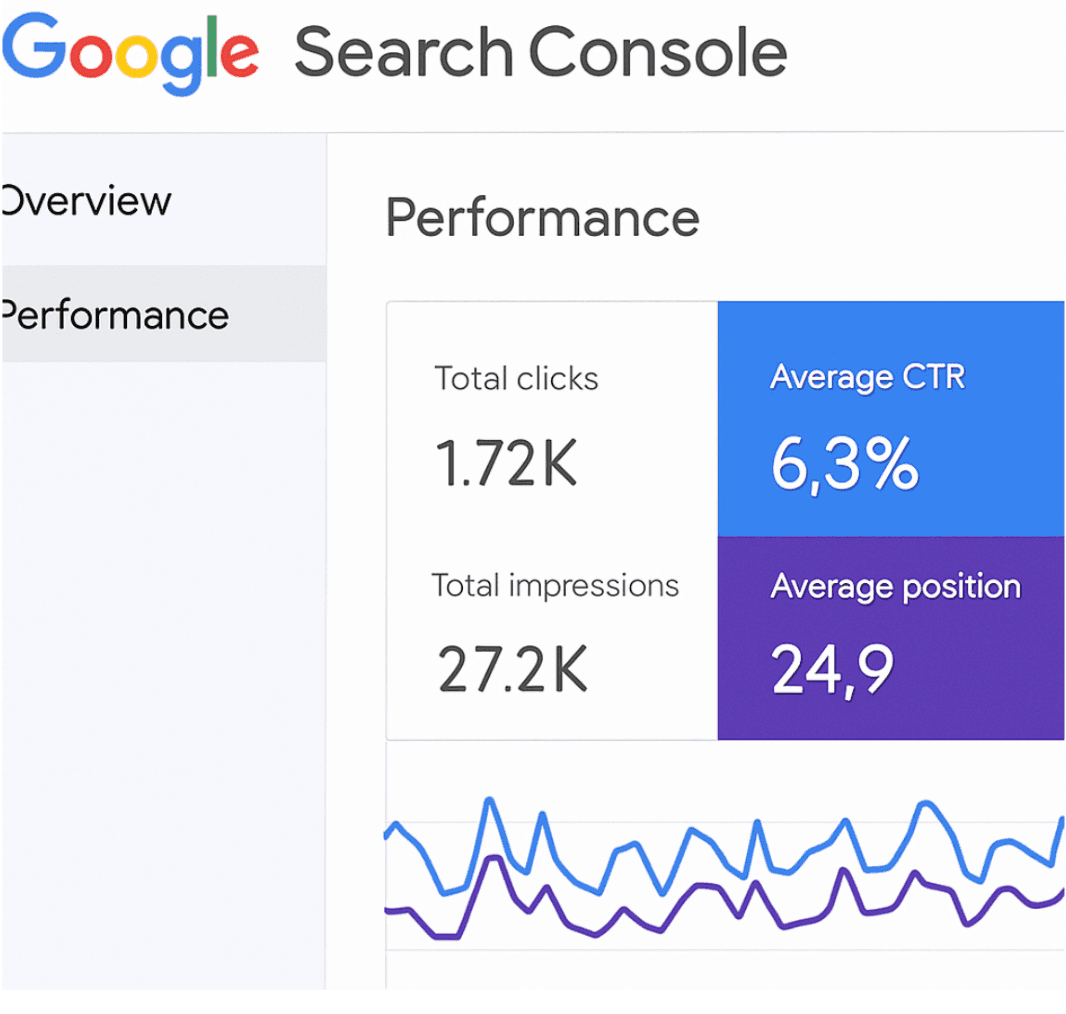
Conducting a Google Search Console CTR analysis is the most effective way to find quick-win opportunities.
- Log into GSC and navigate to the "Search Results" performance report.
- Make sure "Total Clicks," "Total Impressions," "Average CTR," and "Average Position" are all checked.
- Filter your data to look at queries where your Average Position is between 2 and 6.
- Look for queries in this range that have a significantly lower-than-average CTR (e.g., you rank #3 but are only getting a 1.5% click-through rate, whereas the industry average is usually 8-10% for that position).
Step 3: Analyze the SERP
Once you have identified a page with a low CTR, perform a manual Google search for that primary keyword. Look at the titles of the competitors ranking around you.
- Are they offering a more recent year?
- Are they using better power words?
- Does your title suffer from truncation?
Step 4: Rewrite and Monitor
Using the SEO title tips outlined above, rewrite your title to make it more compelling than the competition's. Push the update to your live site, and then request indexing in Google Search Console. Wait two to three weeks, then re-check the GSC data to see if your CTR has improved.
Proven Title Best Practices and SEO Title Tips
To wrap up our deep dive into the Best SEO Title Examples, let's synthesize our findings into a definitive checklist of title best practices. Keep these SEO title tips handy whenever you are publishing or optimizing a webpage.
- Match Search Intent: The most beautifully written title will fail if it doesn't give the searcher what they are actually looking for. Always check what type of content Google is already rewarding (e.g., videos, product pages, or long-form guides) and align your title accordingly.
- Keep it Unique: Every single page on your website must have a unique meta title. Duplicate titles confuse search engines and force your own pages to cannibalize each other in the SERPs.
- Put the Keyword First: Front-loading your primary keyword ensures that users and search engine bots immediately grasp the topic of the page, even if the end of the title gets truncated on smaller screens.
- Use Separators Wisely: Use pipes (|) or dashes (-) to separate your brand name from the primary headline. It creates a clean, readable aesthetic. (e.g., Primary Keyword and Hook | Brand Name)
- Leverage Numbers and Brackets: Odd numbers, in particular, tend to perform exceptionally well in titles. Additionally, adding brackets or parentheses (like [Video] or (Updated for 2024)) naturally draws the eye and increases clickability.
- Don't Overpromise (Clickbait): While emotional triggers and power words are highly recommended, never promise something your content does not deliver. Misleading clickbait titles result in high bounce rates, which sends a negative signal to search engines and will eventually tank your rankings.
Conclusion
Mastering the art of writing SEO-friendly titles is one of the most high-impact, low-effort tasks in digital marketing. Your title tag is the critical bridge between ranking on a search engine and actually securing a visitor.
By understanding the technical boundaries, leveraging human psychology, utilizing semantic keywords, and consistently analyzing your data for underperforming pages, you can dramatically improve your organic traffic without writing a single new word of content.
Start today. Pick five of your most important web pages, apply these formulas, and watch your click-through rates soar. Remember, in the world of SEO, the best content doesn't always win — the content with the most compelling, click-worthy title does.
Generate Perfect SEO Titles in Seconds
Stop guessing and start ranking. Our SEO Title Generator instantly creates click-worthy, keyword-optimized titles tailored to your topic — no copywriting degree required.
- Left-loaded keywords for maximum search visibility
- Power words baked in for higher click-through rates
- Character count validation so you never get truncated