
In today's digital age, having a strong online presence is crucial for architectural firms. SEO, or search engine optimization, is key to achieving this. Architects and designers can greatly benefit from effective SEO strategies that increase visibility and attract potential clients.
Local SEO is particularly important for architects — it allows firms to target clients in specific geographic areas. Understanding the basics of SEO is the first step, covering keyword research and optimizing website content. High-quality content is essential: it not only engages visitors but also establishes authority in the field.
Google My Business is a powerful tool for local SEO. It helps firms appear in local search results. Online reviews and ratings also play a significant role — they impact local search rankings and build client trust. By implementing these strategies, architectural firms can enhance their online presence and grow their client base.
Why SEO Matters for Architects and Designers

Architects and designers face unique challenges in the digital landscape. They need to showcase their creativity and technical skills online. SEO helps increase the visibility of their portfolios and projects.
A well-optimized website attracts potential clients by appearing in relevant search results. It also ensures that people find the specific services or design styles they need. This targeted visibility is essential for niche markets.
Local SEO is crucial for architects who want to attract clients from their area. It ensures that firms appear when local clients search for services. This is especially valuable in highly competitive markets.
The digital environment is constantly evolving. New competitors emerge daily, making it necessary to maintain strong online visibility. A robust SEO strategy can help stand out from the competition.
- Enhances online visibility
- Attracts targeted local clients
- Boosts brand recognition and authority
- Improves user trust through reviews and content
Understanding the importance of SEO empowers architects and designers to make informed marketing decisions.
Understanding SEO Basics for Architectural Firms
SEO, or Search Engine Optimization, is a cornerstone of online marketing. At its core, SEO aims to improve a website's visibility in search engines. This is crucial for architectural firms wanting to attract more potential clients.
A firm grasp of SEO basics begins with understanding search engines. Search engines like Google use complex algorithms to rank websites. These algorithms consider various factors, from keywords to site speed and mobile usability.
Effective SEO requires a multi-faceted approach. Here are key components to focus on:
- Keywords: Words and phrases people search for
- Quality Content: Engaging and informative text and media
- Backlinks: Links from other credible sites to yours
- Technical SEO: Fast load times and mobile-friendly design
Knowing these elements allows firms to streamline their efforts. By optimizing each component, they can improve their online presence significantly. Ultimately, a well-structured SEO plan leads to improved search rankings and increased client inquiries.
Keyword Research: Finding the Right Terms for Your Audience
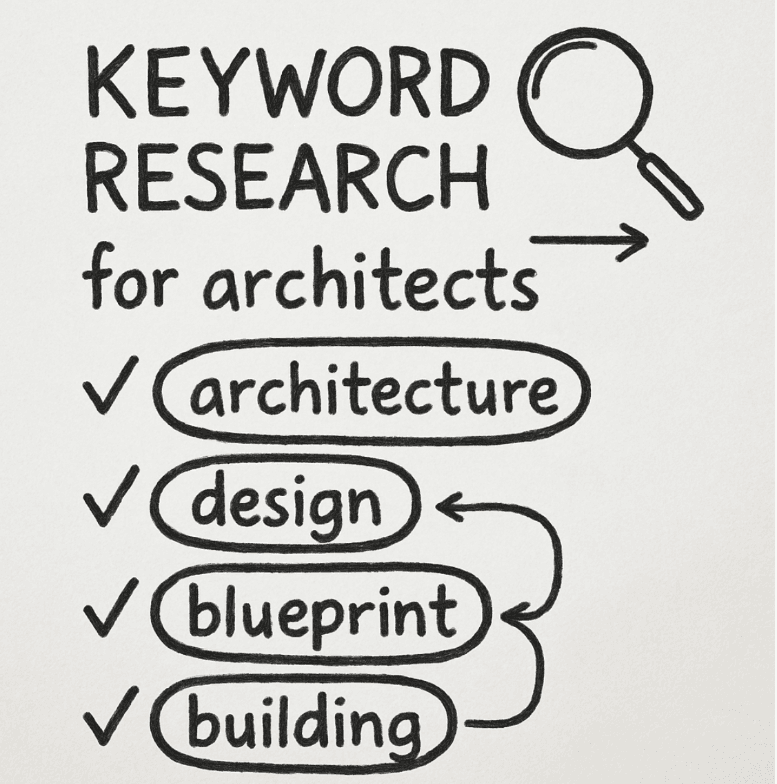
Keyword research is the backbone of any successful SEO strategy. It involves finding terms your audience uses when searching for services. Understanding these terms allows you to target the right audience effectively.
To begin, utilize tools like Google's Keyword Planner or SEMrush. These tools help identify keywords with high search volume and low competition. Focusing on these can boost your site's visibility.
When conducting research, consider the following elements:
- Relevance: Ensure the keyword reflects your services.
- Volume: Prioritize keywords with substantial search interest.
- Competition: Identify terms with manageable competition.
- Intent: Understand the user's search purpose.
Using this approach, your firm can develop a strong keyword strategy. This strategy acts as a guide for creating optimized content that resonates with potential clients. Effective keyword integration leads to improved search rankings and increased traffic.
Ultimately, a thorough understanding of keyword research will help attract the right clients. By aligning content with search terms, your firm can greatly enhance its online presence.
On-Page SEO: Optimizing Your Website Content

On-page SEO plays a crucial role in enhancing your website's visibility. It's about refining each page to improve search rankings and user experience. Every element on the page matters, from text to images and links.
To start, focus on integrating target keywords naturally throughout your content. Ensure these keywords appear in titles, headings, and body text. However, avoid keyword stuffing, which can harm readability and SEO.
- Title Tags: Use compelling, keyword-rich titles.
- Meta Descriptions: Provide concise summaries that entice clicks.
- Internal Linking: Connect related pages to enhance navigation.
- URL Structure: Use clear, keyword-focused URLs.
Additionally, images are an important part of website content. Optimize images by using descriptive alt text, which aids both SEO and accessibility. Compress images to improve page load speed, affecting user satisfaction and rankings.
By focusing on on-page SEO, architectural firms can create a robust online presence. Optimize each content aspect for a seamless user journey and better search engine recognition. This holistic approach will improve your site's performance and attract more clients.
Local SEO for Architects: Attracting Clients in Your Area

Local SEO is vital for architectural firms seeking local clients. Focusing on local strategies helps target specific geographical areas effectively.
Start with Google My Business. Claim and optimize your listing for improved visibility in local search results. Include accurate NAP (Name, Address, Phone number) information for consistency across platforms.
Another crucial step is acquiring local citations. Ensure your firm's details appear in relevant online directories. This establishes credibility and enhances local presence.
- Use local keywords: Incorporate city or region names naturally in content.
- Obtain local backlinks: Connect with local businesses for link opportunities.
- Geo-targeted ads: Run ads focused on local demographics.
- Community engagement: Share local news and projects.
Online reviews play a significant role in local SEO. Encourage satisfied clients to leave positive reviews on platforms like Google. Positive feedback not only improves trust but also search rankings.
Consider hosting community events. Participate in local workshops or sponsor events to increase visibility. This engagement can help your firm become an integral part of the local community.
By implementing these local SEO practices, architects can effectively capture their target market. This approach brings your firm closer to potential clients, increasing opportunities for collaboration and projects.
Building Authority: Content Marketing and Link Building

Establishing authority online is crucial for architectural firms aiming to stand out. Content marketing is a powerful tool in achieving this goal. By creating high-quality, valuable content, firms can engage their audience and attract attention from industry peers.
Start by developing a content strategy that showcases your expertise. This might include industry insights, project case studies, or tips for sustainable design. Such content not only draws in potential clients but also positions your firm as a knowledgeable leader.
Link building further enhances your authority. Gaining backlinks from reputable websites boosts your site's credibility and search rankings. Focus on obtaining links from industry-related sites or local organizations.
- Guest blogging: Write posts for industry websites.
- Webinars: Host informative sessions on architectural trends.
- Infographics: Create visual content to simplify complex ideas.
Networking plays a vital role in link-building efforts. Engage with industry influencers and participate in events to forge relationships. These connections often lead to valuable backlink opportunities.
Adopting a focused approach to content marketing and link building can solidify your firm's reputation. This strategy not only boosts search engine visibility but also builds trust among potential clients.
Technical SEO: Ensuring a Strong Website Foundation
Technical SEO is the backbone of an effective SEO strategy. It ensures that search engines can efficiently crawl and index your site. This technical aspect might seem daunting, but it's crucial for visibility.
A well-structured site improves user experience and search engine comprehension. Start by ensuring your website is fast-loading. Speed influences both user satisfaction and search rankings, especially on mobile devices.
Site security is another fundamental element of technical SEO. Implement HTTPS to protect user data and to signal trustworthiness to search engines. A secure site often ranks higher than a non-secure one.
- XML Sitemaps: Help search engines understand site structure.
- Robots.txt File: Guides search engines on which pages to index.
- Broken Links: Regularly check for and fix any to maintain integrity.
- Mobile-Friendliness: Ensure the site is responsive and user-friendly on mobile.
By addressing technical SEO, you lay a solid foundation for other strategies. A technically sound website supports higher search engine rankings and improved user engagement. Investing in technical SEO is not merely beneficial but essential for your firm's online success.
Leveraging Google My Business and Online Reviews

Google My Business (GMB) is an essential tool for local SEO for architects. It enhances your visibility in local search results. Setting up a detailed GMB profile is crucial — it includes your firm's name, address, phone number, and business hours.
Engage with clients by keeping your profile updated with recent photos and posts. This interaction can attract more local clients and improve search rankings. Consistency in your business information is key.
Online reviews are powerful influencers of potential clients. Encourage satisfied clients to share their experiences. Positive reviews boost your reputation and can improve local search visibility. Respond to reviews to show appreciation and professionalism.
- Create and Verify: Set up and verify your GMB profile.
- Optimize: Use accurate and consistent information.
- Engage: Actively respond to client reviews.
- Update Regularly: Keep all details current.
Utilizing GMB and online reviews strategically can establish your firm's credibility. A robust online presence can differentiate your business in the competitive architecture market. Focused efforts in this area are essential for attracting local clients.
Enhancing User Experience and Mobile Optimization
In today's digital age, mobile optimization is paramount. More clients search for services on their smartphones. Therefore, a responsive website is vital for engaging potential clients. It ensures a seamless experience across all devices.
A fast-loading site enhances user engagement. Slow websites can frustrate users, leading to a high bounce rate. Optimizing images and scripts can significantly boost your site's loading speed.
Navigation should be intuitive and user-friendly. A clear site structure assists both users and search engines. Ensure your architecture firm's website is easy to explore.
- Responsive Design: Ensure your site adjusts to different screen sizes.
- Quick Load Times: Reduce load times to retain visitors.
- Simple Navigation: Clear menus and links for ease of use.
Prioritizing user experience not only improves SEO rankings but also builds client satisfaction and loyalty. A well-optimized mobile site demonstrates professionalism and attentiveness.
Measuring Success: Analytics and Continuous Improvement
Understanding the efficacy of your SEO efforts is crucial. Analytics tools provide insights into what works. These insights are foundational for refining your strategy.
Google Analytics is a powerful tool. It tracks visitor behavior and identifies popular content. Use this data to inform your content strategy and improve engagement.
Continuous monitoring is key to staying competitive. Regularly analyze your website's performance. Adjust strategies based on emerging data and trends.
- Traffic Sources: Where are visitors coming from?
- Bounce Rate: Are visitors staying on your site?
- Conversion Rates: How many visitors are taking action?
Continuous improvement keeps your firm ahead. A dynamic approach to SEO allows you to adapt and grow. Regularly updating strategies based on analytics ensures long-term success.
Advanced Strategies: Voice Search, Video, and Emerging Trends
Voice search continues to grow with increased mobile use. Many people now ask their devices questions. Optimizing for voice queries can significantly enhance your visibility.
Video content is also gaining popularity. Videos engage users and improve dwell time on your site. Creating project walkthroughs or client testimonials can attract attention and keep visitors engaged.
Stay ahead by embracing emerging trends. Understanding new SEO technologies and adapting quickly can offer a competitive edge. These strategies can position your firm as an industry leader.
- Optimize for Voice Search: Use natural language and questions.
- Utilize Video Content: Create engaging and relevant videos.
- Stay Updated: Follow SEO trends to adapt effectively.
Conclusion: Building a Sustainable SEO Strategy for Your Firm
Implementing a sustainable SEO strategy requires ongoing effort and adaptation. The architecture industry is competitive, making SEO a critical component of business success. Consistently revisiting and refining your strategies can ensure long-term growth and visibility.
By focusing on both local and global SEO practices, architectural firms can attract a diverse client base. From keyword research to technical enhancements, every aspect plays a pivotal role.
Commitment to SEO is an investment in your firm's future. Embrace the evolving nature of digital marketing. This proactive approach will cement your position in the industry and continue to draw in potential clients.
Turn SEO Strategy Into a Repeatable System
If you want to turn these best practices into a repeatable, trackable process, a modern SEO workflow can make the difference between trying tactics and building compounding visibility. ProgSEO.dev is designed to help teams plan, execute, and iterate on SEO work in a structured way.
- Keep content, on-page improvements, and local optimization moving forward
- Automate publishing and updates without losing momentum
- Track performance and iterate based on real data
It's a focused tool for one thing — helping architectural firms and agencies publish and maintain SEO content without overcomplicating the workflow.
Try ProgSEO.devFAQ: SEO for Architectural Firms
Local SEO is one of the most important channels for architectural firms. Most clients hire architects within their region, so appearing in local search results and on Google Maps can significantly increase the number of qualified inquiries you receive.
Start with service + location combinations like "residential architect in [city]" or "commercial architecture firm [city]". Also target project-type keywords such as "home renovation architect" or "sustainable building design". Use tools like Google Keyword Planner or SEMrush to validate search volume.
Google My Business puts your firm on the map — literally. A fully optimized GMB profile with accurate contact details, project photos, and client reviews helps you rank in the local pack (the map section of search results), which is prime real estate for local discovery.
SEO is a long-term investment. Most firms begin seeing measurable improvements in rankings and traffic within 3–6 months of consistent effort. Competitive markets may take longer. The key is consistency: regular content publishing, technical upkeep, and review management compound over time.
Absolutely. Blog posts on topics like "how to choose an architect", project case studies, and guides on sustainable building not only attract potential clients but also position your firm as an authority — which directly benefits your search rankings.
The most common issue is a slow, non-mobile-optimized website. Many architecture firm sites are image-heavy and not optimized for performance. Compressing images, enabling fast hosting, and ensuring the site is responsive can lead to significant ranking improvements on their own.

Aziz J.
Co-founder @ ProgSEO.dev
Written By
Aziz is building ProgSEO.dev, a platform focused on automating SEO content production. He focuses on turning SEO into a system that consistently generates and updates content without manual workflows. Focused on building scalable SEO systems for SaaS and professional services.