
These figures ($3,209 agency average, $1,348 freelance average) come from industry surveys regarding SEO (organic search) retainers, not search engine marketing (paid search/PPC) packages. Replace with actual SEM/PPC management pricing data or clarify that the stats reflect SEO retainers., as reported in industry SEO pricing benchmarks.
▶ Related Video
How much does an SEM agency cost in 2026?
Standard packages bundle account architecture, routine bid management, ad copywriting, and conversion tracking. Your media budget for networks like Google Ads remains separate from agency management fees, scaling directly with your growth goals.
Key Takeaways
- Retainer benchmarks. Agency management retainers average $3,209 per month, while 74.7% of search professionals bill via ongoing monthly retainers.
- Separated media spend. SEM package fees cover professional agency management, whereas click costs are billed directly to your corporate card by ad networks.
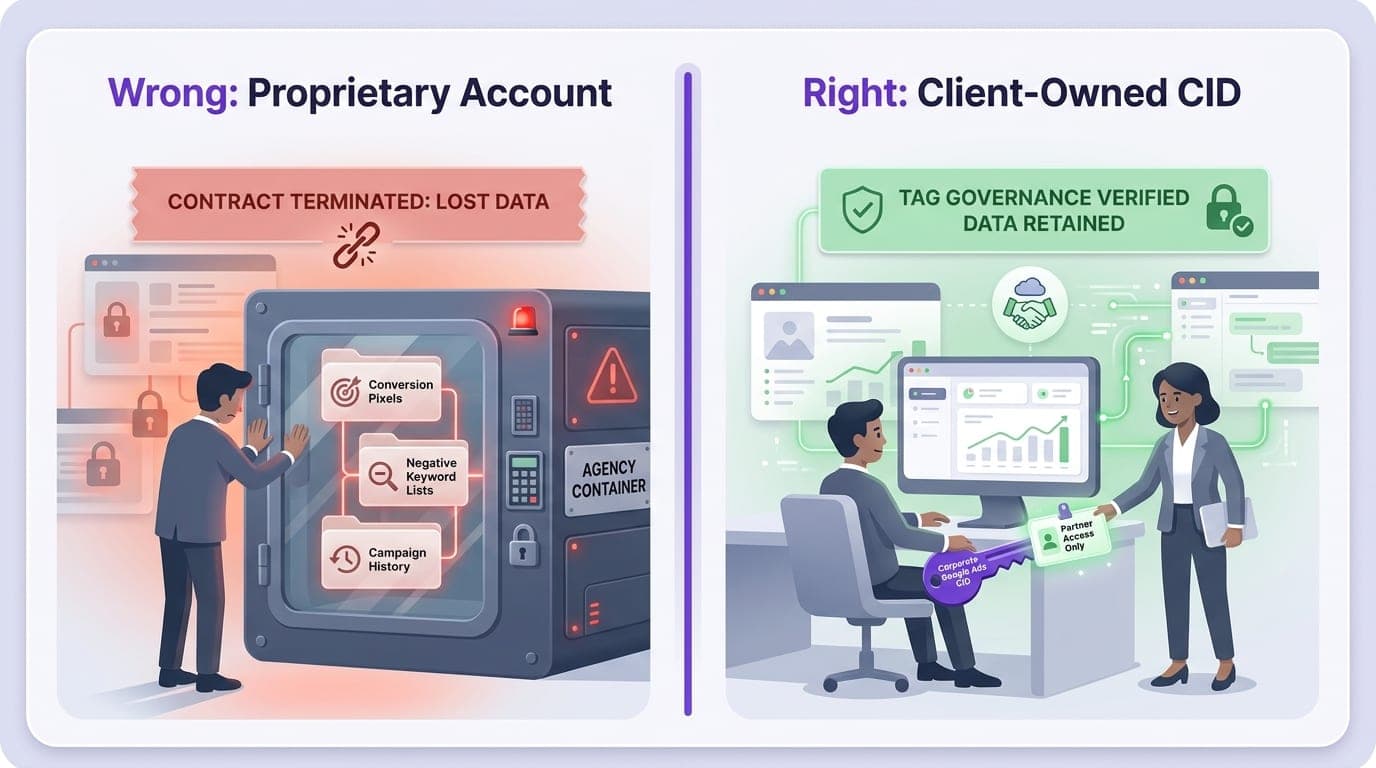
- Account ownership priority. Never permit an agency to hold your conversion pixels or campaign data inside an inaccessible proprietary container.
- Targeted conversion tracking. Profitable account management depends on server-side tracking and verified ROAS over raw click volume.
- Negative keyword pruning. Routine search query filtering eliminates wasted ad spend far faster than automated bidding algorithms alone.
Core Deliverables Included in Standard SEM Packages
An SEM package delivers an end-to-end framework to plan, execute, and optimize paid search campaigns. I expect any qualified agency to begin with comprehensive commercial intent keyword research rather than simple volume scraping.
Deliverables center around six operational pillars that protect your budget while improving conversion volume across search network auctions:
- Account structure and campaign buildout. Grouping ad sets by intent theme, match types, and geographic location.
- Responsive search ad copywriting. Creating modular headlines and descriptions tested against platform click-through standards.
- Negative keyword expansion. Adding negative terms weekly to block irrelevant queries and preserve media budget.
- Bid strategy management. Tuning target CPA or target ROAS (Return on Ad Spend) algorithms based on verified revenue data.
- Conversion tracking implementation. Deploying server-side events and lead tags via Google Tag Manager.
- Landing page alignment. Auditing post-click page speed, copy consistency, and form usability under W3C standards.
In my experience, aggressive weekly negative keyword expansion yields far greater cost reductions than relying blindly on automated bidding recommendations.
SEM Package Pricing Models and Real Monthly Costs
Most search marketing providers bill using ongoing monthly retainers rather than hourly fees. Industry survey data shows that 76% of providers prefer retainer pricing, and 74.7% of professionals charge monthly retainers.
For one-time campaign setups, 48.9% of service providers use project-based pricing. Project fees average $9,507 for agencies and $2,348 for freelancers. Providers with 5–10 years of experience charge $9,087 per project, whereas those under two years average $1,881.
| Pricing Model | Billing Mechanism | Best Suited For | Key Advantage |
|---|---|---|---|
| Flat Monthly Retainer | Fixed management fee based on scope | Predictable monthly ad spend | Transparent cost ceiling |
| Percentage of Ad Spend | Tiered percentage (often 10%–20%) | Rapidly scaling media budgets | Aligns agency resources with scale |
| Hybrid (Base + %) | Low base retainer plus modest variable % | Mid-market performance accounts | Guarantees baseline maintenance |
| Performance-Based | Base fee plus bounty per qualified lead | Established high-converting funnels | Direct incentive for acquisition |
Consultants charge an average monthly retainer price of $3,250, slightly above the agency average of $3,209. Freelancers remain the most economical tier at $1,348 per month.
The first common mistake I see buyers make is bundling ad spend and management fees into a single invoice. When an agency quotes $5,000 without separating management from actual media spend, they often pocket whatever budget they fail to deploy.
In my view, flat retainers with tiered spend thresholds provide far cleaner alignment than pure percentage-of-spend models that tempt agencies to increase ad spend needlessly.
How SEM Packages Differ from Pure SEO Retainers
While both approaches capture demand on search engine results pages, an SEM package manages paid auctions, whereas an SEO package builds organic indexation equity.
Paid search buys immediate visibility. The moment you pause your Google Ads media budget, your traffic drops to zero. Conversely, as explored in our guide to seo packages, organic optimization compounds over months through technical health and content authority.
⚡
SEM (Paid Search)
Immediate SERP placement, precise keyword auction bidding, granular demographic targeting, and continuous cost-per-click spend.
🌱
SEO (Organic Search)
Long-term organic rankings, technical website health, compounding content authority, and zero per-click media fees.
Many organizations combine both channels into hybrid search retainers. Hybrid packages prevent paid cannibalization by suppressing paid bids on brand queries where organic rankings already dominate.
For large organizations scaling complex catalogs, coordinating paid data with enterprise search engine optimization uncovers high-converting keywords that deserve permanent organic landing pages.
In my assessment, relying entirely on paid search without building organic search equity creates an unsustainable business risk as auction click prices escalate.
Standard SEM Service Tiers from Starter to Enterprise
SEM packages naturally scale across three operational tiers based on account complexity, channel scope, and testing velocity.
- Starter / Local Growth Tier. Focuses on single-network Google Ads setups for local service businesses or single-product catalogs. Includes core negative lists, call tracking, and bi-weekly bid checks.
- Mid-Market / Regional Tier. Expands across Google and other search engines other than google, incorporating Microsoft Advertising. Adds remarketing audiences, dynamic search ads, and split testing for conversion funnels.
- Enterprise Omnichannel Tier. Covers national or multi-currency global campaigns. Delivers full data warehouse attribution, automated API bidding rules, customized scripts, and dedicated landing page design.
Enterprise scopes also involve deep competitive intelligence. Teams frequently evaluate competitor impression share and copy shifts using tools compared in our moz vs semrush vs ahrefs marketing breakdown.
I recommend mastering single-engine query intent on your primary channel before allocating resources across secondary networks.
Performance Metrics and Reporting Cadence to Hold Agencies Accountable
A competent SEM agency should never hide behind monthly vanity summaries. I evaluate account health using weekly spend pacing checks paired with detailed monthly business reviews.
Your package must include automated dashboard access through Google Looker Studio or direct data feeds tracking commercial metrics:
- Cost Per Acquisition (CPA). The blended media and labor cost required to generate a qualified lead.
- Return on Ad Spend (ROAS). Total revenue generated divided by gross media expenditure.
- Conversion Rate (CVR). The percentage of ad clicks that trigger verified purchase or lead events tracked in Google Analytics 4.
- Search Impression Share. How frequently your ads display relative to the total available auction inventory.
- Quality Score. The expected CTR, ad relevance, and landing page experience tracked via Google Ads Quality Score guidelines.
In my experience, agencies that report top-line clicks while ignoring qualified lead pipeline performance are usually concealing wasted ad spend.
How to Evaluate an SEM Agency and Spot Critical Red Flags
Selecting an agency requires verifying technical ownership and governance before signing any long-term service agreement.
The second common mistake buyers make is allowing an agency to run campaigns inside a proprietary agency account. If you ever terminate that contract, they keep your conversion history, campaign architecture, and negative keyword lists.
- Demand account ownership. Ensure all campaigns run within your own Google Ads Manager CID, granting the agency partner access only.
- Verify tag governance. Confirm conversion pixels are configured in your corporate container using Google Tag Manager.
- Inspect negative keyword frequency. Review the account change log to confirm the agency actively filters waste at least weekly.
- Refuse long lock-ins. Avoid rigid 12-month initial commitments without a 60-day performance break clause.
- Audit landing page testing. Ensure your provider tests landing pages rather than dumping paid traffic onto generic homepages.

I always advise marketing leaders never to sign an SEM retainer that locks historical campaign performance data inside an agency-owned container.
If your paid campaigns are running smoothly but your organic search footprint needs scalable infrastructure, ProgSEO automatically builds and updates data-backed search pages to capture compounding non-paid traffic alongside your active marketing efforts.
No. SEM package fees cover agency labor, campaign architecture, ad copywriting, and daily bid optimizations. Your ad spend is billed directly to your company payment method by Google or Microsoft.
Agency retainers average $3,209 per month, with 64% under $1,000 and 13% between $2,000 and $5,000, while freelance search retainers average $1,348 monthly.
Most quality agencies operate on 3-month to 6-month initial agreements before transitioning to rolling monthly retainers. Avoid long lock-ins that lack clear performance milestones.
Yes. Combining SEM and SEO creates a hybrid search strategy that captures immediate auction leads while building durable organic keyword visibility across organic search results.
Sources & References
- Organic Media Group — Industry benchmarks on agency retainer pricing, project models, and provider billing structures.
- Google Ads — Official platform portal for commercial search ad network management and budget controls.
- Google Ads Help — Technical guidelines regarding Quality Score metrics, CTR expectations, and ad relevance.
- Google Ads Conversion Tracking Documentation — Official implementation standards for measurement tags and event conversion actions.
- Google Tag Manager Support — Deployment documentation for container setups and client-side event tracking.
- Google Analytics 4 Help — Standard procedures for conversion event tracking and web attribution.
- Microsoft Advertising — Official portal for managing search ad inventory on Bing and partner networks.
- Google Looker Studio — Official reporting suite for real-time paid search dashboards and analytics visualization.
- W3C Web Accessibility Guidelines — Technical standards for web usability and high-performing digital landing pages.