To build a profitable search engine marketing strategy, you need to align commercial search queries directly with tightly grouped campaigns, dedicated landing pages, and verified conversion tracking. Over the past decade running paid acquisition, I have learned that launching a scalable SEM system takes roughly two weeks of setup using Google Ads, Google Tag Manager, and basic competitive intelligence tools.
▶ Related Video
SEO in 2025: How I'd Learn it if I Were Starting Over
| Strategy Phase | Primary Focus | Core Metric | Benchmark Standard |
|---|---|---|---|
| Account Architecture | Single-theme ad groups split by intent | Impression Share | > 75% on core commercial terms |
| Keyword Curation | High-intent commercial terms and negative lists | Click-Through Rate (CTR) | > 5% on top-of-page search ads |
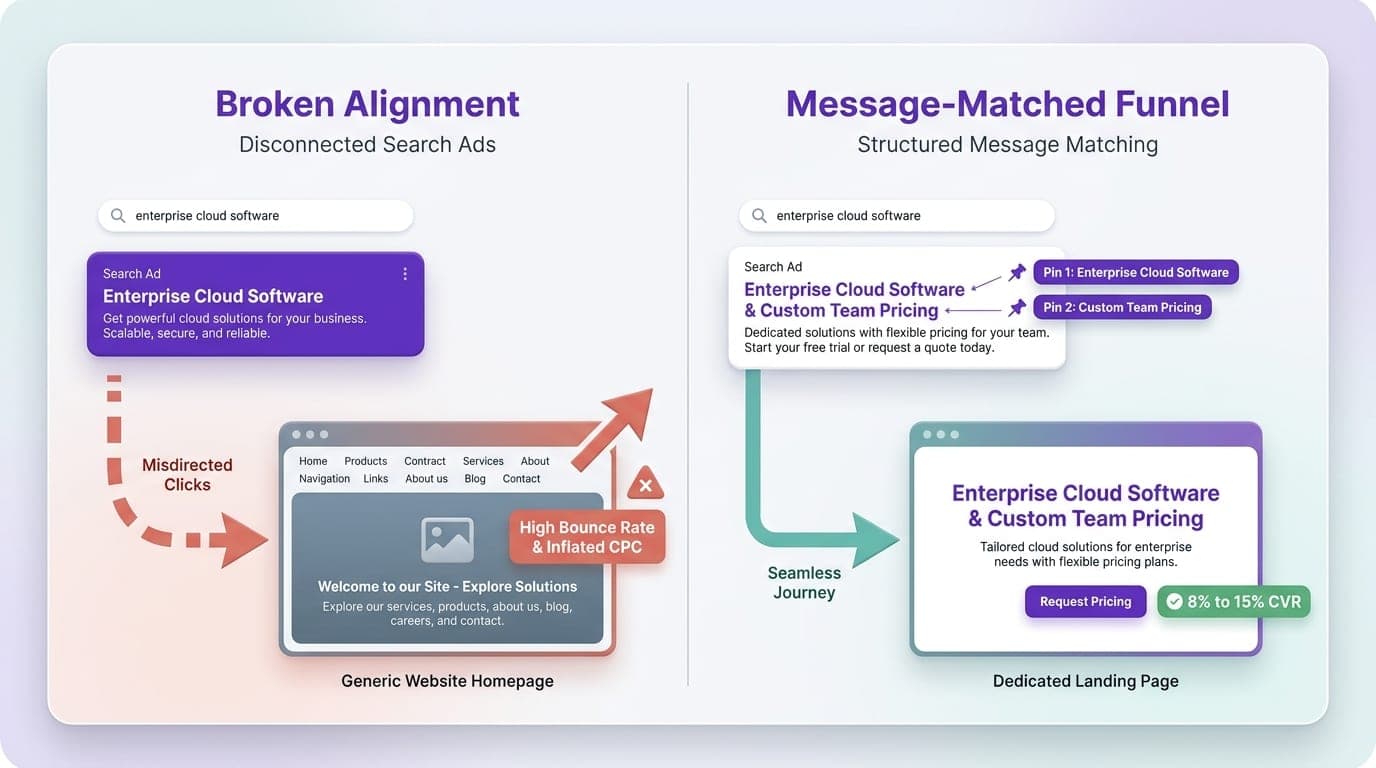
| Post-Click Experience | Message-matched, high-speed landing pages | Conversion Rate (CVR) | 8% to 15% for dedicated pages |
| Bidding Automation | Algorithmic adjustment based on value signals | Return on Ad Spend (ROAS) | 3x to 5x blended return |
| Account Pruning | Search term filtering and match type audits | Cost Per Acquisition (CPA) | Within target customer margin |
Key Takeaways
- Structure determines relevance. Grouping ad groups by tight semantic themes prevents budget waste and drives higher Quality Scores.
- Smart Bidding requires conversion volume. Automated algorithms need at least 30 reliable conversion actions per month before shifting away from manual control.
- Exact match protects initial capital. Broad match terms without massive negative lists will erode margins on tangential queries.
- Quality Score actively reduces costs. Raising your score from 5 to 8 reduces actual cost per click by up to 30 percent.
- Paid queries validate organic roadmaps. Feeding top-converting search terms into your content engine creates compounding organic visibility.
Defining Objectives and Search Channel Architecture
Every profitable search campaign starts with strict commercial objectives rather than arbitrary traffic numbers. In my experience, teams that launch without predetermined Target CPA or Target ROAS thresholds inevitably overpay for bottom-funnel clicks while chasing vanity metrics.
Paid search functions fundamentally differently from organic acquisition. While organic search compounds slowly over months, paid search provides immediate auction access and rapid query testing. I treat paid search as an immediate validation tool that tests message framing and conversion readiness before committing long-term resources, often referencing a structured SEO strategy plan PDF to align organic assets with proven paid winners.
When structuring your account, avoid the legacy mistake of cramming hundreds of miscellaneous terms into single ad groups. I organize accounts using Single-Theme Ad Groups (STAGs). Under this setup, each ad group contains three to five tightly related keywords that share identical search intent and trigger bespoke ad creatives.
- Brand Protection Campaigns: Dedicated solely to proprietary brand queries to secure position one at low cost per click (CPC).
- High-Intent Commercial Campaigns: Targeted at searchers actively seeking software, services, or transactional solutions.
- Competitor Alternative Campaigns: Structured around rival brand names paired with terms like 'alternative' or 'comparison'.
- Discovery Campaigns: Broad-match experimental groups isolated with strict budget caps to mine emerging query themes.
My opinion is that separating your brand campaigns from non-brand search is non-negotiable. Blending brand traffic with non-brand terms disguises poor commercial performance under inflated account-wide ROAS figures.
Commercial Keyword Research and Match Type Filtering
Keyword research for search advertising must prioritize transactional and commercial intent above raw volume. Bidding on high-volume informational queries will quickly exhaust your daily budget on researchers who have zero intention of buying.
I begin keyword discovery by analyzing search auction dynamics and competitor visibility. Reviewing competitive footprints using tools compared in our Moz vs Semrush vs Ahrefs marketing breakdown reveals exactly which paid terms competitors defend month after month. Industry reporting on Search Engine Land consistently highlights that competitive bid pressure concentrates on high-intent conversion terms.
“The fastest way to burn an advertising budget is bidding on what people want to learn instead of what people want to buy.”
- Paid Search Audit Principle
Mistake 1: Unleashing broad match without aggressive negative lists. Many advertisers trust automated broad match defaults immediately after campaign launch. This mistake allows search engines to match queries against completely unrelated searches, destroying efficiency.
- Exact Match ([keyword]): Deployed on core revenue drivers where search syntax and user intent must match precisely.
- Phrase Match ("keyword"): Used to capture meaningful variations that preserve the core meaning of the transactional query.
- Broad Match (keyword): Reserved exclusively for mature accounts with established conversion histories and robust audience signals.
- Universal Negative Lists: Applied across all campaigns to filter out queries containing 'free', 'jobs', 'salary', or 'login'.
In my view, you should never deploy broad match terms during your first thirty days of advertising. Start with strict exact match and disciplined phrase match until you establish baseline conversion rates.
Ad Copywriting, Creative Assets, and Landing Page Relevance
Winning search auctions requires maximizing your Ad Rank, which search engines calculate using your maximum bid alongside your Quality Score. According to official guidelines on Google Ads Quality Score, relevance depends on expected CTR, ad relevance, and landing page experience.
To maximize CTR on Responsive Search Ads (RSAs), write up to fifteen distinct headlines and four descriptions. Modern search auctions assemble these assets dynamically. However, letting algorithms assemble ad copy completely unchecked can yield repetitive or disorienting headlines.
- Pin Position One: Lock your primary keyword directly into headline position one to confirm query relevance instantly.
- Pin Position Two: Reserve headline position two for your primary value proposition or distinct commercial differentiator.
- Dynamic Insertion: Use keyword insertion cautiously on exact match groups to reflect the searcher's precise query.
- Ad Assets Deployment: Populate sitelinks, callout assets, structured snippets, and lead forms to dominate visual real estate.
- Clear Commercial CTA: Avoid passive language and instruct searchers explicitly to 'Book a Demo' or 'Request Pricing'.
Post-click relevance matters just as much as ad copy. If your ad promises enterprise pricing, sending users to a generic homepage causes instant bounces. I recommend building dedicated pages via platforms like Unbounce that echo the exact phrasing of your top-performing ads.
My opinion on ad copy is firm: headline pinning remains essential for serious enterprise brands. Letting an algorithm experiment without human-enforced constraints frequently generates embarrassing combinations that damage brand trust.
Smart Bidding Protocols and Budget Allocation
Choosing the correct bidding strategy depends entirely on the conversion data maturity of your ad account. Many advertisers rush into full automation before giving the underlying machine learning algorithms sufficient conversion signals to make accurate bids.

Official documentation for Google Ads Smart Bidding confirms that strategies like Target CPA and Target ROAS utilize auction-time bidding. The algorithm calculates contextual user signals like device, operating system, time of day, and geographic location to adjust bids dynamically.
Mistake 2: Switching to automated Smart Bidding prematurely. When a new campaign lacks at least 30 conversions over the trailing 30 days, automated bidding algorithms struggle to distinguish converting users from passive browsers, resulting in erratic spending swings.
- Phase 1 (Manual CPC with Enhanced CPC): Retain precise bid control during account launch to discover true market clearing prices.
- Phase 2 (Maximize Conversions): Transition once ad groups log steady weekly conversions, setting a strict cap to prevent bid inflation.
- Phase 3 (Target CPA): Apply when scaling volume at a defined customer acquisition cost, keeping target CPA realistic against historic averages.
- Phase 4 (Target ROAS): Deploy on e-commerce or tiered SaaS accounts tracking varied order values to prioritize high-margin transactions.
In my experience, expanding your campaigns across Microsoft Advertising frequently lowers acquisition costs. Enterprise searchers on desktop devices using Edge often yield lower CPCs and higher deal sizes than the standard Google auction.
Audience Layering, Conversion Tracking, and Campaign Optimization
A high-performing search engine marketing strategy relies on continuous optimization rituals rather than passive campaign maintenance. Once your campaigns are live, tracking integrity and audience qualification separate market leaders from unprofitable accounts.

Setting up conversion tracking through Google Tag Manager ensures primary actions—such as completed checkouts or submitted lead forms—are tracked accurately. I always configure server-side conversion imports to prevent client-side ad blockers from dropping critical attribution data.
Layering targeted audiences onto your search keywords substantially sharpens bidding precision. Using Remarketing Lists for Search Ads (RLSA), you can bid aggressively on broad commercial terms specifically for searchers who have already visited your pricing page.
- Customer Match: Upload hashed first-party customer lists to exclude active clients from prospecting campaigns.
- In-Market Audiences: Layer users demonstrating active purchase intent for your category in 'Observation' mode to measure bid performance.
- Weekly Search Term Audits: Review exact user queries weekly to harvest high-performing variants and prune negative keywords.
- Bid Adjustment Audits: Review device, location, and scheduling performance to reduce bids on poor-performing segments.
Paid search data should never exist in a silo. Feeding converting search terms into your organic pipeline supports broader enterprise search engine optimization by uncovering commercial questions that merit dedicated editorial resources.
My firm opinion is that daily bid adjustments harm automated campaigns. Machine learning algorithms require stability; tinkering with bids or budgets every twenty-four hours resets the learning phase and creates artificial performance dips.
To scale your overall search presence without running into manual content bottlenecks, I recommend pairing paid query discovery with ProgSEO to turn your verified search data into high-ranking programmatic landing pages. It bridges the gap between expensive paid clicks and automated organic acquisition.
SEM focuses primarily on paid search advertising to secure immediate top-of-page visibility through ad auctions, while SEO focuses on optimizing website technical health and content to earn unpaid organic rankings over time.
For modern accounts, stick to three to five tightly related keywords per ad group. Keeping groups small ensures your ad copy and landing page closely match user intent, which keeps Quality Scores high.
Most campaigns require two to four weeks and at least 30 to 50 conversions to gather statistically meaningful data before you can accurately judge performance or activate automated Smart Bidding.
A low Quality Score usually stems from poor landing page load speeds, weak message matching between your ad text and landing page headline, or low expected click-through rates relative to auction competitors.
Sources & References
- Google Ads — Official management console and guidelines for search advertising campaigns.
- Google Tag Manager — Primary tool for event deployment and conversion tag orchestration.
- Google Ads Quality Score Guide — Documentation outlining the technical components of Ad Rank and expected CTR.
- Search Engine Land — Industry news covering search engine auction trends and keyword match updates.
- Unbounce — Dedicated landing page optimization platform for conversion rate testing.
- Google Ads Smart Bidding — Official technical documentation explaining auction-time algorithmic bidding strategies.
- Microsoft Advertising — Enterprise search network management portal for desktop and cross-platform search auctions.