When I build organic growth engines, I never treat writing as an isolated creative act. Master content planning and optimization by systematically matching user problems, structuring cluster architecture, applying rigorous semantic checks, and refreshing decaying URLs. This predictable process replaces guesswork with steady compounding rankings.
▶ Related Video
The Top 7 Content Strategies To Get Ahead of Everyone Else
| Workflow Phase | Primary Objective | Key Deliverable | Success Metric |
|---|---|---|---|
| Phase 1: Research | Identify unmet audience queries and SERP formats | Search intent brief | Keyword alignment score |
| Phase 2: Architecture | Group queries into logical topical silos | Keyword cluster map | Topical coverage ratio |
| Phase 3: Production | Execute drafts with clear editorial timelines | Editorial calendar | On-time delivery rate |
| Phase 4: Optimization | Satisfy on-page semantic and readability benchmarks | Scored pre-publish draft | NLP content score >= 80 |
| Phase 5: Maintenance | Identify and remediate ranking losses | Content refresh backlog | Recovered organic clicks |
Key Takeaways
- Intent dictates page format. Aligning your article structure with the live SERP layout matters far more than gross search volume.
- Clusters establish topical authority. Building dedicated sub-topic spokes around a central pillar outperforms disconnected, one-off articles.
- Enforce 48-hour stage gates. Keeping editorial production moving requires rigid handoffs between brief creation, drafting, and technical review.
- Score entities before publishing. Use natural language processing tools to surface semantic omissions before your draft goes live.
- Refreshes yield faster ranking gains. Updating decaying content with established URL authority routinely outperforms launching brand-new pages from scratch.
Distinguishing Planning From Optimization
I view planning as determining what to create and why, while optimization dictates how search engines and humans consume it. Confusing the two causes teams to write aimless prose or over-optimize irrelevant topics.
Planning establishes your business priorities, keyword coverage, and publishing tempo. Optimization refines that roadmap through semantic headings, entity enrichment, internal links, and layout structure.
I believe separating planning from optimization creates silos that ruin execution speed. When my writers understand on-page requirements during brief creation, drafts require fewer revision cycles.
Audience Research and Search Intent Discovery
Audience research starts by uncovering the exact friction points prospective customers experience before they even consider your brand. I dissect customer service transcripts, sales call recordings, and forum threads to identify these real-world objections.
Search engines categorize this demand into four primary intents: informational, commercial, transactional, and navigational. To diagnose intent correctly, study the live SERP using Google's search documentation as a guide for what algorithms reward.
If top results are step-by-step guides, writing a product comparison page guarantees failure. You must match the SERP format, whether it demands calculators, templates, or teardowns.
Here is a common mistake I see constantly: mistaking search volume for commercial intent. A keyword with 20,000 monthly searches that brings zero qualified pipeline costs more to produce than a 200-volume keyword that drives high-intent buyers.
In my view, traditional persona documents with fictional hobbies are an absolute waste of time for SEO. I care only about the buyer's acute pain points, technical objections, and purchasing authority.
- Analyze SERP features: Inspect whether Google serves video carousels, featured snippets, or discussion forums for the query.
- Audit competitor page angles: Note whether the ranking pages target beginners, practitioners, or enterprise buyers.
- Extract recurring forum questions: Mine communities like Reddit to find nuance that generic keyword tools overlook.
- Map user journey stage: Categorize every query as problem-aware, solution-aware, or decision-ready before drafting.
Keyword Mapping and Topic Cluster Architecture
I organize keyword targets into topical clusters rather than treating every keyword as an isolated blog post. A pillar page covers the broad core topic, supported by closely related cluster spokes that resolve specific sub-questions.
To see how large brands structure complex sites, look at enterprise search engine optimization patterns. Internal links connect these cluster pages directly back to the pillar, passing authority and establishing topical depth.
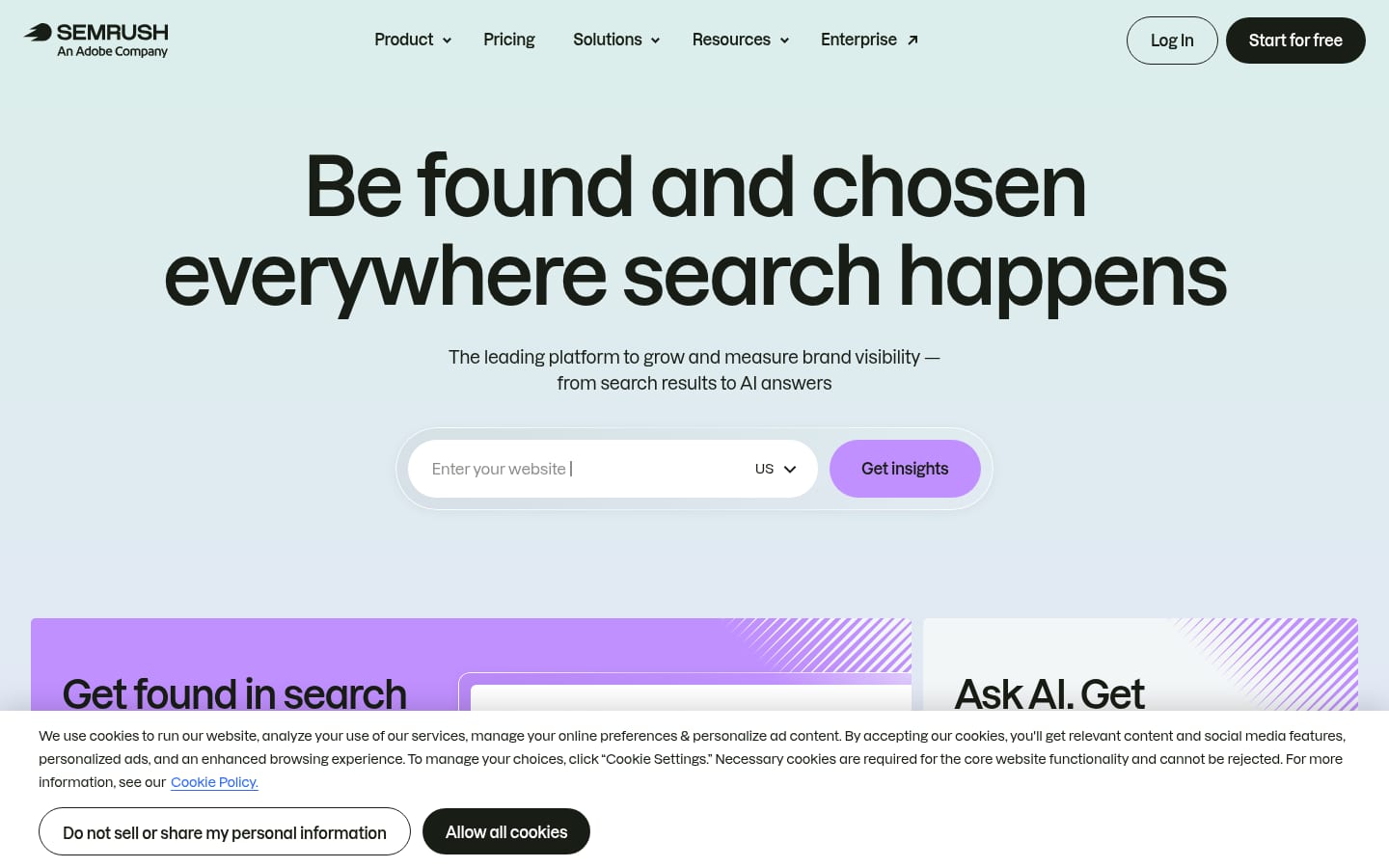
According to research on topic clusters by Semrush, structuring content hierarchically improves topical relevance signals for search crawlers. This prevents keyword cannibalization across your catalog.
I think building more than five cluster spokes before publishing the pillar is a massive strategic blunder. Launch the core page first, observe early indexing, and expand spokes incrementally based on verified impressions.
- Select the core pillar topic: Define a high-level head term with broad informational demand.
- Identify long-tail spokes: Find 4-8 secondary queries that answer distinct sub-problems.
- Establish bidirectional linking: Ensure every spoke points to the pillar with descriptive anchor text.
- Assign unique primary keywords: Verify that no two pages compete for identical search queries.
Editorial Calendars and Workflow Scheduling
An editorial calendar is an operational contract between research, drafting, design, and technical review. Without clear stage gates, content teams miss deadlines and produce inconsistent work.
I track draft progress across five discrete stages: brief development, initial draft, peer review, SEO staging, and scheduled publication. Giving each stage a 48-hour SLA keeps pipelines moving.
While social channels require real-time reactive scheduling as outlined by Sprout Social's calendar strategies, search-driven content demands steady compounding output. I align publication dates to internal product releases and seasonal search peaks.
In my experience, spreadsheets make terrible production trackers once a team passes two writers. They lack automated notifications, invite version-control disasters, and fail to track granular status changes.
- Assigned target keyword: Explicitly display primary and secondary keyword goals on every card.
- Stage ownership: Designate exactly one responsible person for each production phase.
- Review deadlines: Enforce strict cutoff windows for editorial revisions and technical sign-offs.
- Asset repositories: Centralize research briefs, draft links, and visual assets in one location.
Pre-Publication On-Page SEO and Content Scoring
Before any article goes live, I run a systematic pre-flight audit that evaluates semantic entities, structural hierarchy, and readability. Writing brilliant prose means nothing if search crawlers fail to parse your semantic relationships.
Start with your metadata. Craft title tags that incorporate the target keyword near the beginning, adhering to Google's title link documentation to prevent automated truncation in search results.
Structure the body with a single H1 tag, logical H2 subheadings, and descriptive H3 sections. When tackling extensive enterprise libraries, adopt advanced techniques for large-scale content optimization to streamline heading hierarchies.
Distribute your contextual links deliberately. Every page must link back to relevant cluster pages using clear anchor text, following Moz's internal linking guidelines to distribute link equity throughout the domain.
I believe chasing a 100/100 content grade in NLP scoring tools harms natural readability and reader engagement. Algorithmic scoring should guide topic breadth, not force awkward keyword stuffing.
- Title tag length: Keep titles between 50-60 characters with the primary query placed upfront.
- Meta description intent: Write 150-160 characters summarizing the core benefit and value proposition.
- Heading integrity: Confirm that H2 and H3 elements answer direct sub-queries logically.
- Image accessibility: Include descriptive alt attributes that reflect visual context, not keyword spam.
- Scannable paragraphs: Limit paragraphs to under 50 words to improve mobile readability metrics.
The Essential Software Stack for Scale
Scaling production requires specialized tools that eliminate manual friction across keyword discovery, semantic analysis, and workflow management. Modern teams increasingly recognize why automated SEO tools are replacing manual optimization across repetitive tasks.
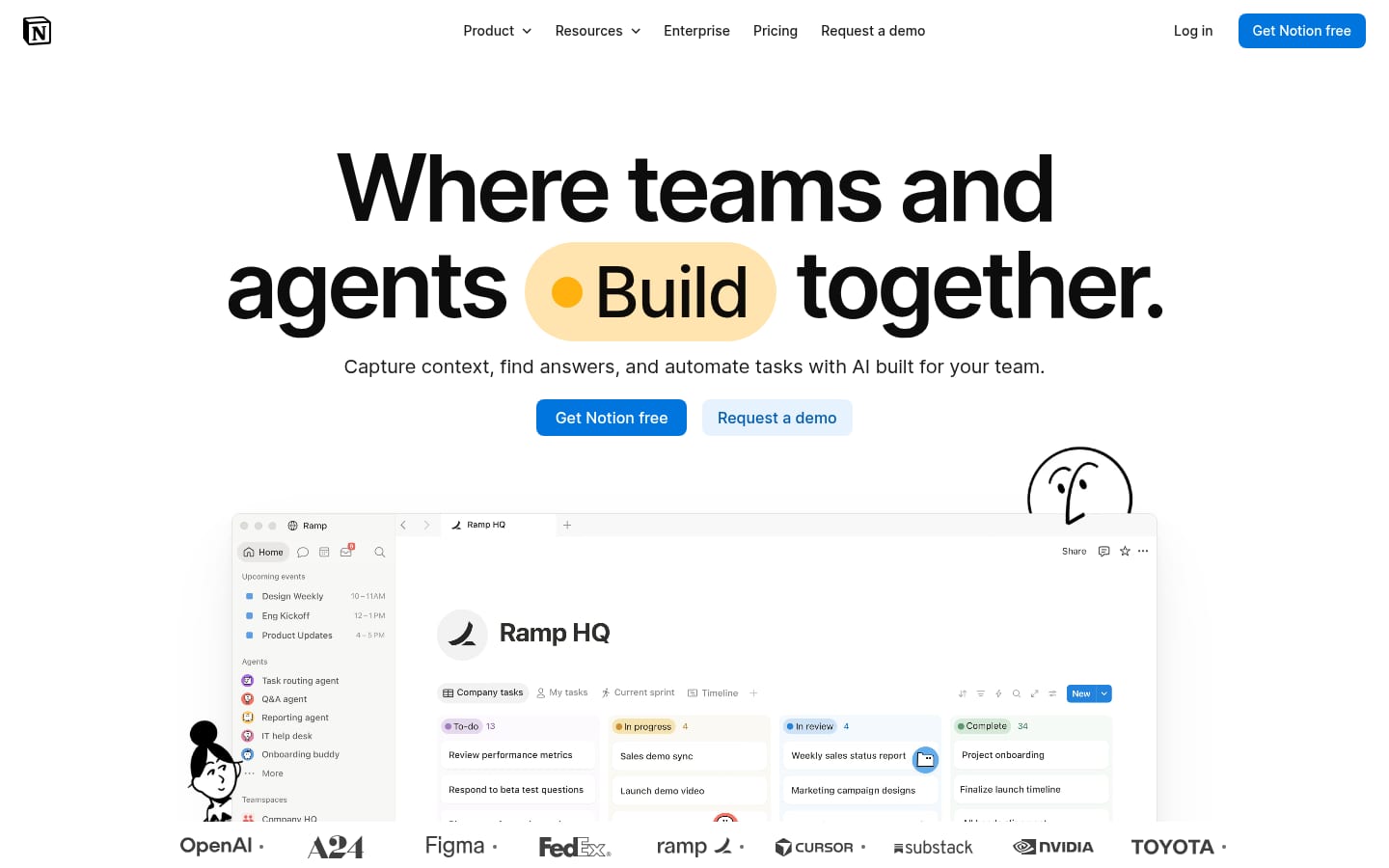
For comprehensive keyword metrics and competitor backlink gap analysis, Ahrefs' search intent analysis helps identify precise traffic opportunities. Combine this with workspace tools like Notion or Asana to manage editorial pipelines.
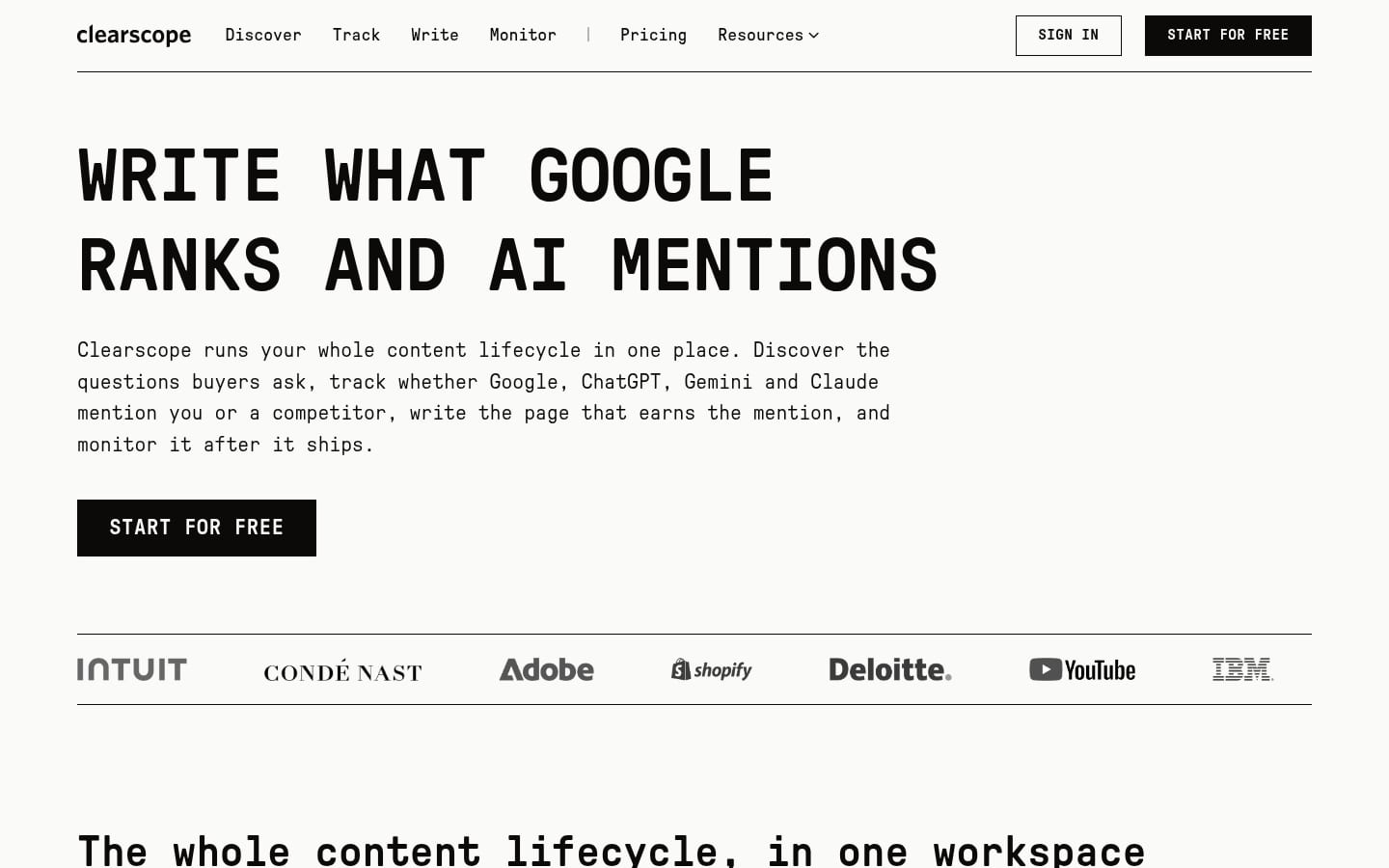
For semantic optimization and content scoring, platforms like Clearscope benchmark your draft against the top thirty search results. They identify missing entities, recommended word counts, and searcher questions.
In my view, all-in-one marketing suites are generally inferior to specialized point tools for deep optimization. Dedicated software delivers fresher data, better NLP parsing, and faster interface responsiveness.
- Keyword research: Tools like Ahrefs and Semrush for volume, difficulty, and SERP history.
- Content scoring: NLP platforms like Clearscope and Surfer for semantic entity extraction.
- Workflow tracking: Project management software like Notion, ClickUp, or Airtable for stage gates.
- Performance monitoring: Native consoles like Google Search Console for real-world impression tracking.
Post-Publication Auditing and Decay Remediation
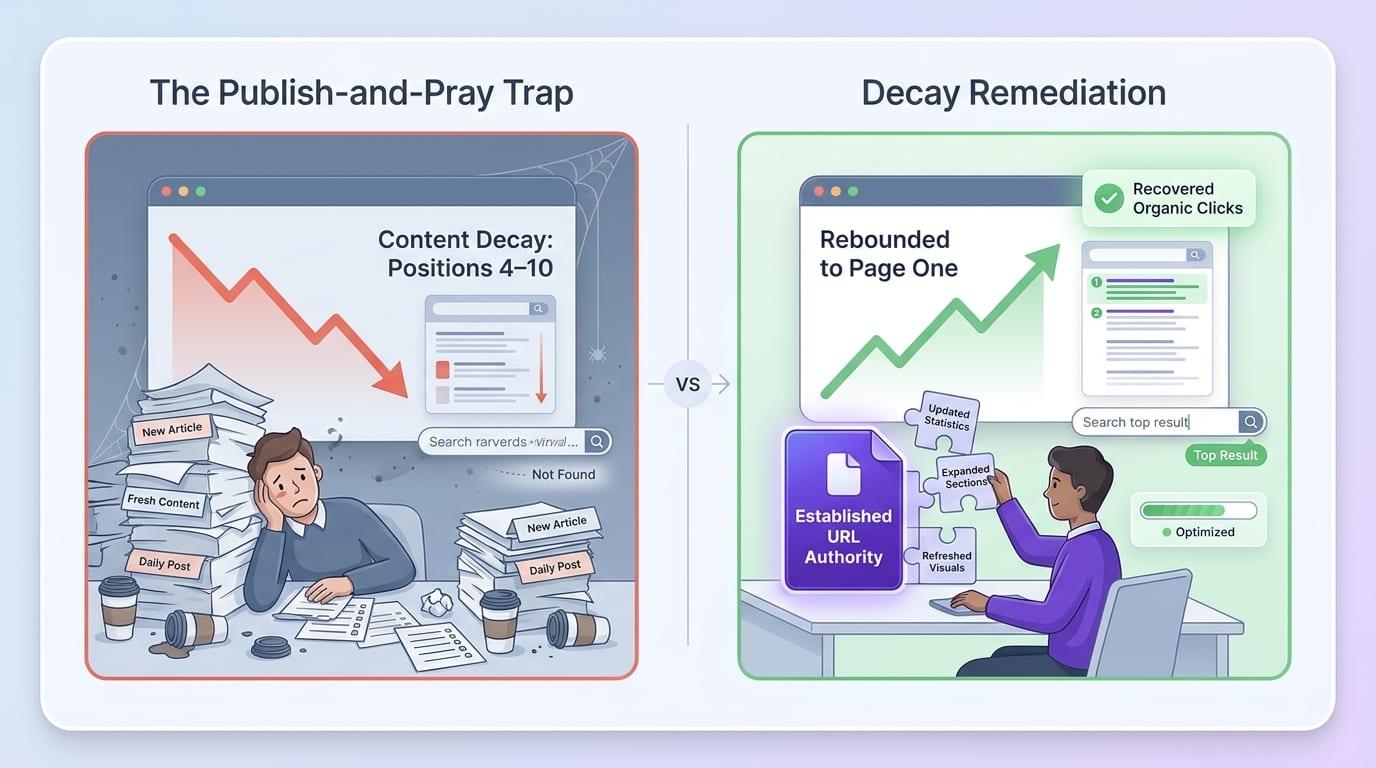
Publishing is merely the starting line for organic traffic. Every piece of content gradually experiences content decay as competitors publish fresher resources and search algorithms evolve.
I audit existing content every six months by evaluating performance metrics inside Google Search Console. Look for pages losing impressions or dropping from positions 4 through 10.
This brings us to the second major mistake: the publish-and-pray trap. Teams churn out dozens of new articles while ignoring declining legacy URLs that already have authority and backlinks.
When updating decaying content, I replace outdated statistics, add new practical examples, expand thin sections, and re-optimize headings. Pair these refreshes with a structured conversion optimization plan to monetize recovered traffic.
I consider content updates far more lucrative than drafting new articles from scratch. Refreshed content often rebounds to page one within three weeks because Google already trusts the URL.
- Isolate decaying URLs: Identify articles showing negative 6-month traffic deltas in search analytics.
- Diagnose the ranking slip: Check if competitors introduced interactive tools, fresher stats, or deeper intent answers.
- Expand semantic depth: Incorporate newly trending secondary keywords that have emerged since publication.
- Request re-indexing: Submit the refreshed URL directly via Search Console inspection for faster processing.
Managing a high-velocity publication schedule across research, on-page optimization, and regular refreshes requires disciplined operations. If you need to scale production automatically without sacrificing data-backed relevance, ProgSEO creates programmatic, search-optimized pages directly from your existing catalog data.
Content planning focuses on audience research, topic clustering, and editorial scheduling to determine what to publish. Content optimization focuses on on-page SEO, semantic keywords, readability, and structural elements to help existing or planned drafts rank higher.
Select keywords by balancing commercial intent, topical relevance to your core product, and search volume. Group queries into topic clusters and prioritize topics that directly solve customer problems over high-volume generic keywords.
Run the draft through a content scoring tool, optimize title tags and meta descriptions, structure headers logically from H1 to H3, embed internal links to cluster pages, and compress all images with descriptive alt text.
Audit your entire catalog every six months. Identify decaying pages losing impressions in Google Search Console and refresh them with updated data, new search entities, and refreshed internal links.
Sources & References
- Google Search Central Help — Official guidelines on creating helpful, people-first content.
- Ahrefs Blog — Methodologies for identifying and mapping organic search intent.
- Semrush Blog — Research and tactical guidance for structuring topic clusters.
- Google Search Central Documentation — Best practices for managing title links and metadata in search results.
- Sprout Social Insights — Frameworks for planning and managing multi-channel publication calendars.
- Moz Learning Center — Strategies for building website authority through internal linking architecture.
- Clearscope Official Platform — Advanced semantic content scoring and NLP entity analysis.
- Google Search Console Help — Performance tracking and impression monitoring documentation.
- Notion — Workspace software for building editorial production databases and workflows.