If you are trying to grow organic traffic, improve search rankings, and build a stronger online presence, backlinks are one of the most important SEO concepts to understand. This backlinks guide explains what backlinks are, why they matter, how to get backlinks to your website, and how to build a backlink strategy that helps your site grow without relying on risky shortcuts. Whether you are a small business owner, SaaS founder, blogger, affiliate marketer, or content marketer, backlinks can become one of the most valuable assets in your SEO system.
A backlink is a link from another website to your website. In simple terms, when another site mentions your page and links to it, that link becomes a backlink. Search engines use backlinks as signals of trust, authority, relevance, and popularity. If many respected websites link to a page, search engines may interpret that page as useful and reliable. This does not mean every backlink is valuable, though. A single high-quality backlink from a relevant and trusted website can be more powerful than dozens of weak links from low-quality directories, spammy blogs, or irrelevant websites.
Backlinks are not magic, and they do not replace good content, technical SEO, or a clear search intent strategy. However, they often act as the difference between a page that is published and ignored and a page that earns rankings, visibility, and traffic. The strongest SEO strategies combine useful content, strong internal linking, clean site architecture, keyword research, and consistent backlink acquisition. In other words, backlinks work best when they support a website that already deserves to rank.
What Are Backlinks?
Definition and Importance
Backlinks are external links pointing from one website to another. For example, if a marketing blog writes an article about SEO tools and links to your website as a recommended resource, your website has earned a backlink from that blog. From the user’s perspective, a backlink is a path to another useful page. From the search engine’s perspective, a backlink can be interpreted as a vote of confidence, especially when the linking page is relevant, trusted, and editorially selective.
The importance of backlinks comes from the way the web is structured. Links connect pages, help users discover information, and help search engines crawl and understand relationships between websites. A page that receives links from other credible pages is often seen as more important than a page with no external references. This is why backlinks have been part of SEO from the earliest days of search engines. While algorithms have become much more advanced, links still remain a major part of how search engines evaluate authority and relevance.
It is useful to separate backlinks from internal links. Internal links point from one page on your website to another page on the same website. Backlinks come from external domains. Both matter, but they play different roles. Internal links help distribute authority across your own pages and guide users through your site. Backlinks help bring authority, trust, discovery, and referral traffic from outside sources. A healthy SEO strategy usually needs both.
For beginners, the easiest way to understand backlinks is to think of them as recommendations. If a respected person in your industry recommends your work, people are more likely to trust you. If a low-quality anonymous source recommends you, that recommendation may not matter much. The same idea applies to backlinks. The source, context, relevance, and quality of the recommendation matter more than the raw number of links.
Types of Backlinks
Not all backlinks are the same. Some links pass stronger SEO value, while others may mainly help with brand awareness, referral traffic, or discovery. Understanding the different types of backlinks helps you avoid wasting time on weak tactics and focus on the link building methods that actually support long-term growth.
| Type of Backlink | SEO Value | Risk Level | Best Use Case |
|---|---|---|---|
| Editorial backlinks | Very high | Low | Earned naturally through useful content, original research, or expert commentary. |
| Guest post backlinks | Medium to high | Medium | Building authority through relevant industry websites. |
| Digital PR backlinks | Very high | Low | Earning links from media, journalists, reports, and newsworthy campaigns. |
| Directory backlinks | Low to medium | Low to medium | Local SEO, SaaS listings, niche business profiles, and trusted directories. |
| Forum and community links | Low | Medium | Referral traffic, community visibility, and helpful participation. |
| Broken link building backlinks | Medium to high | Low | Replacing outdated or broken resources with your useful content. |
| Paid or spammy backlinks | Unstable | High | Usually best avoided because they can create long-term SEO risk. |
One of the most common distinctions is between dofollow and nofollow links. A standard link can pass ranking signals from one page to another. A nofollow link includes an attribute that tells search engines not to treat the link as a traditional endorsement in the same way. However, nofollow links are not useless. They can still bring referral traffic, brand exposure, and discovery. A natural backlink profile usually includes a mix of different link types.
The best backlinks are usually editorial. These are links that someone chooses to add because your content helps their readers. For example, a journalist may link to your original data, a blogger may reference your guide, or an industry website may cite your free tool. These links are valuable because they are earned through usefulness rather than manipulation. If you want to get quality backlinks, your first question should not be “Where can I place links?” but “What can I create that other people would genuinely want to reference?”
Why Are Backlinks Critical for SEO?
Impact on Search Rankings
Backlinks influence search rankings because they help search engines understand which pages are trusted by the wider web. When multiple relevant websites link to a page, it suggests that the page contains useful information. This can improve the page’s ability to rank, especially in competitive search results where many pages have similar content quality. A page about a highly competitive keyword may need strong backlinks to stand out from other pages targeting the same topic.
However, backlinks do not work in isolation. A weak page with thin content will not become a strong SEO asset just because it has links. Likewise, a great article with no backlinks may struggle to rank if the topic is competitive. The strongest results usually come from matching high-quality content with relevant backlinks. Search engines want to show users helpful results, and backlinks are one of the signals that help identify which pages have been trusted or referenced by others.
Anchor text also matters. Anchor text is the clickable text used in a link. If many websites link to a page using words related to a topic, search engines may better understand what that page is about. For example, if several websites link to your article using anchor text like “backlinks guide” or “how to build backlinks,” that can reinforce topical relevance. But over-optimized anchor text can look unnatural. A healthy backlink profile includes branded anchors, URL anchors, partial-match anchors, generic anchors, and natural phrases.
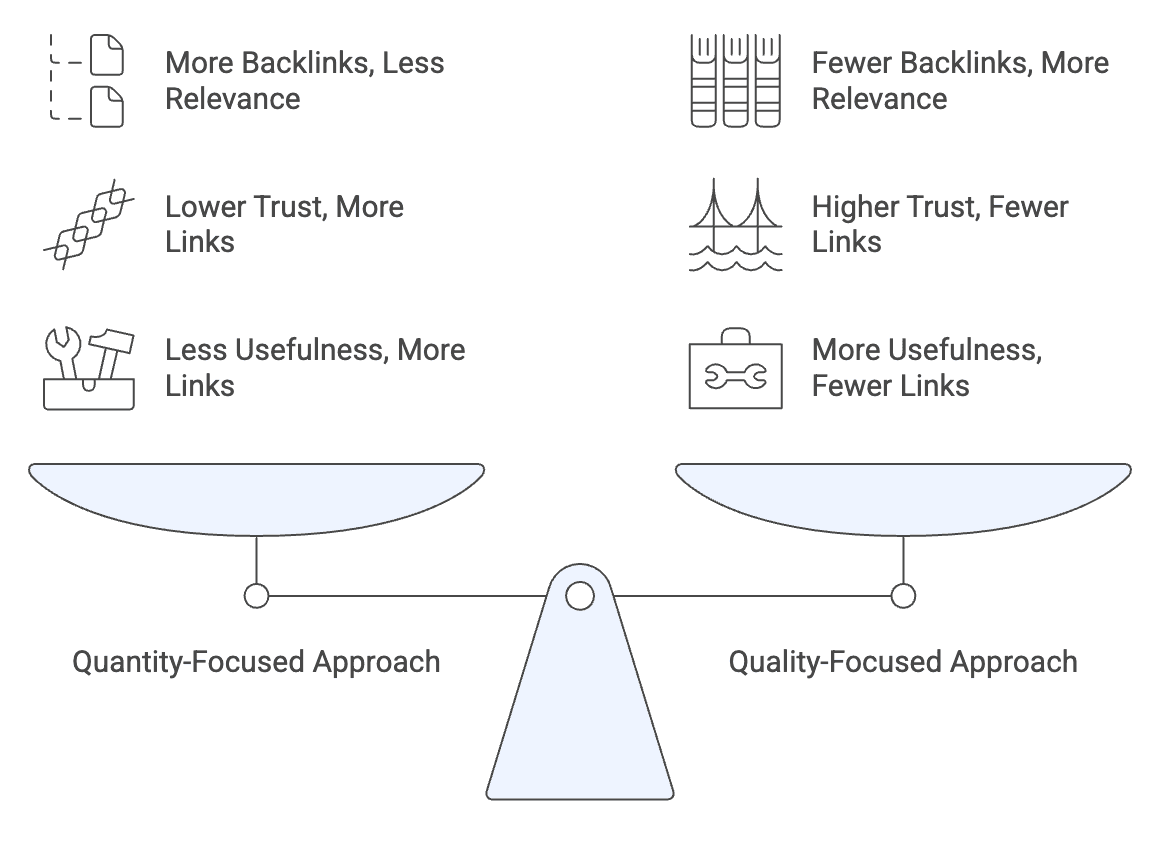
One high-quality backlink can sometimes outperform many low-quality backlinks. A link from a trusted industry publication, university page, major blog, or respected niche website can carry more weight than dozens of links from unrelated sites. This is why link building should not be treated as a numbers game. The goal is not simply increasing backlinks. The goal is increasing the number of relevant, trusted, useful backlinks that support your website’s authority.
Influencing Domain Authority
Domain Authority, Domain Rating, Authority Score, and similar metrics are third-party estimates of a website’s backlink strength. Tools such as Moz Backlink Learning Center, Ahrefs Link Building Guide, and Semrush use their own formulas to estimate how authoritative a domain appears based on backlinks and related signals. These metrics are not used directly by Google as official ranking factors, but they are useful for SEO analysis because they help compare websites, evaluate link opportunities, and monitor backlink growth over time.
A website with strong backlinks from reputable sources usually becomes easier to rank over time. This is because authority tends to compound. When your domain becomes more trusted, new pages can sometimes rank faster, internal links can become more effective, and your content may be taken more seriously by both users and search engines. This is why a long-term SEO backlink strategy matters. You are not only trying to rank one article. You are building the authority of the entire website.
Imagine two websites publish similar articles targeting the same keyword. One website is brand new, has no backlinks, and has no history of publishing useful content. The other website has been mentioned by respected blogs, industry directories, podcasts, and media outlets. Even if the articles are similar, the second website may have an advantage because search engines have more external signals suggesting that the domain is trustworthy. This does not mean new websites cannot compete, but it does mean they need a smarter and more focused backlink strategy.
Enhancing Referral Traffic
Backlinks are valuable not only because of rankings but also because they can send direct referral traffic. A backlink from a relevant article, review page, resource list, or industry guide can bring visitors who are already interested in your topic. For many businesses, these visitors can be more valuable than random traffic because they arrive with context. They have just read about a problem, tool, method, or recommendation related to your website.
Referral traffic can also create secondary benefits. Visitors who discover your website through backlinks may subscribe, share your content, mention your brand, or link to you later from their own websites. This is one reason digital PR and content promotion can be so powerful. A single placement can lead to visibility, which leads to more mentions, which leads to more backlinks and brand searches. In SEO, visibility often compounds when the right people discover your content.
For example, a SaaS company might earn a backlink from a niche software comparison article. That backlink may help with SEO authority, but it may also bring qualified visitors who are actively comparing tools. A local business might receive a backlink from a city guide, chamber of commerce page, or local news article. That backlink can improve local relevance while also sending real customers. The best backlinks usually help both search engines and humans.
How to Build Quality Backlinks
Creating Valuable Content
The foundation of quality backlink building is useful content. If your website does not have anything worth linking to, outreach becomes much harder. People do not want to link to generic, shallow, or purely promotional pages. They link to resources that help explain something, prove something, simplify something, or save their readers time. Before asking how to get backlinks, ask whether your page deserves backlinks.
Some content formats attract backlinks more naturally than others. Original research is one of the strongest. If you publish data that no one else has, writers and journalists may cite it. Statistics pages can also attract backlinks because content creators often need numbers to support their articles. Free tools are another powerful format because people love linking to useful resources. Templates, calculators, checklists, benchmark reports, expert roundups, and detailed guides can also earn links when they solve a clear problem.
A good backlinks guide should not only tell readers to “create great content.” That advice is too vague. Link-worthy content usually has a specific reason to be cited. It may contain unique data, a strong framework, a clear definition, visual assets, examples, or a practical workflow. If your content simply repeats what the top-ranking pages already say, it may be useful for users but not especially linkable. To attract quality backlinks, your content should add something that competing pages do not.
For example, instead of writing a generic article titled “What Is SEO?”, a website could publish a research-backed report on how small businesses allocate SEO budgets in the United States. Instead of writing another basic guide to email marketing, a SaaS brand could create a free subject line analyzer. Instead of producing a standard blog post about backlinks, a company could publish a backlink quality checklist, outreach templates, and a spreadsheet for tracking campaigns. The more useful and specific the asset, the easier it becomes to promote and earn links.
Guest Posting Strategies
Guest posting is one of the most common ways to build backlinks, but it must be done carefully. A good guest post is not a thin article created only to insert a link. It should provide genuine value to the host website’s audience. When guest posting is relevant, editorial, and useful, it can help build authority, relationships, referral traffic, and brand recognition. When it is spammy, repetitive, or placed on low-quality websites, it can create risk and waste time.
The best guest posting strategy begins with relevance. Look for websites that serve your industry, audience, or adjacent topics. A backlink from a relevant niche site is usually more valuable than a link from a random general blog. If you run an SEO software company, relevant targets might include marketing blogs, SaaS blogs, startup publications, content marketing websites, or small business resources. If you run a local service business, relevant targets might include local blogs, community websites, industry associations, and regional publications.
Your pitch should be personalized and value-first. Do not send generic emails that say, “I want to write a guest post for your website.” Instead, show that you understand their audience. Suggest specific article ideas that fill a gap on their site. Explain why the topic would help their readers. Keep the pitch short, respectful, and easy to respond to.
Here is a simple guest post outreach template:
Subject: Guest article idea for [Website Name]

Hi [Name],

I enjoyed your article on [specific topic]. I especially liked the point about [specific detail].

I wanted to suggest a guest article idea that could be useful for your readers:

[Article idea #1]
[Article idea #2]
[Article idea #3]

I can write a practical, non-promotional article with examples, clear steps, and original insights from my experience in [industry/topic].

Thanks for considering it.

Best,
[Your Name]
When adding links inside a guest post, keep them natural. Link to your resource only when it genuinely adds value. Avoid stuffing keyword-rich anchor text. A branded or contextual anchor is usually safer and more natural than exact-match anchors repeated across many guest posts. The goal is to build authority, not to create a pattern that looks manipulated.
Networking with Industry Influencers
Many backlinks come from relationships. People are more likely to link to your work when they know you, trust you, or have seen your expertise before. This does not mean you need to become famous. It means you should participate in your industry consistently. Comment on useful posts, share thoughtful insights, join discussions, help people, appear on podcasts, collaborate on content, and build genuine connections before asking for anything.
Relationship-based link building often outperforms cold outreach because trust already exists. If you publish a strong resource and send it to someone who already respects your work, they are more likely to read it, share it, or link to it. This is especially important in competitive industries where website owners receive dozens of backlink requests every week. A warm relationship helps you stand out from the noise.
Influencer networking can also lead to indirect backlinks. For example, if you collaborate with an expert on a quote roundup, they may share the article with their audience. If your article gets attention, another blogger may discover and cite it. If you appear on a podcast, the episode page may link to your website. If you contribute useful insights on LinkedIn or X, journalists and writers may notice your expertise. Backlink acquisition is often the result of repeated visibility, not one isolated outreach email.
Utilizing Social Media for Backlink Acquisition
Social media links themselves are usually not the same as editorial backlinks from websites. However, social media can play an important role in backlink acquisition because it helps your content get discovered. If nobody sees your article, tool, report, or guide, nobody can link to it. Promotion is part of link building. Publishing is only the first step.
The best social media strategy for backlinks is not simply posting a link once and hoping for the best. Turn your content into smaller assets. Share key insights, charts, statistics, examples, controversial lessons, mistakes, and mini-guides. Tag relevant people only when it is appropriate. Post in communities where the topic is useful. Repurpose one article into multiple LinkedIn posts, X threads, Reddit comments, newsletter mentions, and short videos.
For example, if you publish a guide on how to build quality backlinks, you could create a short LinkedIn post explaining five backlink mistakes, a Twitter thread about broken link building, a Reddit answer about how to get backlinks to your site, and a visual checklist for evaluating backlink quality. Each piece increases the chances that someone discovers the full guide and references it later.
Social media can also help you test which angles attract attention. If a specific statistic, framework, or example gets engagement, that may be the part of your content worth promoting more heavily through outreach. Link building becomes easier when you understand what people already find interesting.
Actionable Strategies for Obtaining Backlinks
Conducting Competitor Analysis
Competitor backlink analysis is one of the most practical ways to find link opportunities. Instead of guessing where to get backlinks, you can study websites that already rank for your target keywords and examine who links to them. If a website links to your competitor’s guide, tool, case study, or resource page, it may also be willing to link to your content if your page is useful and relevant.
Start by choosing several competitors that rank for your target keywords. Use backlink analysis tools to inspect their referring domains, most linked pages, anchor texts, and link types. Look for patterns. Are they getting links from guest posts, directories, statistics pages, podcasts, resource pages, digital PR campaigns, or comparison articles? These patterns reveal what works in your niche.
The goal is not to copy every competitor backlink. Some links may be irrelevant, low-quality, paid, or impossible to replicate. Instead, prioritize realistic opportunities. If multiple competitors are listed in the same SaaS directory and you are not, that is an easy opportunity. If a competitor earned links from a statistics roundup, you might create a better data page. If several competitors appear on podcasts, you might pitch yourself as a guest. Competitor analysis gives you direction.
A simple competitor backlink workflow looks like this: choose three to five ranking competitors, export their referring domains, remove low-quality or irrelevant sites, categorize the remaining links by type, identify repeat domains that link to several competitors, and build an outreach list. This process turns backlink acquisition from a vague idea into a structured campaign.
Engaging in Digital PR
Digital PR is one of the best ways to obtain high-quality backlinks, especially from authoritative publications. It involves creating newsworthy stories, data, insights, or expert commentary that journalists, bloggers, and publishers want to mention. Unlike basic link building, digital PR focuses on earning attention through something worth covering.
A strong digital PR campaign usually starts with a story. That story might be based on original research, a survey, internal product data, industry trends, expert analysis, or a timely event. For example, an SEO company could analyze thousands of websites and publish a report about the most common technical SEO mistakes. A finance brand could survey consumers about spending habits. A SaaS company could publish benchmark data from its users. These assets can become link magnets because journalists and bloggers need credible sources.
Digital PR is powerful because it can earn links from websites that are difficult to reach through normal guest posting. Media outlets, industry publications, and high-authority blogs are unlikely to link to generic promotional content. But they may link to original data, expert commentary, or a useful public resource. If you want to attract quality links, give publishers something valuable to reference.
The outreach process for digital PR should be targeted. Build a list of journalists and writers who cover your topic. Read their recent work. Pitch your story in a concise way. Explain why it matters now, what makes the data interesting, and how it helps their audience. The easier you make it for a writer to understand and use your resource, the more likely they are to mention it.
Finding and Fixing Broken Links
Broken link building is a classic backlink strategy because it helps both sides. Website owners do not want broken links on their pages because they create a poor user experience. If you find a broken link on a relevant page and offer your content as a replacement, you are solving a real problem while earning a backlink.
The process begins by finding pages in your niche that link to outdated or deleted resources. These might be old guides, discontinued tools, expired statistics pages, or pages returning a 404 error. Once you find a broken link, check what the original page used to contain. Then create or identify a resource on your own website that serves a similar purpose. Finally, reach out to the site owner and politely suggest replacing the broken link with your working resource.
Broken link building works best when your replacement content is genuinely useful. If the broken link pointed to a detailed guide, your replacement should not be a thin landing page. If the original resource contained statistics, your page should include updated data. The stronger your replacement, the easier your outreach becomes.
Here is a simple broken link outreach template:
Subject: Broken link on your page

Hi [Name],

I was reading your page about [topic] and noticed that one of the links seems to be broken:

[Broken URL]

It looks like it used to point to a resource about [subject]. We recently published a useful replacement here:

[Your URL]

It may be helpful for your readers if you decide to update the page.

Best,
[Your Name]
This strategy requires patience because not every website owner will respond. However, it is one of the more ethical and practical ways to make backlinks because it is based on improving the web rather than forcing links where they do not belong.
Creating Linkable Assets
A linkable asset is a page or resource specifically designed to attract backlinks. It is not always the same as a normal blog post. A normal blog post may answer a keyword, while a linkable asset gives other creators a reason to cite it. The best linkable assets are useful, original, easy to reference, and relevant to your website’s main topic.
Examples of linkable assets include statistics pages, free tools, calculators, templates, original research, glossaries, benchmark reports, interactive maps, checklists, and visual explainers. For example, if you run a marketing website, a page with updated SEO statistics can attract links from bloggers writing about SEO. If you run a real estate website, a calculator for mortgage affordability may earn links from finance blogs. If you run a SaaS company, a free tool related to your product can generate backlinks and leads at the same time.
To create a strong linkable asset, start with the question: “Who would link to this, and why?” If you cannot answer that clearly, the asset may not be link-worthy. A journalist may link because of data. A blogger may link because of a clear definition. A teacher may link because of a helpful diagram. A business owner may link because of a practical template. The reason matters.
Using Resource Page Link Building
Resource pages are pages that collect helpful links around a specific topic. Many universities, nonprofits, blogs, industry associations, and businesses maintain resource pages for their audience. If your content is genuinely helpful, you can suggest it as an addition.
To find resource pages, search for queries such as “keyword resources,” “keyword useful links,” “keyword recommended tools,” or “keyword guide.” Review each page carefully. Do not pitch every resource page you find. Look for pages that are active, relevant, and likely to include outside links. Then send a short message explaining why your resource would help their readers.
Resource page link building is especially effective when you have a strong guide, free tool, checklist, template, or educational asset. It is less effective for sales pages. Most resource page owners want to link to helpful content, not promotional landing pages.
Tools for Analyzing Backlinks
Google Search Console
Google Search Central Documentation and Google Search Console are some of the most useful free tools for understanding your backlink profile. It shows which websites link to your site, which pages receive the most links, and what anchor text is commonly used. While it does not provide the same depth as paid SEO platforms, it is a good starting point for website owners who want to monitor backlinks without paying for advanced tools.
The main advantage of Google Search Console is that it comes directly from Google. You can use it to identify your most linked pages and understand which content naturally attracts backlinks. If one of your pages receives more links than others, study why. Is it a guide, tool, statistic, or resource? That insight can help you create more link-worthy content in the future.
The limitation is that Google Search Console is not ideal for competitor analysis. You can see your own links, but you cannot inspect competitor backlink profiles in detail. For that, you need tools such as Ahrefs, Semrush, Moz, or other backlink software.
Ahrefs and Semrush
Ahrefs and Semrush are two of the most popular SEO platforms for backlink analysis. Both can help you inspect referring domains, analyze competitor backlinks, find broken links, monitor new and lost backlinks, evaluate anchor text, and discover link building opportunities. These tools are especially useful when you are serious about building a repeatable backlink acquisition process.
| Feature | Ahrefs | Semrush |
|---|---|---|
| Backlink analysis | Strong backlink database and link profile analysis. | Strong backlink analytics with audit and toxicity tools. |
| Competitor research | Useful for finding competitor referring domains and link gaps. | Useful for competitor tracking, backlink gap analysis, and outreach planning. |
| Broken link building | Helpful for finding broken backlinks and dead pages. | Helpful for backlink audits and identifying problematic links. |
| Best for | Deep backlink research and SEO analysis. | Broader SEO campaigns, audits, and marketing workflows. |
When using paid tools, avoid becoming obsessed with metrics alone. Domain Rating, Authority Score, traffic estimates, and spam indicators are useful, but they are not perfect. Always manually review link opportunities. Ask whether the website is relevant, whether it has real traffic, whether the content is useful, whether the link would make sense for users, and whether the site appears trustworthy.
Moz Link Explorer
Moz Link Explorer is another helpful backlink analysis tool. It is especially known for metrics such as Domain Authority and Spam Score. These metrics can help beginners quickly evaluate whether a website appears strong or risky. Moz can also help you review inbound links, discover linking domains, and compare your website with competitors.
Moz is useful when you want a beginner-friendly view of backlink quality. However, like all SEO tools, it should be used as a guide rather than an absolute truth. A website with a high metric is not automatically a good backlink opportunity, and a website with a lower metric is not automatically worthless. Relevance, editorial quality, and real audience value still matter.
How to Check Backlink Quality
Checking backlink quality is one of the most important skills in SEO. Many beginners think every backlink is good, but that is not true. Some backlinks can help rankings, some may have no meaningful effect, and some can create risk if they come from spammy or manipulative sources. A strong backlink strategy focuses on quality, not just quantity.
The first factor is relevance. A backlink from a website in your industry or a related topic usually makes more sense than a link from a random unrelated site. If you run an SEO software company, links from marketing blogs, SaaS websites, startup publications, and business resources are relevant. Links from unrelated casino, adult, or spam directories would not be useful and may look suspicious.
The second factor is authority. A backlink from a trusted website can carry more value than a backlink from a weak or unknown domain. However, authority should not be judged only by third-party scores. Look at the website manually. Does it publish real content? Does it have an audience? Does it rank for relevant keywords? Does it have signs of editorial standards?
The third factor is placement. A contextual link inside the main body of a relevant article is usually stronger than a footer link, sidebar link, or random author bio link. Search engines can evaluate where links appear and whether they are likely to be editorially meaningful. A natural link inside a useful paragraph is usually the ideal placement.
The fourth factor is anchor text. Natural anchor text is diverse. If all backlinks use the exact same keyword, it may look manipulative. A healthy backlink profile includes branded anchors, partial-match anchors, naked URLs, and natural phrases. For example, instead of forcing every link to say “backlinks guide,” some links might say “this guide,” “SEO backlink strategy,” your brand name, or the full URL.
The fifth factor is traffic. A website with real organic traffic is often more valuable than a site that exists only to sell links. If the linking website has no rankings, no audience, and hundreds of unrelated outbound links, it may not be a strong opportunity. Real websites usually have topical focus, engaged readers, and a reason to exist beyond link placement.
Common Backlink Mistakes to Avoid
One of the biggest backlink mistakes is focusing only on quantity. Many website owners ask, “How many backlinks do I need?” before asking whether those backlinks are relevant or useful. In modern SEO, a backlink profile with fewer high-quality links can outperform a larger backlink profile filled with weak links. Search engines are much better at identifying unnatural patterns than they used to be.
Another common mistake is buying cheap backlink packages. Offers such as “1,000 backlinks for $20” are usually dangerous or worthless. These links often come from spam networks, low-quality directories, automated profiles, or hacked websites. They may not help your rankings, and in some cases, they can damage your site’s trust. Sustainable link building takes effort because real links come from real websites.
Over-optimized anchor text is another risk. If you build many backlinks with the same exact-match keyword, it can look unnatural. For example, if every link to your article uses “best backlinks guide” as the anchor text, that pattern may appear manipulative. Natural backlinks rarely look so perfect. People link in different ways, using different phrases.
Low-quality guest posting is also a problem. Guest posts can be useful when they appear on relevant, high-quality websites. But guest posts published on sites that accept anything from anyone are often weak. If a website has no clear audience, publishes unrelated topics, and exists mainly to sell links, it is not a strong link building target.
Another mistake is ignoring link relevance. A backlink from a high-authority website may look attractive, but if the topic is completely unrelated, the value may be limited. Relevance helps search engines understand why the link exists. A relevant backlink is more natural, more useful for users, and usually more valuable for SEO.
Finally, many businesses make the mistake of building backlinks only to the homepage. While homepage links are useful, you should also build links to important content pages, tools, guides, comparison pages, and commercial pages when appropriate. Deep links help individual pages rank and distribute authority throughout your website.
How to Create a Backlink Strategy
A backlink strategy is a structured plan for earning and building links over time. Without a strategy, link building becomes random. You might send a few outreach emails, submit your site to a few directories, publish a guest post, and then stop. A real SEO backlink strategy connects your business goals, keyword targets, content assets, competitors, and outreach process.
Start by identifying the pages that matter most. These may include high-value blog posts, product pages, service pages, comparison pages, landing pages, or free tools. Not every page deserves active link building. Focus on pages that can generate traffic, leads, sales, or authority. For example, if your website sells SEO software, a page targeting “link building tools” or “backlinks guide” may be worth promoting because it attracts a relevant audience.
Next, analyze the competition. Look at the backlink profiles of pages currently ranking for your target keywords. How many referring domains do they have? What types of websites link to them? Are the links from guest posts, resource pages, directories, media mentions, or data citations? This helps you estimate the level of effort required.
Then create or improve your content. Link building is much easier when your page is better than competing pages. Add original examples, expert insights, better structure, useful visuals, templates, FAQs, statistics, and practical steps. If your page is weak, outreach will feel like begging. If your page is genuinely helpful, outreach becomes a recommendation.
After that, choose your link building tactics. For a new website, you might start with foundational links such as business profiles, niche directories, partner links, and community mentions. Then you can move into guest posting, resource page outreach, broken link building, podcast appearances, and digital PR. As your website grows, you can invest more in original research, free tools, and content promotion.
Finally, track results. Monitor new backlinks, lost backlinks, rankings, organic traffic, referral traffic, and conversions. Link building is not only about acquiring links. It is about understanding which links actually support business growth.
Backlink Tips for Beginners
If you are just starting, do not try to build hundreds of backlinks at once. Focus on building a clean foundation. Create a few strong pages that deserve links. Make sure your website looks trustworthy. Add clear author information, useful content, contact details, and a professional design. Many people will not link to a website that looks unfinished or unreliable.
Start with easy but legitimate backlinks. Create profiles on relevant business directories, SaaS directories, startup communities, local directories, partner websites, and social platforms. These links may not be extremely powerful, but they help establish your presence. Then move toward higher-value tactics such as guest posting, expert quotes, and resource page outreach.
Build relationships before you need links. Comment on industry posts, join communities, help other creators, and share useful insights. When you later publish a strong article or tool, you will already have people who may be willing to check it out. Link building becomes much easier when people recognize your name.
Be patient. Backlink acquisition takes time. Some outreach campaigns will fail. Some people will ignore your emails. Some links will take weeks or months to appear. This is normal. SEO rewards consistency. A few good backlinks every month can become a powerful asset over a year.
Frequently Asked Questions
Natural backlinks are links that other websites give you without being paid, forced, or manipulated. They usually happen because your content is useful, trustworthy, original, or interesting. For example, if a blogger finds your guide helpful and links to it as a resource, that is a natural backlink. Natural backlinks are often the safest and most valuable type of link because they reflect genuine editorial choice.
To check backlink quality, review the linking website’s relevance, authority, traffic, content quality, link placement, anchor text, and overall trustworthiness. A good backlink usually comes from a real website with a relevant audience, useful content, and natural editorial standards. Avoid links from spammy websites, unrelated directories, obvious link farms, or pages filled with random outbound links.
There is no universal number of backlinks you need. It depends on your keyword difficulty, competition, domain authority, content quality, search intent, and industry. Some low-competition pages can rank with very few backlinks. Competitive keywords may require dozens or hundreds of referring domains. Instead of chasing a fixed number, compare your page with the pages currently ranking for your target keyword.
Beginners can get backlinks by creating useful content, submitting their website to relevant directories, writing guest posts, joining industry communities, appearing on podcasts, answering expert quote requests, building free tools, and reaching out to websites that link to similar resources. The key is to focus on relevance and value rather than shortcuts.
Yes, backlinks are still important for SEO, especially in competitive search results. However, the quality, relevance, and naturalness of backlinks matter much more than simple quantity. Backlinks work best when combined with strong content, technical SEO, internal linking, and clear search intent.
The best backlink strategy is one that matches your website, niche, and resources. For many businesses, the strongest strategy combines link-worthy content, competitor analysis, guest posting, digital PR, resource page outreach, and relationship building. The goal is to build a diverse, relevant, and trustworthy backlink profile over time.
Bad backlinks can create problems if they are part of manipulative, spammy, or unnatural link schemes. Search engines are often good at ignoring low-quality links, but intentionally building spammy backlinks is still risky. It is better to avoid cheap link packages, private blog networks, irrelevant directories, and automated backlink tools that promise unrealistic results.
Conclusion
Backlinks remain one of the most important parts of SEO because they help search engines and users understand which websites are trusted, useful, and worth visiting. But successful link building is not about collecting as many links as possible. It is about earning relevant, high-quality backlinks that support your content, brand, and long-term authority.
A strong backlink strategy begins with valuable content. If your website publishes useful guides, original research, free tools, templates, and practical resources, link building becomes much easier. From there, you can use competitor analysis, guest posting, broken link building, digital PR, social media promotion, and relationship building to attract quality links. The process takes time, but the results can compound for months and years.
If you are serious about SEO, treat backlinks as part of a larger growth system. Build pages that deserve to rank. Promote them to the right people. Track your backlink profile. Avoid shortcuts that create risk. Focus on relevance, usefulness, and trust. That is how backlinks become more than links. They become a long-term engine for rankings, referral traffic, authority, and business growth.
If you want to turn this backlink strategy into consistent organic growth, you also need strong SEO pages that are worth linking to. With AI-powered SEO content creation, ProgSEO.dev helps you generate search-focused pages designed to attract traffic, support link building, and strengthen your website’s long-term authority.

Aziz
Founder at ProgSEO
Written By
Aziz is the founder of ProgSEO, where he helps businesses scale their organic traffic using programmatic SEO, AI-driven content, and modern growth strategies.