Future Trends in AI SEO: 2026 Insights
The search landscape is undergoing a metamorphosis unlike anything we have seen since the dawn of the internet. As we move deeper into the decade, artificial intelligence is no longer just a buzzword or an experimental tool; it is the foundational infrastructure of how information is organized, retrieved, and presented. If 2023 and 2024 were the years of AI experimentation, 2026 is the year of AI maturation and seamless integration. Welcome to the future of SEO.
In this comprehensive guide, we will unpack the most critical AI SEO Statistics 2026, exploring how algorithms have evolved from simple link-counting mechanisms to sophisticated, conversational engines that understand human intent with staggering accuracy. We will dive deep into actionable strategies to help you future-proof your digital presence, adapt to generative search engines, and maintain a competitive edge in an increasingly automated world.
Whether you are a seasoned search expert or a business owner trying to navigate the complexities of modern search, understanding these shifts is non-negotiable. Let's explore the trends, the data, and the tactical maneuvers required to dominate the search engine results pages (SERPs) of tomorrow.
AI SEO Statistics in the U.S. (2026 Data)
The data shows a clear trend. In the U.S. market, regular search engines still get the most traffic. However, AI search and AI tools are starting to change how we do SEO, create content, and measure results. In April 2026, Google had about 16.4 billion visits from the U.S. In the same month, ChatGPT had around 1.021 billion visits. According to Semrush, AI Overviews are used in about 12.95% of searches. Similarweb reports that visits to U.S. AI platforms increased by 28.6% compared to last year.
The data shows a big change is happening before people click on search results. According to Similarweb's U.S. consumer data, AI is doing better than traditional search in finding and checking products. Companies like HubSpot, Semrush, and Gartner highlight the challenges of this change. U.S. SEO and marketing teams are using AI faster, but it is getting harder to earn consumer trust and grab advertiser attention.
Scope and Selection Criteria
This research focused only on traffic in the U.S. We included statistics that mentioned:
- the U.S. market
- USA traffic
- U.S. SEO/marketing respondents
- U.S. consumers
If a page has an updated date, we used that date. If it only has a publication date, we used that date instead. The quotes in the table are short and taken directly from the original page for easy reading.
A table with confirmed numbers.
All quotes above are taken directly from the public source page. The dates show when the page was last updated or published.
| Statistic | Value | Year | Source |
|---|---|---|---|
| Google.com held the top spot in April 2026 with approximately 16.4 billion U.S. visits | 16.4B visits | 2026 | Similarweb |
| AI Overviews currently show up for around 12.95% of search queries on average in the U.S. market | 12.95% | 2026 | Semrush |
| About 15% of all U.S.-based search queries trigger AI Overviews | 15% | 2024 | HubSpot |
| 73% of SEO professionals say AI is becoming an important part of their SEO strategy | 73% | 2026 | HubSpot |
| Websites affected by AI Overviews reported increased traffic | 41% | 2025 | HubSpot |
| AI platform visits in the U.S. grew year-over-year | +28.6% | 2025–2026 | Similarweb |
| U.S. consumers using AI during product discovery | 35% | 2026 | Similarweb |
| U.S. consumers using traditional search during discovery | 13.6% | 2026 | Similarweb |
| AI usage during product evaluation vs traditional search | 32.9% vs 15% | 2026 | Similarweb |
| Organic search drives almost 19% of ChatGPT.com USA traffic | ~19% | 2025 | Similarweb |
| More than half of U.S. consumers use AI engines weekly | 50%+ | 2025 | Similarweb |
| Marketing leaders unsure how to measure AI search success | 64% | 2025 | Similarweb |
| Marketers saying personalization improves leads or purchases | 93% | 2026 | HubSpot |
| Marketing teams saving 10+ hours weekly with AI | 67% | 2026 | HubSpot |
| U.S. consumers preferring brands that avoid GenAI content | 50% | 2026 | Gartner |
| Consumers actively tuning out ads | 81% | 2026 | Gartner |
Patterns in the data
To understand the table, look at these points: traffic scale, search-surface change, purchase-journey change, and organizational readiness.
For traffic scale, Google leads web visits in the U.S. with about 16.4 billion visits in April 2026. AI traffic is also significant. ChatGPT had around 1.021 billion U.S. visits in the same time. Similarweb noted that visits to AI platforms grew by 28.6% from January 2025 to January 2026. This shows that while AI is important, it doesn't replace Google.
Next, AI Overviews are now common in U.S. SEO. Semrush reports they are used in 12.95% of U.S. queries, while HubSpot found a 15% rate for June 2024. These numbers come from different times, but they still indicate that SEO teams need to consider AI-generated search results.
In the purchase journey, 35% of Americans use AI to discover products, compared to 13.6% who use traditional search. For evaluating products, 32.9% use AI versus 15% for search. This suggests that some decisions are made before visiting Google. Still, organic search affects AI use too, as it drives nearly 19% of traffic to ChatGPT.com. So, traditional SEO still plays a role in AI.
Marketers and SEOs in the U.S. are quickly using AI, but they struggle with measurement. HubSpot found that 73% of SEO professionals see AI as important for their strategy. Also, 93% of marketers feel personalization helps with leads, and 67% save over 10 hours each week using AI. However, Similarweb noted that 64% of marketing leaders are unsure how to measure success in AI search. This difference between use and measurement is important to understand.
Lastly, there is a trust issue in the U.S. market. Gartner reports that 50% of U.S. consumers prefer brands that do not use GenAI in customer content. Also, 81% aim to ignore ads. Together, these numbers suggest that "AI-powered" messaging might not convince consumers if it feels untrustworthy or disruptive. This is an important point alongside growth data for AI.
Takeaways
In the U.S., AI search is growing quickly but hasn't replaced Google yet. In April 2026, Google had about 16.4 billion visits, while ChatGPT had around 1.021 billion visits. AI platform usage in the U.S. increased by 28.6% compared to the previous year.
The biggest risk for SEO may not just be losing clicks but also losing early customer engagement. Data from Similarweb shows that AI is leading in helping users discover and evaluate options. This means some customers are making choices before they even start a traditional search.
Many SEO professionals see AI as very important. According to a survey, 73% of U.S.-based SEO experts believe AI is key to their strategy. However, 64% of marketing leaders are unsure how to measure the success of AI search.
For marketing and brand strategies in the U.S., it's important to combine efficiency data with trust data. Research from HubSpot shows that using AI and personalization can improve performance. However, a study by Gartner indicates that many consumers dislike artificial brand experiences and disruptive ads.
The Landscape of Search: Key AI SEO Statistics 2026
To understand where we are going, we must first look at the data driving these massive industry shifts. The adoption of artificial intelligence in search optimization has accelerated at a breakneck pace, fundamentally altering both user behavior and marketer strategies.
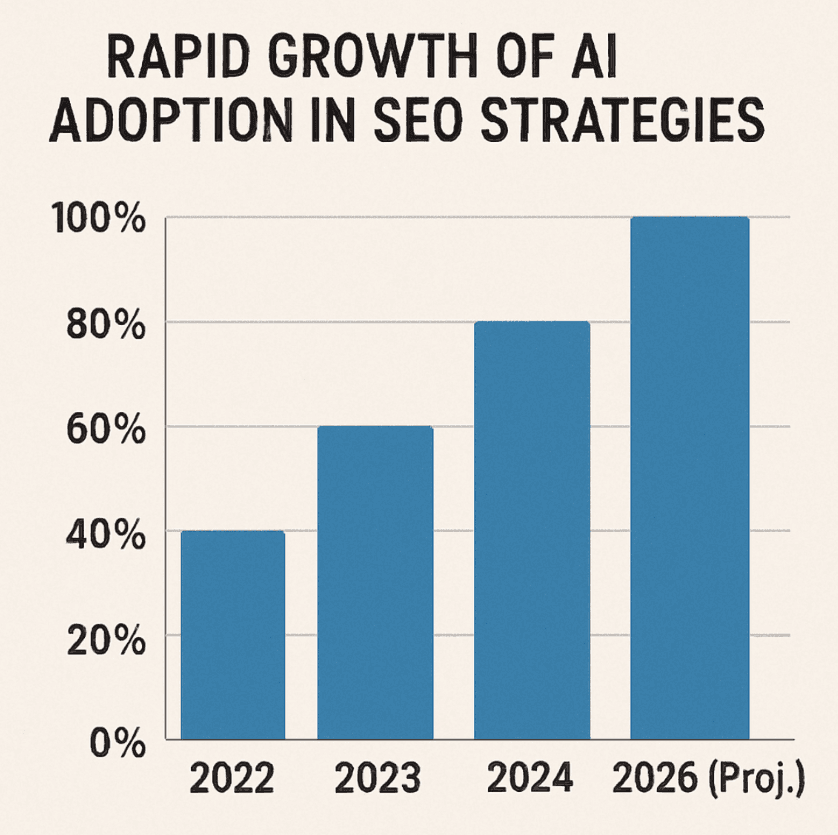
When industry analysts examine the trajectory of the market, one of the most common questions is: what percentage of marketers use AI for search optimization? Current projections for 2026 indicate a staggering reality. According to aggregated industry forecasts and emerging AI marketing insights, roughly 88% of all digital marketing professionals and SEO agencies will rely on AI-powered tools for daily tasks-ranging from content ideation to deeply complex technical audits.
Here are a few projected AI SEO Statistics 2026 that highlight the scale of this transformation:
- Content Generation: Nearly 75% of all B2B and B2C web content published will involve some form of AI assistance, up from just 20% in 2023.
- Search Behavior: Over 60% of user queries are expected to trigger a generative AI response or overview at the top of the search results, bypassing the traditional "10 blue links."
- Budget Allocation: Enterprises will reallocate up to 40% of their traditional SEO budgets toward AI-driven conversational optimization and entity-building strategies.
- Voice and Visual Search: Multimodal search (combining voice, text, and image inputs) will account for nearly 35% of all search queries, driven by the ubiquity of AI assistants embedded in smartphones and smart glasses.
These statistics paint a clear picture: the game has changed. Traditional ranking factors still matter, but they are now filtered through the lens of large language models (LLMs) that prioritize context, expertise, and direct answers over simple keyword matching.
Generative Engine Optimization vs Traditional Search Ranking
For two decades, the SEO playbook was relatively straightforward: conduct keyword research, write optimized content, build backlinks, and ensure your website is technically sound. While those pillars haven't entirely crumbled, they have been built upon by a new paradigm. Understanding generative engine optimization vs traditional search ranking is the most critical hurdle modern marketers face.
Traditional Search Ranking (The Old Way)
Traditional search algorithms were fundamentally built on an index-and-retrieve model. Google's crawlers would index billions of pages, and when a user typed a query, the algorithm would use signals like keyword density, title tags, and PageRank (backlinks) to serve a list of documents that most likely contained the answer. The engine was a librarian, pointing you to the right book.
Generative Engine Optimization (The New Way)
Generative search engines, powered by LLMs like Google's Gemini or OpenAI's GPT models, act less like librarians and more like subject-matter experts. Instead of just pointing you to a source, they synthesize information from multiple sources to generate a unique, conversational answer in real time.
Generative Engine Optimization (GEO) requires optimizing not just to be indexed, but to be cited as a reliable source by an AI model.
Key differences include:
- Context Over Keywords: Traditional SEO obsessed over exact-match keyword placement. GEO obsesses over comprehensive topic coverage and semantic relationships.
- Citation Value: Getting a backlink was the holy grail of traditional SEO. In GEO, getting your brand or data point explicitly mentioned and linked within an AI-generated summary is the ultimate prize.
- Format Preferences: AI engines prefer highly structured, easily parseable data (tables, bullet points, clear statistics) because it makes synthesizing answers computationally easier.
Actionable Tip: Shift your focus from "ranking first" to "being the most citable source." Incorporate unique, proprietary data into your content that an AI model would naturally want to reference when summarizing a topic.
Analyzing the Impact of Generative Search on Organic Traffic Trends
With AI synthesizing answers directly at the top of the SERP, one of the most pressing concerns for webmasters is traffic loss. The impact of generative search on organic traffic trends is profound, forcing a recalibration of what success looks like in digital marketing.
Historically, ranking in the #1 position guaranteed a massive influx of clicks. However, with Search Generative Experience (SGE) and similar AI overviews pushing traditional links below the fold, click-through rates (CTR) are shifting dramatically.
The Informational Query Dilemma
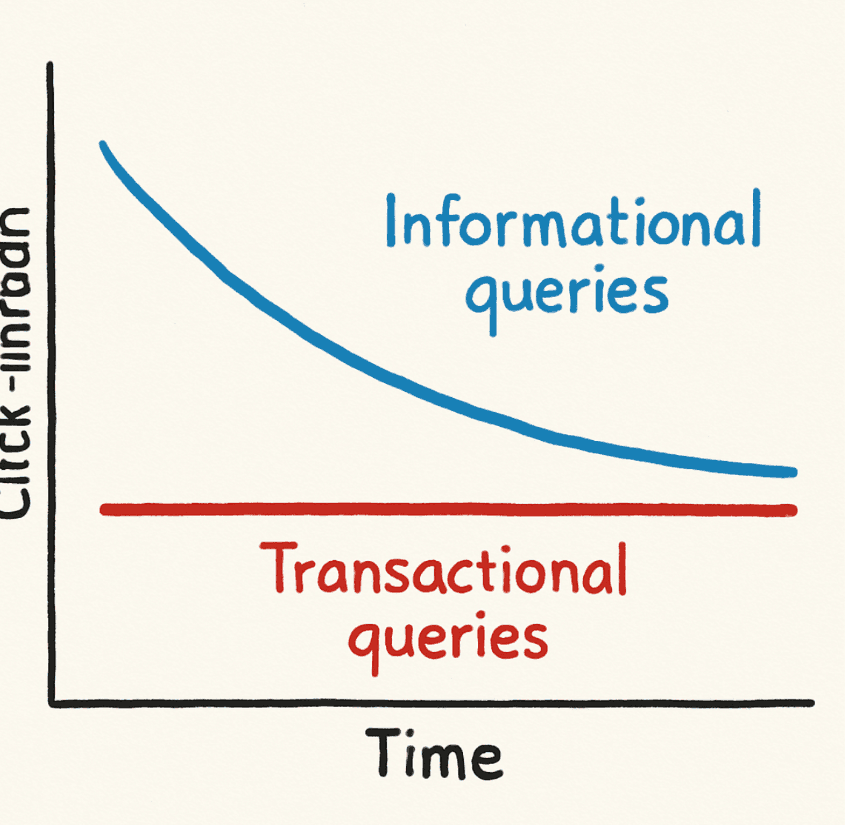
A common question raised by panic-stricken webmasters is: how does SGE affect click-through rates for informational queries? The reality is sobering. For purely informational queries-questions like "what is the capital of Australia" or "how to boil an egg"-CTR to external websites is projected to plummet by 40% to 60% by 2026. The AI engine can answer these queries perfectly without the user ever needing to click a link.
The Transactional and Nuanced Query Opportunity
Conversely, the impact is quite different for transactional, deeply nuanced, or "Your Money or Your Life" (YMYL) queries. When users are looking to buy software, diagnose a complex medical issue, or read in-depth reviews of a high-ticket item, they still crave human validation, deep exploration, and trusted brands.
For these queries, generative search acts as a highly effective filter. While the overall volume of traffic to your site might decrease, the intent and quality of the traffic that does click through will be exceptionally high. Users who click past an AI overview are typically further down the funnel and ready to convert.
Adapting to the Traffic Shift:
- Audit Your Traffic Profile: Identify which pages rely heavily on top-of-funnel, basic informational queries. Expect traffic drops here and pivot your monetization strategy accordingly.
- Focus on Middle/Bottom of Funnel: Invest heavily in comparison guides, original research, case studies, and expert opinion pieces-content that AI struggles to replicate authentically.
- Redefine KPIs: Traffic volume is no longer the ultimate metric. Shift your focus to engagement rates, conversion rates, and the quality of leads generated from organic search.
Conquering the Zero-Click Epidemic: Semantic Entity Optimization
As generative AI provides more immediate answers, the phenomenon of the "zero-click search"-where a user finds their answer on the results page and leaves without clicking a link-will reach an all-time high in 2026. To survive, marketers must pivot their strategies. The most effective method for addressing zero click search growth through semantic entity optimization.
What is Semantic Entity Optimization?
Search engines no longer view the web merely as a collection of linked web pages; they view it as a Knowledge Graph-a vast web of "entities" (people, places, concepts, organizations) and the relationships between them. Semantic entity optimization is the process of helping AI clearly understand who you are, what concepts you are connected to, and why you are an authority on those concepts.
When you optimize for entities, you ensure that even if a user doesn't click your website, your brand is the one the AI mentions as the definitive source. If a user searches, "Best CRM software for small business," and the AI overview says, "According to [Your Brand], the key features to look for are...", you have achieved a major zero-click victory: brand reinforcement and thought leadership.
How to Optimize for Entities:
- Robust Schema Markup: Go far beyond basic local business schema. Use advanced JSON-LD structured data to explicitly define your organization, your authors, your products, and the specific topics your content covers (using about and mentions schema properties).
- Define Your Brand Entity: Create an exhaustive "About Us" page. Link out to your official social profiles, your Wikipedia page (if applicable), and reputable directories. Connect the dots for the AI so it clearly recognizes your brand as a distinct, authoritative entity.
- Use Unambiguous Language: AI models rely on natural language processing. Write clearly and establish relationships in your text. (e.g., "Our CEO, Jane Doe, who holds a Ph.D. in Data Science from MIT, believes that...")
- Target Knowledge Panels: Claim your Google Knowledge Panel. Ensuring your entity is officially recognized in Google's Knowledge Graph is the bedrock of future-proof SEO.
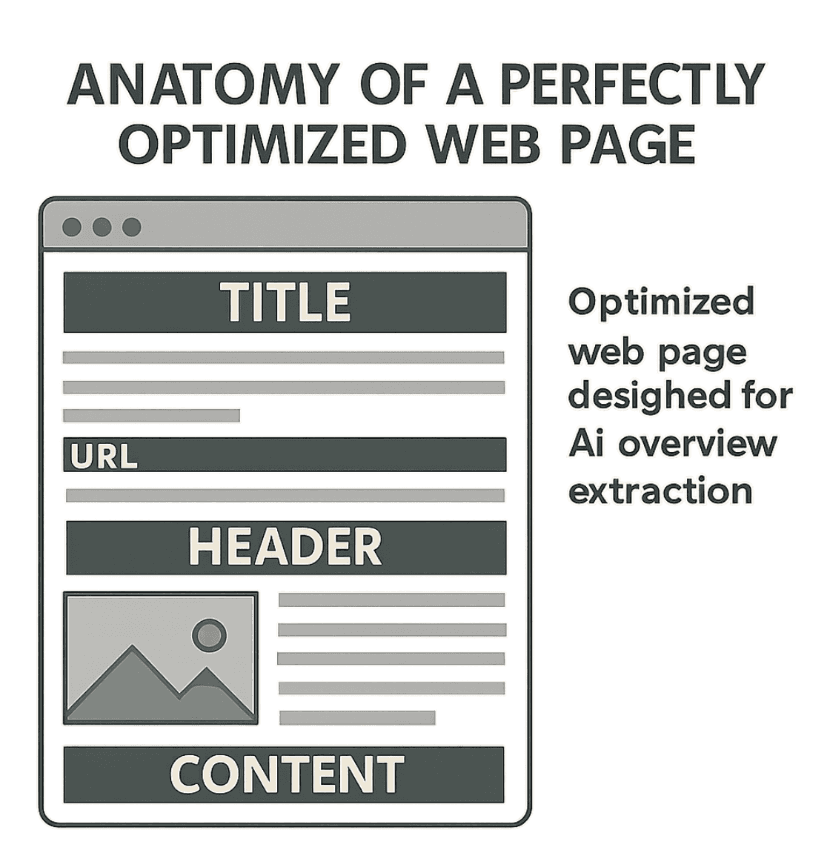
Mastering the AI Snippet: How to Optimize Content for AI Overviews
If traditional ranking meant fighting for the #1 spot, 2026 ranking means fighting to be the primary citation in an AI Overview. The rules for achieving this are distinct. Knowing how to optimize content for AI overviews requires a blend of technical formatting and highly concise copywriting.
AI models process language by predicting the most logical sequence of words based on vast training data. When they generate an overview, they look for source material that is easily digestible, factually dense, and directly addresses the user's prompt without fluff.
The Blueprint for AI Overview Optimization
- Inverted Pyramid Writing: Start your articles and sections with a direct, concise answer. Do not bury the lede. If the heading is "What is the ROI of Email Marketing?", the very first sentence should be, "The average ROI of email marketing is $36 for every $1 spent, according to industry benchmarks." Follow this with the detailed breakdown.
- Information Density: AI engines despise fluff. Eliminate introductory filler. Replace long, winding paragraphs with high information density-pack your sentences with verifiable facts, statistics, and expert quotes.
- Strategic Use of Formatting: AI models parse structured text much easier than walls of words.
- Use bulleted lists for step-by-step instructions.
- Use HTML tables for comparing data (prices, features, pros/cons).
- Use descriptive, question-based H2 and H3 tags. - The "Targeted Snippet" Strategy: Intentionally design 40-to-60-word paragraphs throughout your content that are perfectly tailored to answer specific, long-tail questions related to your primary topic. Think of these as "AI bait."
- Corroboration and Consensus: AI overviews strive to present accurate information. If your content presents a wild, unsubstantiated claim that contradicts the rest of the internet, the AI is unlikely to cite you. Ensure your core facts align with general industry consensus, while providing unique insights or proprietary data to stand out.
The Evolution of Search Intent: The Future of Keyword Research
If you are still downloading massive lists of keywords, sorting by search volume, and churning out articles to target exact-match phrases, your strategy will be obsolete by 2026. The future of keyword research in the era of chatbots requires a complete mental shift from "matching strings" to "understanding things."
Users are increasingly interacting with search engines as if they were human experts. Instead of searching for "best running shoes flat feet," a user in 2026 will use voice search or a chatbot prompt to ask, "I'm a beginner runner with flat feet training for a 5k on pavement, what shoes give the best arch support under $150?"
The NLP Revolution in Search
This shift is entirely driven by the natural language processing role in understanding search intent. NLP allows search algorithms to move beyond keyword matching to grasp the nuance, context, and underlying motivation behind a complex query. The AI understands the relationships between "beginner," "flat feet," "pavement," and "budget."
Adapting Your Keyword Strategy
- From Keywords to Conversational Prompts: Instead of targeting isolated keywords, map out the entire conversation a user might have with a chatbot regarding your product or service. What are the follow-up questions? Anticipate and answer them within a single, comprehensive piece of content.
- Focus on Long-Tail and Zero-Volume Keywords: As queries become more conversational, they become uniquely highly specific. Traditional SEO tools might show "zero search volume" for a hyper-specific phrase, but aggregated across thousands of similar variations, these conversational prompts drive massive, highly-targeted traffic.
- Semantic Grouping: Use AI tools to group keywords by intent rather than by raw phrasing. A single, authoritative guide should naturally cover dozens of semantic variations of a topic without you ever having to artificially insert them.
- Analyze Real User Questions: Your best keyword research tools in 2026 are your sales team, your customer support logs, and conversational listening tools. The exact questions your customers are asking in real life are the exact prompts they are feeding into generative search engines.
The Ultimate Tightrope: Balancing Automated Content Generation with E-E-A-T Principles
The predicted adoption of AI driven content strategies is nearly universal. By 2026, generating a grammatically correct, 2,000-word article will take less than five seconds and cost fractions of a cent. But therein lies the greatest danger: when content creation becomes infinitely scalable and completely commoditized, how do search engines separate the signal from the noise?
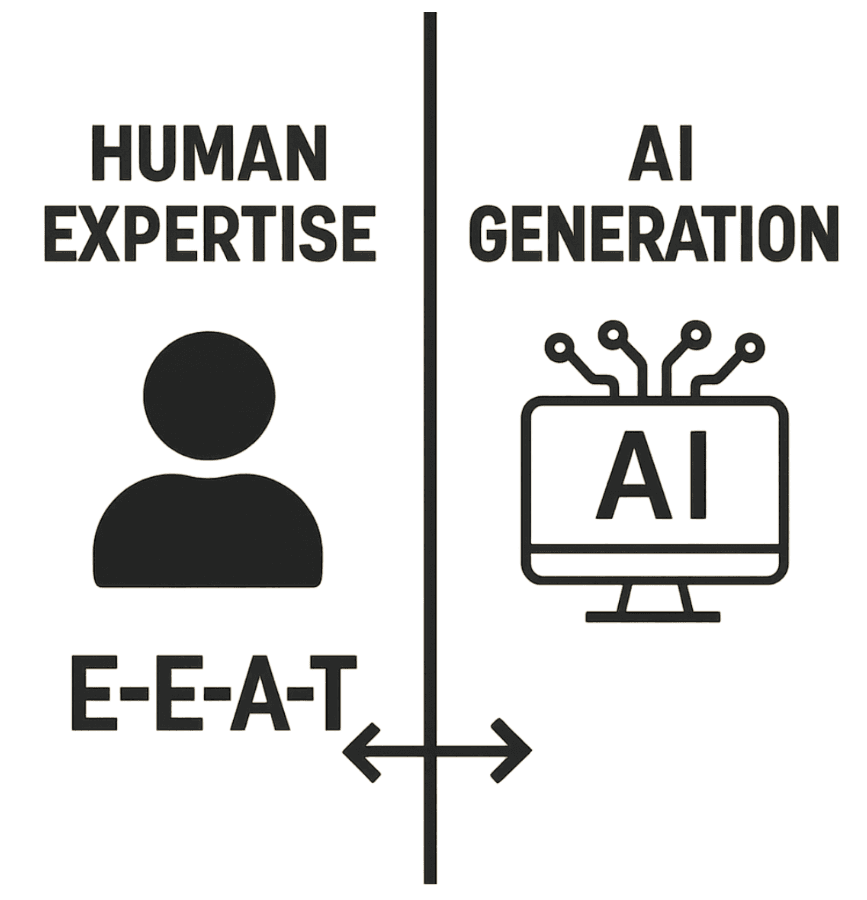
Google's answer to this is E-E-A-T (Experience, Expertise, Authoritativeness, and Trustworthiness). As AI-generated spam floods the web, search algorithms are leaning heavily into these human-centric signals. The challenge for modern marketers is balancing automated content generation with E-E-A-T principles.
The Commoditization of General Information
If you use an LLM to generate an article summarizing the history of the internet, you are adding zero new value to the web. The AI trained on existing articles to write your article, which will then be evaluated by an AI search engine that already knows the information. This closed loop of recycled knowledge will not rank in 2026.
Injecting the Human Element
To succeed, AI must be a co-pilot, not an autopilot. Here is how to blend AI efficiency with human E-E-A-T:
- Experience (The First 'E'): AI has never used a product, tasted a recipe, or visited a destination. Content must include first-hand experience. Use AI to structure and draft your article, but manually inject your personal experiences, original photos, and specific anecdotes that prove you actually did the thing you are writing about.
- Expertise & Authority: Leverage subject matter experts (SMEs). Have an AI transcribe a 20-minute interview with your internal expert, and use that transcript as the foundational prompt for your content generation. This ensures the output contains unique, expert insights rather than generic web-scraped data.
- Trustworthiness: Be transparent. Display clear author bios with links to LinkedIn profiles and verifiable credentials. Maintain strict editorial oversight. Fact-check every AI-generated claim, as AI hallucinations (making up facts) remain a liability.
The 2026 Workflow:
- Human conceives the unique angle.
- Human conducts the original research/interview.
- AI outlines and drafts the initial content.
- Human edits, injects personality, adds first-hand experience, and verifies facts.
- AI optimizes the formatting and generates schema markup.
Beyond Text: Multimodal Search Impact on Image and Video Visibility
Search is no longer confined to a keyboard. The integration of computer vision, speech recognition, and large language models has given rise to multimodal search. A user can now take a photo of a broken bicycle gear with their phone, circle the broken part, and ask via voice, "How do I fix this specific piece and where can I buy a replacement near me?"
This incredible technological leap highlights the multimodal search impact on image and video visibility. If your SEO strategy in 2026 is strictly text-based, you are ignoring a massive segment of the search market.
Visual Search Optimization
Tools like Google Lens are processing billions of visual queries every month. To ensure your products and images are surfaced:
- Contextual Image Placement: Search algorithms use the text surrounding an image to understand its context. Ensure your images are placed immediately adjacent to highly relevant, descriptive text.
- High-Resolution and Clear Focal Points: AI vision models need clear pixels to identify objects. Blurry, low-quality images are ignored.
- Exhaustive Metadata: Descriptive file names, thorough EXIF data, and meticulously crafted alt text are no longer optional. When writing alt text, describe the image exactly as you would to someone who cannot see it, keeping the AI's need for context in mind.
Video Optimization in the AI Era
Video is heavily favored for "how-to" and tutorial queries. AI engines now automatically transcribe videos, segment them into chapters, and pull specific video clips directly into the search results to answer a user's prompt.
- Spoken Keywords: Because AI trans transcribes your video audio, ensure your script naturally includes the questions and conversational prompts your audience is using.
- Video Schema: Use VideoObject structured data to explicitly tell the search engine the video's title, description, thumbnail, and upload date.
- Chapter Markers: Manually add timestamps and descriptive chapter titles to your YouTube or embedded videos. This allows the AI to extract and serve the exact 30-second clip that answers a user's specific query.
Navigating the Local Sphere: AI's Influence on Brand Discovery
Local SEO has traditionally been governed by proximity, relevance, and prominence (usually dictated by Google Business Profile reviews and local citations). While these remain important, the large language models influence on local search results is introducing a new layer of complexity.
Generative AI integrations are transforming local searches into highly personalized, conversational recommendations. Instead of searching "Italian restaurants near me," a user in 2026 prompts an AI assistant with: "I need a romantic Italian restaurant in downtown Chicago that has gluten-free pasta options, a quiet atmosphere, and is highly rated for anniversary dinners."
The Hyper-Personalization of Search
This level of granularity significantly amplifies the impact of personalized AI search results on brand discovery. The AI is not just looking for an Italian restaurant category tag; it is parsing thousands of user reviews, website menus, and social media mentions in real-time to match the exact atmospheric and dietary requirements of the user.
Optimizing for Conversational Local Search
To ensure your local business thrives in this environment:
- Granular Attribute Management: Keep your Google Business Profile (and other local directory listings) obsessively updated. Check every applicable attribute-from "wheelchair accessible" to "women-owned" to "offers vegan options." The more data points the AI has, the more likely it is to match you with a hyper-specific user prompt.
- Review Mining and Generation: AI models rely heavily on user reviews to understand the vibe and nuance of a business. Encourage your customers to leave detailed reviews. A review that says, "Great place!" is useless to an AI. A review that says, "The gluten-free carbonara was amazing, and the dim lighting made for a perfect romantic anniversary dinner," is pure SEO gold, as it provides the exact semantic matches the AI needs for future recommendations.
- Comprehensive Menu and Service Pages: Do not use PDFs for your menus or service lists. AI engines struggle to parse them fluidly. Use structured HTML pages with clear descriptions, prices, and ingredients/features so the LLM can confidently recommend your specific offerings.
Working Smarter: Machine Learning in Technical SEO and SERP Analysis
While much of the conversation around AI focuses on content generation, the most significant productivity gains for SEO professionals are happening behind the scenes. Technical SEO-the process of ensuring a website meets the technical requirements of modern search engines-is notoriously time-consuming and complex. By 2026, AI and automation will have completely revolutionized this space.
The Economics of Automated Audits
One of the most compelling arguments for upgrading your tech stack is the sheer cost efficiency of using machine learning for technical SEO. Tasks that used to take a technical SEO analyst 20 hours a week can now be executed by machine learning algorithms in minutes.
- Log File Analysis: Machine learning scripts can ingest massive server log files to map exactly how search engine bots are crawling your site, instantly identifying crawl traps, wasted crawl budget, and orphaned pages without manual spreadsheet wizardry.
- Predictive Architecture: AI tools can analyze user behavior flow and semantic relationships to automatically suggest-and in some CMS platforms, dynamically generate-optimal internal linking structures that distribute PageRank perfectly.
- Automated Hreflang and Redirects: Managing international SEO and massive site migrations is fraught with human error. AI systems can automatically map URLs, generate flawless hreflang tags, and implement complex 301 redirect chains, saving thousands of dollars in agency fees and preventing catastrophic traffic drops.
Real-Time Intelligence
Beyond site maintenance, the effectiveness of AI tools for real-time SERP analysis is giving marketers an unprecedented tactical advantage. SERPs are no longer static; they are highly volatile and dynamic, changing based on real-world events, personalization, and algorithmic micro-adjustments.
Modern AI SEO platforms continuously monitor the search landscape. They can instantly detect when a competitor drops a new piece of content, analyze the semantic gaps in your own content compared to the current top-ranking pages, and provide real-time recommendations for updating your articles.
Tracking the Right SEO Performance Metrics
With AI changing the nature of traffic and interaction, the SEO performance metrics you track must evolve. In 2026, you must monitor:
- Brand Mentions in AI Overviews: Tracking how often your brand is cited by generative engines, even if a click doesn't occur.
- Engagement Time/Scroll Depth: Because traffic volume may decrease, proving that the traffic you do receive is highly engaged is critical.
- Conversion Rate from Organic: Ultimately, revenue matters more than traffic. Tracking the precise conversion rate of organic visitors will justify your SEO investments even in a lower-traffic environment.
- Entity Salience Score: Using natural language APIs to test how strongly search engines associate your brand name with your target industry topics.
Conclusion: Embracing the AI-Driven Search Era
The integration of AI in marketing is no longer on the horizon; it is the ground beneath our feet. As we navigate the complex web of digital marketing trends heading into 2026, the core directive for search professionals and business owners is clear: adapt or become invisible.
The AI SEO trends outlined in this guide represent a fundamental shift in how human knowledge is organized and accessed. We are moving away from an era of reverse-engineering algorithms with exact-match keywords and manipulative link-building. We are entering an era that rewards true authority, comprehensive understanding, technical excellence, and structured data.
While the tools and the interfaces have changed, the fundamental goal of search engines remains the same: to provide the user with the most accurate, helpful, and trustworthy information possible. By aligning your strategies with these AI marketing insights-focusing on semantic entity optimization, adapting to multimodal inputs, leveraging machine learning for technical efficiency, and strictly adhering to E-E-A-T principles-you will not only survive the generative AI revolution, but you will thrive in it.
The future of SEO in 2026 belongs to those who view artificial intelligence not as a shortcut to cheap content, but as a powerful catalyst for delivering exceptional digital experiences. Start optimizing for the machine that understands, not just the machine that indexes, and your brand will dominate the search landscapes of tomorrow.
Source URLs checked
Here are the public URLs that were looked at during this time:
https://www.semrush.com/blog/ai-overviews/
https://www.semrush.com/blog/ai-search-trends/
https://blog.hubspot.com/marketing/evolution-of-search
https://blog.hubspot.com/marketing/how-to-use-google-ai-search
https://blog.hubspot.com/marketing/how-startups-can-unlock-growth-with-seo
https://blog.hubspot.com/marketing/state-of-generative-ai
https://blog.hubspot.com/marketing/how-search-behaviors-are-changing
https://www.similarweb.com/blog/marketing/geo/gen-ai-stats/
https://www.similarweb.com/blog/marketing/seo/most-used-ai/
https://www.similarweb.com/blog/marketing/geo/citation-gap-analysis/
https://www.similarweb.com/blog/research/market-research/most-visited-websites-usa/
https://www.similarweb.com/blog/marketing/geo/what-is-geo/
https://www.gartner.com/en/newsroom/press-releases/2026-03-16-gartner-marketing-survey-finds-50-percent-of-consumers-prefer-brands-that-avoid-using-genai-in-consumer-facing-content0
https://www.gartner.com/en/newsroom/press-releases/2026-04-13-gartner-marketing-survey-finds-eighty-one-percent-of-consumers-tune-out-ads
https://www.semrush.com/blog/ai-overviews/
https://www.semrush.com/blog/ai-search-trends/
https://blog.hubspot.com/marketing/evolution-of-search
https://blog.hubspot.com/marketing/how-to-use-google-ai-search
https://blog.hubspot.com/marketing/how-startups-can-unlock-growth-with-seo
https://blog.hubspot.com/marketing/state-of-generative-ai
https://blog.hubspot.com/marketing/how-search-behaviors-are-changing
https://www.similarweb.com/blog/marketing/geo/gen-ai-stats/
https://www.similarweb.com/blog/marketing/seo/most-used-ai/
https://www.similarweb.com/blog/marketing/geo/citation-gap-analysis/
https://www.similarweb.com/blog/research/market-research/most-visited-websites-usa/
https://www.similarweb.com/blog/marketing/geo/what-is-geo/
https://www.gartner.com/en/newsroom/press-releases/2026-03-16-gartner-marketing-survey-finds-50-percent-of-consumers-prefer-brands-that-avoid-using-genai-in-consumer-facing-content0
https://www.gartner.com/en/newsroom/press-releases/2026-04-13-gartner-marketing-survey-finds-eighty-one-percent-of-consumers-tune-out-ads

Aziz J.
Co-founder @ ProgSEO.dev
Written By
Aziz is building ProgSEO.dev, a platform focused on automating SEO content production. He focuses on turning SEO into a system that consistently generates and updates content without manual workflows. Focused on building scalable SEO systems for SaaS and professional services.